Red Sarah Bernhardt Peony Buying Guide: Sizes and Tips
Buying a red Sarah bernhardt peony is an investment in long-term garden beauty. These deep red double blooms bloom reliably for decades with minimal care, but choosing the right plant at purchase matters for establishment and first-year performance. This guide walks you through plant sizes, quality indicators, and what to expect from different sources.
What to Look For When Buying Red Sarah Bernhardt Peonies
A healthy peony starts with the roots. When you buy a red Sarah bernhardt peony, examine the root structure before leaving the nursery or opening a mail-order package. Roots should be firm, pale or light tan, and show no soft, dark, or mushy sections. Smell the soil: fresh earth is good; sour or rotten smells signal poor drainage or disease during growing.
Check the crown, which is where shoots emerge from the roots. The crown should be solid and free of cracks, dark lesions, or soft rot. This is where peony scale (a common pest) can hide, so look for small bumps or crusting along the crown.
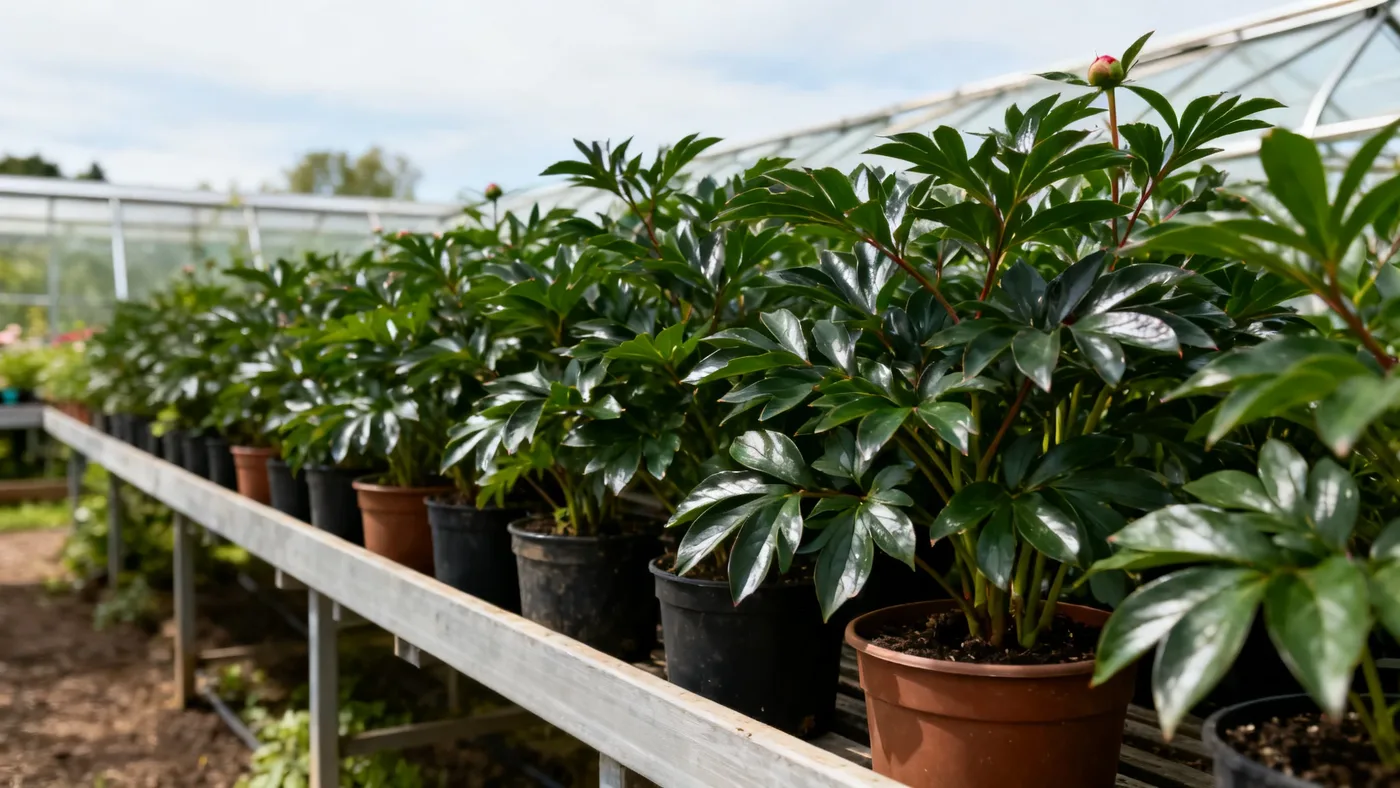
Foliage on container-grown plants should be dark green, glossy, and deeply lobed. Yellowing leaves, brown edges, or sparse growth may indicate stress during shipping or poor nursery care. Some leaf yellowing during transplant shock is normal, but healthy stock recovers quickly once planted.
The soil in the container should be moist but not waterlogged. Soggy soil at purchase suggests the plant has been overwatered, which weakens roots and invites root rot. Bone-dry soil is also a red flag: roots pull away from the sides and may not re-establish contact after planting.
Understanding Container Sizes and Plant Maturity
Red Sarah bernhardt peonies are sold in a range of sizes. Smaller plants cost less but take longer to mature. Larger plants bloom sooner but demand more immediate care during establishment.
Bareroot divisions are the smallest and most affordable option. These are dormant root clumps dug in fall and stored without soil. A quality bareroot should show 3 to 5 eyes (buds) on a firm, undamaged crown. Bareroot plants establish quickly in fall (preferred) or early spring, but do not expect blooms in year one. You will see foliage and possibly buds that abort in year one. Significant blooms arrive in year two or three after planting.
Small container plants (typically quart or gallon size) offer a middle ground. These are bareroot divisions potted a few months before sale. They are easier to transport and plant than bareroot stock, and roots are actively growing. First-year bloom is still unlikely but possible. Expect full maturity and robust flowering around year three.
Large specimen plants (3-gallon containers or larger) may bloom in year one if the nursery has grown them for several seasons. These plants cost more and require more water during establishment, but they deliver visible results quickly. Even so, the plant continues to thicken and expand for another 2 to 3 years, reaching its full mature width of 24 to 36 inches.
Whichever size you choose, plan for slow growth in the first two seasons. Red Sarah bernhardt peonies grow only a few inches per year until the root system deepens and spreads. By year three or four, the clump reaches its mature width and bloom production stabilizes.
If you are considering a container-grown red Sarah bernhardt peony, note that peonies perform better in the ground than in pots. A large, deep container (15 gallons or more) can work for a season or two, but long-term success requires in-ground planting. Peonies are perennials that benefit from deep winter cold and stable soil conditions that containers cannot provide.
Key Differences to Compare
Not all red peonies are identical, even within the same trade name. Because 'Red Sarah Bernhardt' is a nursery trade name rather than a formally registered cultivar, plant genetics and performance may vary between suppliers. Here is what to compare when sourcing your plant.
Bloom time: Red Sarah bernhardt typically blooms late spring to early summer, with exact timing varying by your USDA hardiness zone. In zone 3, expect blooms in June; in zone 8, blooms may arrive as early as late May. Ask your supplier what bloom time customers report in your region.
Fragrance: Peonies are fragrant, but intensity varies by cultivar, growing conditions, and individual plant. Red Sarah bernhardt typically offers mild to moderate peony fragrance. If fragrance is important to you, ask the supplier how their stock performs.
Petal count and form: Red Sarah bernhardt blooms are double (many-petaled), but exact petal count can vary. Some years or seasons produce fuller blooms than others. If you have seen photos you particularly like, ask if the supplier grows that exact lineage.
Plant vigor and disease history: A reputable supplier will tell you if their stock has shown any issues with botrytis (a fungal disease that blackens petals in humid springs), powdery mildew, or other common peony problems. Northern suppliers sometimes carry hardier or more disease-resistant lines.
Red Flags to Avoid
Do not buy a red Sarah bernhardt peony with a soft, mushy, or dark crown. This indicates root rot or fungal disease, and the plant will likely fail after planting.
Avoid stock with no visible eyes (buds) on the crown. Eyes are the growing points; a crown with no eyes will not sprout. Bareroot peonies should have at least 3 distinct eyes.
Reject plants with a strong sour or fermented smell in the soil. This signals poor drainage and anaerobic conditions that damage roots permanently.
Do not accept a plant that has been sitting in waterlogged soil for days or weeks. Ask when it was last watered and inspect the soil moisture before purchase or receipt.
Be cautious of plants offered far outside the normal planting seasons (mid-September through October for fall, March through April for spring). Peonies planted in summer or winter often fail because they miss the soil temperature windows needed for root development.
If a supplier claims this plant will bloom prolifically in year one, ask for details. Young peonies rarely bloom heavily in their first season. Realistic expectations are bud formation or light bloom in year one, with full production by years two and three.
Where to Buy Red Sarah Bernhardt Peonies
Specialty peony nurseries are your best source for quality and variety. These growers focus solely on peonies and have deep knowledge of individual cultivars. Many ship bareroot stock nationally in fall and early spring. Research suppliers in your area or contact your local cooperative extension for recommendations.
Regional nurseries and garden centers often stock container peonies in spring and fall. You can see the plant in person, inspect the crown and roots, and pick it up immediately. Quality varies by nursery, so shop at places known for careful plant care and honest labeling.
Mail-order suppliers offer convenience and access to specialty cultivars. Ask about their packing and shipping practices. Good suppliers wrap bareroot plants in damp paper or moss to prevent root drying. Container plants ship in soil to protect roots during transit. Request shipping in your preferred planting window: fall for fall planting, early spring for spring planting.
Online plant marketplaces have expanded options but also increase the risk of mislabeling or receiving substandard stock. Buy from sellers with strong reviews and clear return policies.
Big-box stores and discount chains sometimes carry peonies in spring, often at competitive prices. The downside is little opportunity to inspect roots before purchase, and staff knowledge about peony care is minimal. If you shop this route, buy early in the season when stock is fresh and open the package immediately to check for damage.
Plant the red Sarah bernhardt peony as soon as you receive it. Fall planting (preferred) allows root development before winter dormancy. Spring planting works if done early while the plant is still dormant. Avoid planting after shoots have leafed out; transplant shock is harder to recover from.
Quick Reference Buying Checklist
| What to Check | Healthy Sign | Red Flag |
|---|---|---|
| Crown (top of roots) | Solid, light-colored, free of cracks | Soft, dark, mushy, or lesioned |
| Eyes (shoot buds) | 3 to 5 visible on bareroot; at least 2 on container stock | None visible or sunken |
| Roots | Firm, pale/tan, moist soil contact | Mushy, black, or pulling away from soil |
| Soil smell | Fresh earth | Sour, fermented, or rotten |
| Foliage (container stock) | Dark green, glossy, deeply lobed | Yellow, brown-edged, sparse, or wilted |
| Soil moisture | Moist but not waterlogged | Bone-dry or soggy |
| Planting timing | Fall (September-October) or early spring (March-April) | Summer or winter purchase with immediate planting expected |
| Growth stage claims | Seller is realistic about year-one to year-three timeline | Promises heavy bloom in year one from young bareroot |
Setting Realistic Expectations
A red Sarah bernhardt peony will reward your patience. These plants live 20 to 50 years or longer, blooming reliably for decades. The first few years require some attention to establishment: regular water during the first growing season, full sun exposure (6 or more hours daily), and well-drained, fertile soil. Once established, a mature clump needs little more than an annual cutback in fall and occasional deadheading.
Most gardeners wait until year two or three for impressive blooms. This is normal. A bareroot division planted this fall will establish roots over winter and push foliage in spring, possibly with some aborted buds. By next spring, it will root deeply. In year two, flowers arrive. In year three, you see what this plant was meant to look like.
For the full story on growing and caring for your red Sarah bernhardt peony after purchase, see the complete red Sarah bernhardt peony care guide.