The Complete Red Sarah Bernhardt Peony Care Guide
Red Sarah Bernhardt Peonies are treasured garden plants for good reason. Their deep crimson double blooms make a dramatic statement in late spring, and once established, these long-lived perennials ask for little beyond basic maintenance. We've grown these beauties for years, and this guide covers everything you need to grow them successfully in your garden.
Table of Contents
- Understanding Red Sarah Bernhardt Peonies
- Planting Your Red Sarah Bernhardt Peony
- Watering and Feeding
- Pruning and Deadheading
- Common Problems and Solutions
- Seasonal Care Calendar
- Quick Reference Checklist
Key Takeaways
- Plant in fall (preferred) or early spring in zones 3 through 8
- Space plants 3 to 4 feet apart to allow for mature spread
- Full sun (6+ hours daily) produces the best blooms
- Expect 2 to 3 years before significant flowering after planting
- These plants can live 20 to 50+ years with minimal care once established
- Late fall cutback and spring fertilizing are your main tasks
Understanding Red Sarah Bernhardt Peonies
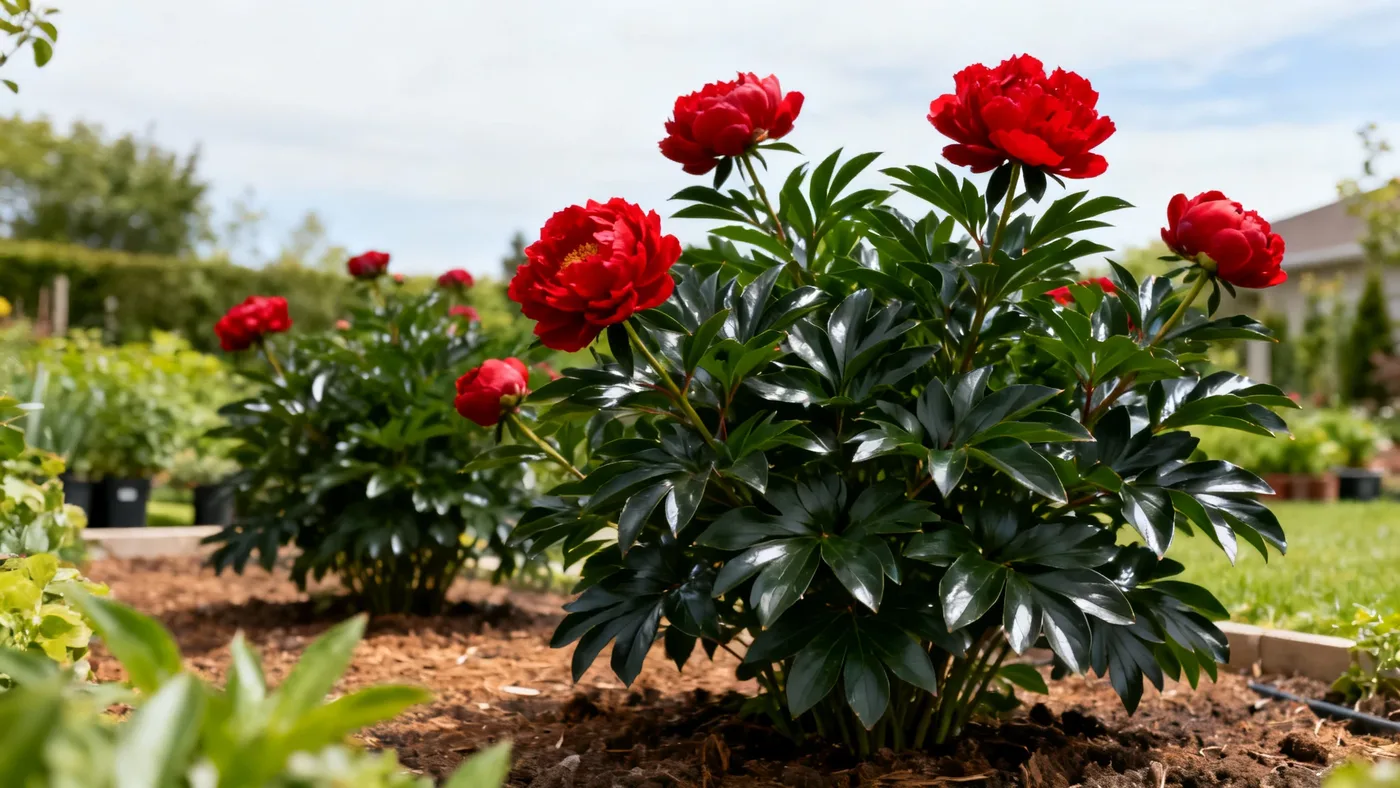
Red Sarah Bernhardt Peony (Paeonia lactiflora 'Red Sarah Bernhardt') is a herbaceous perennial that returns reliably year after year. Unlike some cultivars, the red version produces deep red to crimson double blooms that look formal enough for cutting yet fit naturally into cottage gardens and perennial borders.
These peonies grow 24 to 36 inches tall and spread 24 to 36 inches wide once mature. Growth is slow to moderate, with clumps thickening gradually over several years. Most reach their full mature spread around year 3 to 4, growing only a few inches per year until they settle in. The glossy, deeply lobed dark green foliage provides structure throughout the growing season. Come fall, the leaves often turn bronze, burgundy, or reddish before the plant dies back to the ground for winter.
Red Sarah Bernhardt Peonies bloom in late spring to early summer, typically May through June, though timing shifts depending on your zone. The flowers carry a mild to moderate sweet peony fragrance. They're hardy in USDA zones 3 through 8, so most home gardeners can grow them successfully.
Planting Your Red Sarah Bernhardt Peony
When to Plant
Fall is the preferred planting season for peonies, as it allows roots to establish before spring growth. If you miss fall, early spring while the plant is still dormant works too. Avoid planting during active growth in summer.
Site Selection
Choose a location with full sun: at least 6 hours of direct sunlight daily. In hot climates (zones 7 to 8), light afternoon shade helps prevent stress, but the plant blooms best in full sun. Avoid planting near trees or shrubs that will compete for water and nutrients, and ensure good air circulation to reduce disease pressure.
Soil Preparation
Red Sarah Bernhardt Peonies demand fertile, well-drained soil rich in organic matter. They are intolerant of waterlogged or soggy conditions, which quickly cause root rot. Aim for soil with a pH between 6.5 and 7.0, slightly acidic to neutral.
Before planting, work 2 to 3 inches of compost or aged manure into the top 12 inches of soil. This improves drainage, adds nutrients, and creates the favorable structure peonies need. If your soil is heavy clay, amend it generously with compost to prevent water pooling.
Planting Steps
- Dig a hole 12 inches deep and 12 inches wide.
- Set the peony root so the topmost eyes (buds) are no more than 1 to 2 inches below the soil surface. This is critical: buried too deep, the plant will not flower.
- Backfill with the amended soil, firming gently as you go.
- Water well to settle the soil.
- Space plants 3 to 4 feet apart to allow for their full mature spread and good air circulation.
After planting, mulch around the base (but not touching the crown) with 2 inches of wood chips or shredded leaves. This moderates soil temperature and retains moisture while the plant establishes.
Watering and Feeding
Watering Requirements
Red Sarah Bernhardt Peonies need moderate watering. While establishing (the first year or two), water regularly to keep the soil consistently moist but not soggy. A deep watering once per week is usually sufficient, depending on rainfall and local heat.
Once mature, peonies become moderately drought tolerant. They'll survive dry spells but perform better with regular watering during bloom time. Avoid overhead watering on the foliage, which can promote disease. Water at the base of the plant in early morning if possible, allowing any surface moisture to dry before evening.
Fertilizing
Peonies are not heavy feeders, but a light application in early spring pays dividends. As new shoots emerge, apply bone meal or a balanced fertilizer like 5-10-10. Phosphorus (the middle number) promotes blooms, while a low nitrogen ratio prevents the plant from putting all its energy into foliage at the expense of flowers.
A single spring feeding is typically enough. Avoid heavy nitrogen fertilizers, which encourage leafy growth over blooms. If you've enriched the soil at planting with compost, you may not need fertilizer every year.
Pruning and Deadheading
Summer Deadheading
As spent blooms fade during the growing season, deadhead them to redirect the plant's energy toward next year's flowers rather than seed production. Cut or pinch off the faded bloom just below the flower head. You can leave the attractive foliage to grow on.
Fall Cutback
In late fall, after frost kills the top growth, cut the foliage back to 2 to 3 inches above the ground. Use clean pruners to avoid spreading disease. Remove all cut material from the bed. This prevents disease and keeps the garden tidy going into winter.
Do not prune the plant during the growing season beyond deadheading. The foliage feeds the roots and supports next year's blooms, so removing leaves mid-season weakens the plant.
Supporting Heavy Blooms
Red Sarah Bernhardt's double flowers are stunning but heavy. If stems start to flop as blooms open, install a peony ring or sturdy tomato cage around the plant in early spring before growth gets tall. The plant will grow through the support, hiding it while keeping flowers upright and off wet ground.
Common Problems and Solutions
| Problem | Cause | Solution |
|---|---|---|
| No blooms or very few flowers | Crown planted too deep; insufficient light; plants too young | Verify eyes are 1 to 2 inches below soil. Move to full sun. Wait 2 to 3 years after planting for significant bloom. |
| Bud blast (buds form but don't open) | Late frost; insufficient winter chill; inconsistent watering | Ensure the plant gets adequate winter chill (all zones 3 to 8 have enough). Water consistently during bud formation. Avoid fertilizing too late in summer. |
| Gray, moldy spots on leaves or stems | Botrytis blight (fungal disease) | Improve air circulation. Remove affected foliage. Avoid overhead watering. Remove leaf litter in fall. |
| Ants on buds | Ants farm aphids or feed on floral nectar | Ants do not damage peonies. They are harmless visitors. No treatment needed. |
| Yellowing, wilting, or dying roots | Root rot from poor drainage or overwatering | Improve soil drainage. Plant in raised beds if needed. Never allow standing water. |
| Stems flopping under heavy blooms | Double flowers are heavy; insufficient support | Install a peony ring or tomato cage in early spring. Stake individual stems if needed. |
Seasonal Care Calendar
Spring (April to May)
As shoots emerge, apply bone meal or balanced fertilizer (5-10-10) around the base. Install support structures if needed. Water regularly if rainfall is sparse. Scout for pests like thrips and aphids on new foliage. Begin deadheading as first blooms fade.
Early Summer (June to July)
Continue deadheading throughout bloom time. Water deeply during dry spells. The plant is largely self-sufficient; focus on keeping the area weed-free. Enjoy the blooms, or cut them for arrangements (use a sharp knife and cut early morning).
Late Summer and Fall (August to October)
Reduce fertilizing to avoid pushing late-season growth. Continue watering if drought persists, but the plant needs less as it enters dormancy. After the first frost kills the top growth, cut foliage back to 2 to 3 inches. Remove all debris from the bed.
Winter (November to March)
The plant is dormant and requires no care. Snow and mulch provide natural insulation. In zones 3 to 4, a 3 to 4-inch mulch layer after the ground freezes protects tender crowns. Remove excess mulch in spring as new shoots emerge.
Quick Reference Checklist
| Care Task | Timing | Notes |
|---|---|---|
| Plant | Fall (preferred) or early spring | Eyes 1 to 2 inches below soil; space 3 to 4 feet apart |
| Fertilize | Early spring as shoots emerge | Bone meal or 5-10-10 balanced fertilizer |
| Water | During establishment and bloom; ongoing in drought | Deep watering 1x per week; avoid overhead spray |
| Install support | Early spring before growth gets tall | Peony ring or tomato cage for heavy double blooms |
| Deadhead | Throughout bloom season (May to June) | Remove spent flowers to redirect energy |
| Fall cutback | Late fall after frost | Cut foliage to 2 to 3 inches; remove debris |
| Winter mulch (zones 3 to 4) | After ground freezes | 3 to 4 inches; remove in early spring |
A Lasting Investment
Red Sarah Bernhardt Peonies are among the most dependable perennials a gardener can plant. With correct planting depth, good drainage, and the basic care outlined above, your plants will produce reliable blooms for decades. In 3 to 5 years, you'll have mature clumps that ask for little more than spring fertilizing, summer deadheading, and a fall cutback. Many gardeners report their peonies thriving for 20, 50, or more years with virtually no intervention.
The deep crimson double blooms are worth every bit of that investment. Plant in fall, space generously, and you'll be enjoying these classic beauties for a lifetime.