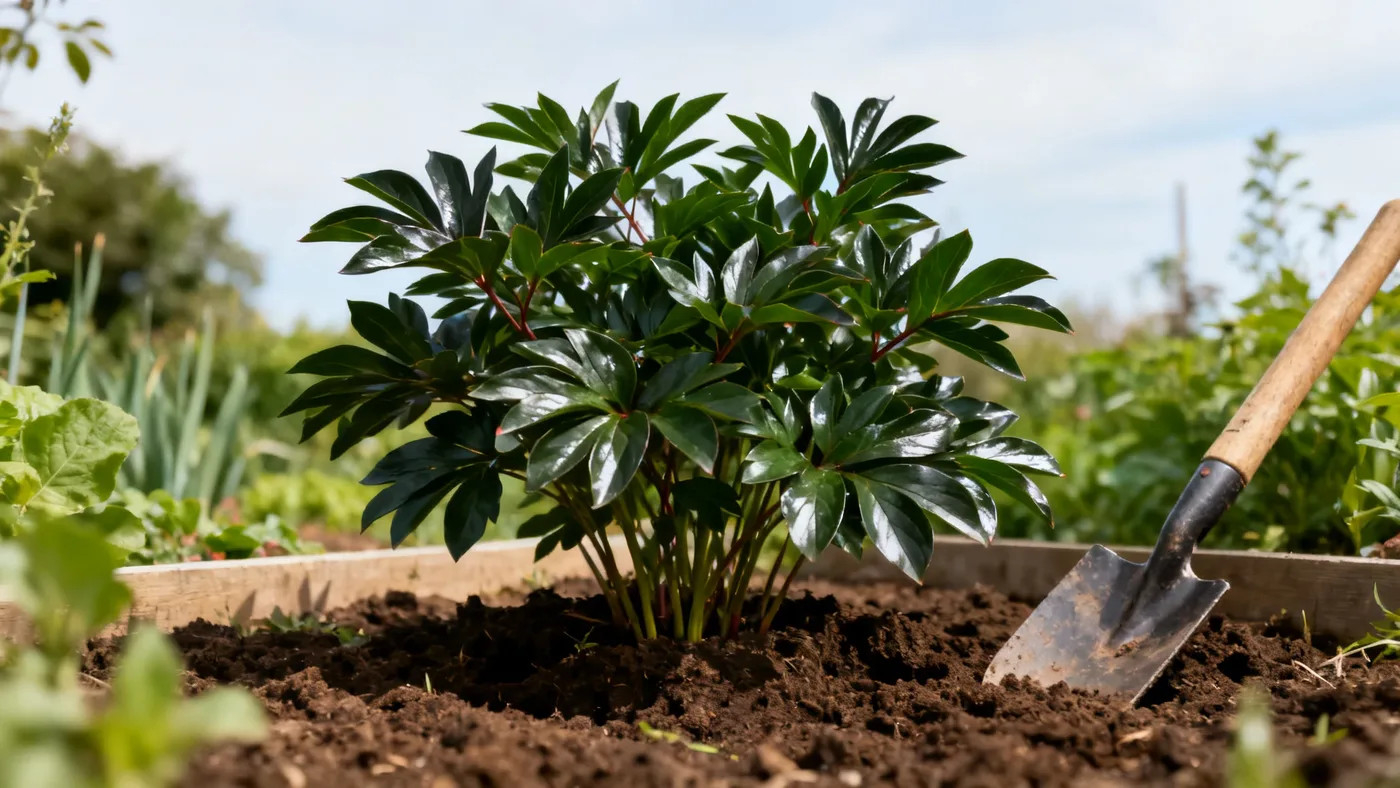
How to Plant Red Sarah Bernhardt Peony the Right Way
Red Sarah Bernhardt Peony is a long-lived perennial that can thrive in your garden for decades if planted correctly from the start. The most common reason peonies fail to bloom is planting the crown too deep. Get this one detail right, follow a straightforward planting schedule, and you'll have a healthy plant producing deep red double flowers by year 3.
This guide walks you through site selection, soil prep, and the exact depth and spacing that matter most for this cultivar.
What You'll Need
Before you dig, gather these materials:
- Bare root or container peony (nursery-grown plant, usually sold in a quart, #1, or #3 container)
- Well-draining loam or potting soil rich in organic matter
- Bone meal or a balanced 5-10-10 fertilizer
- Compost or aged manure for soil amendment
- Shovel and garden fork
- Ruler or measuring stick
- Pruning shears
- Mulch (optional, for establishing year only)
- Garden stakes or peony ring for support (optional, for future years)
Choosing Your Planting Site
Red Sarah Bernhardt Peony thrives in full sun, meaning at least 6 hours of direct sunlight each day. While the plant tolerates light afternoon shade in hot climates, it blooms best with unrestricted sun exposure. Choose a location where the plant will receive consistent morning and midday light.
Equally important is drainage. Peonies are intolerant of soggy or waterlogged soil, so avoid planting in low spots that collect standing water after rain. If your garden has heavy clay, plan to amend the soil before planting (see Soil Preparation below).
Consider future size: Red Sarah Bernhardt Peony matures to 24 to 36 inches tall and 24 to 36 inches wide. Space it 3 to 4 feet away from other plants and structures to allow the clump to expand without crowding.
Preparing Your Soil
Peonies demand fertile, well-drained loam with a soil pH between 6.5 and 7.0. Test your soil before planting if possible. If your pH is too high (above 7.0) or too low (below 6.5), amend accordingly; ask your local extension service for recommendations for your region.
Work compost or aged manure into the top 10 to 12 inches of soil. This improves drainage in clay soils and adds nutrients. Remove any debris, rocks, and compacted soil from the planting hole.
If you have heavy clay, create a mound or raised bed to ensure water doesn't pool around the crown. Peonies that sit in wet soil over winter often develop root rot.
When to Plant: Timing Matters
Fall is the preferred planting season for Red Sarah Bernhardt Peony, as it allows roots to establish before winter dormancy. Plant bare root or container peonies in fall or early spring while the plant is dormant.
In zones 3 to 5, aim to plant 4 to 6 weeks before the first hard frost so roots have time to settle. In zones 6 to 8, you have more flexibility; early fall (September to October) or early spring (February to March) both work well.
If you receive a bare root peony and the ground is frozen, keep the plant in a cool garage and plant as soon as soil becomes workable in spring.
Step-by-Step Planting Instructions
Step 1: Dig the Planting Hole
Dig a hole 12 to 18 inches deep and wide enough that the roots can spread naturally without bending or crowding. If you are planting a container peony, the hole should be slightly wider than the root ball and about as deep.
Step 2: Prepare the Hole Bottom
Add a thin layer of prepared soil (amended with compost) to the bottom of the hole. For bare root plants, create a small cone or mound in the center of the hole; the roots will drape over this cone. For container plants, create a firm base layer.
Step 3: Position the Crown (Critical Step)
This is the most important step. Peony crowns must be planted so the eyes (small buds on the crown) sit no more than 1 to 2 inches below the soil surface. Planting deeper than 2 inches is the leading cause of failure to bloom.
For bare root peonies: Hold the crown at the level you want, with the eyes just visible at the soil surface or barely below. For container peonies: The crown should be at roughly the same depth it was in the container, or slightly shallower.
If you are uncertain about eye placement, mark the depth with a stick before backfilling.
Step 4: Backfill and Water
Fill the hole halfway with amended soil, then water gently to settle the soil and remove air pockets. Finish filling the hole, and water again thoroughly. The soil should be moist but not waterlogged.
Step 5: Add Fertilizer
Sprinkle a light application of bone meal or a balanced 5-10-10 fertilizer around the base of the plant, about 3 to 4 inches away from the crown. This provides phosphorus to encourage root development without excess nitrogen, which favors foliage over blooms.
Step 6: Mulch (Optional)
In fall, a 2 to 3-inch layer of mulch (compost, bark chips, or aged manure) can help moderate soil temperature and retain moisture during the establishing year. Remove most mulch in early spring as new shoots emerge, leaving just an inch or so to protect against frost heave.
Watering and Early Care
Water regularly during the first growing season while the plant is establishing. Aim for 1 to 2 inches of water per week from rain or irrigation, applied at the base of the plant. Avoid overhead watering on foliage, which can promote disease.
Once mature (after year 2), Red Sarah Bernhardt Peony is moderately drought tolerant and needs supplemental watering only during extended dry spells.
In spring, as shoots emerge, apply another light feeding of balanced or phosphorus-rich fertilizer. Do not use heavy nitrogen fertilizers, as they promote foliage at the expense of blooms.
What to Expect: Timeline to Blooms
New peonies may produce a few flowers in year 2, but don't expect full performance until year 3 or 4. The growth rate is slow to moderate; clumps thicken over several years, roughly a few inches of growth per year until the plant reaches mature spread around year 3 to 4. This patience pays off with a plant that blooms reliably for 20 to 50 years or more in the same spot.
When blooms do arrive, look for deep red double flowers in late spring to early summer (typically May to June, though timing varies by zone). The fragrance is mild to moderate with a sweet peony scent.
Tips and Common Mistakes to Avoid
Planting Too Deep is the number one reason peonies fail to bloom. Double-check that eyes are no more than 1 to 2 inches below the soil surface. If you plant too deep, dig the crown up in fall, and replant at the correct depth.
Poor Drainage leads to root rot and weak growth. If water pools around the plant after heavy rain, you need to amend your soil or consider a raised bed.
Insufficient Sun results in few or no blooms. Peonies need at least 6 hours of direct sun daily. If your chosen spot is shadier than you realized, move the plant in fall (before it's fully established) or wait until year 2 or 3 and relocate then.
Overcrowding invites powdery mildew and poor air circulation. Space plants 3 to 4 feet apart and thin out weaker stems in spring if growth becomes very dense.
Heavy Nitrogen Fertilizer promotes lush foliage but weak blooms. Stick to balanced or phosphorus-rich formulas.
Overhead Watering wets the foliage and creates conditions for fungal diseases like botrytis blight. Water at the base of the plant in the early morning.
Late Frost After Growth Emerges can cause bud blast, where flower buds fail to open. This is less common in milder zones but a known risk in zone 3 and 4 gardens. There is no preventive action other than ensuring the plant has sufficient winter chill.
Quick Reference: Planting Checklist
| Task | Timing / Detail |
|---|---|
| Choose planting site | Full sun (6+ hours); well-drained soil; 3-4 ft from other plants |
| Test and amend soil | pH 6.5-7.0; work in compost or aged manure 10-12 in deep |
| Plant bare root or container | Fall (preferred) or early spring; 4-6 weeks before first frost if fall |
| Dig planting hole | 12-18 in deep, wide enough for roots to spread |
| Position crown | Eyes 1-2 in below soil surface (critical for blooming) |
| Backfill and water | Moist but not waterlogged; water gently to settle |
| Fertilize | Bone meal or 5-10-10 balanced fertilizer, light application |
| Mulch (optional) | 2-3 in in fall; remove most in early spring |
| Water first year | 1-2 in per week at the base; avoid overhead watering |
| Fertilize in spring (years 2+) | Light application of balanced or phosphorus-rich fertilizer |
| Expected first blooms | Year 2-3; full mature performance by year 3-4 |
| Plant mature size | 24-36 in tall and wide; reaches full spread around year 3-4 |
| Bloom time | Late spring to early summer (May-June, zone dependent) |
For more detailed ongoing care after your peony is established, see our complete Red Sarah Bernhardt Peony care guide.