Red Sarah Bernhardt Peony Botanical Name and Classification
Lyon, 1906: a breeder named Dessert files a pink double peony under the name of a famous actress. A century later, that choice still decides which tag you find on a red one. Many buyers assume "Red Sarah Bernhardt" is a separate species, or a tree peony, because the name is so long. What we see is a trade name layered on a very ordinary, very reliable herbaceous plant.
In this article, we'll go through where the name came from, what Paeonia lactiflora tells you, how this plant differs from tree and Itoh peonies, and what the classification means for winter cutback, hardiness and planting depth.
Where the Red Sarah Bernhardt Peony Name Began
The pink Sarah Bernhardt dates to 1906, when Dessert of Lyon introduced it and named it for a famous actress of the day. It is a double, rose-pink peony, and it became one of the best known garden peonies in the trade. Buyers recognized the name and asked for it by name, so nurseries kept using it for decades.
The red form came later and borrowed that recognition. "Red Sarah Bernhardt" works as a selling name. It tells you the flower is in the Sarah Bernhardt style, full and double, but deeper in color. We have no breeder record for the red selection that we can cite, so we treat the name as a trade name and not as proof of parentage.
What the Color Really Is
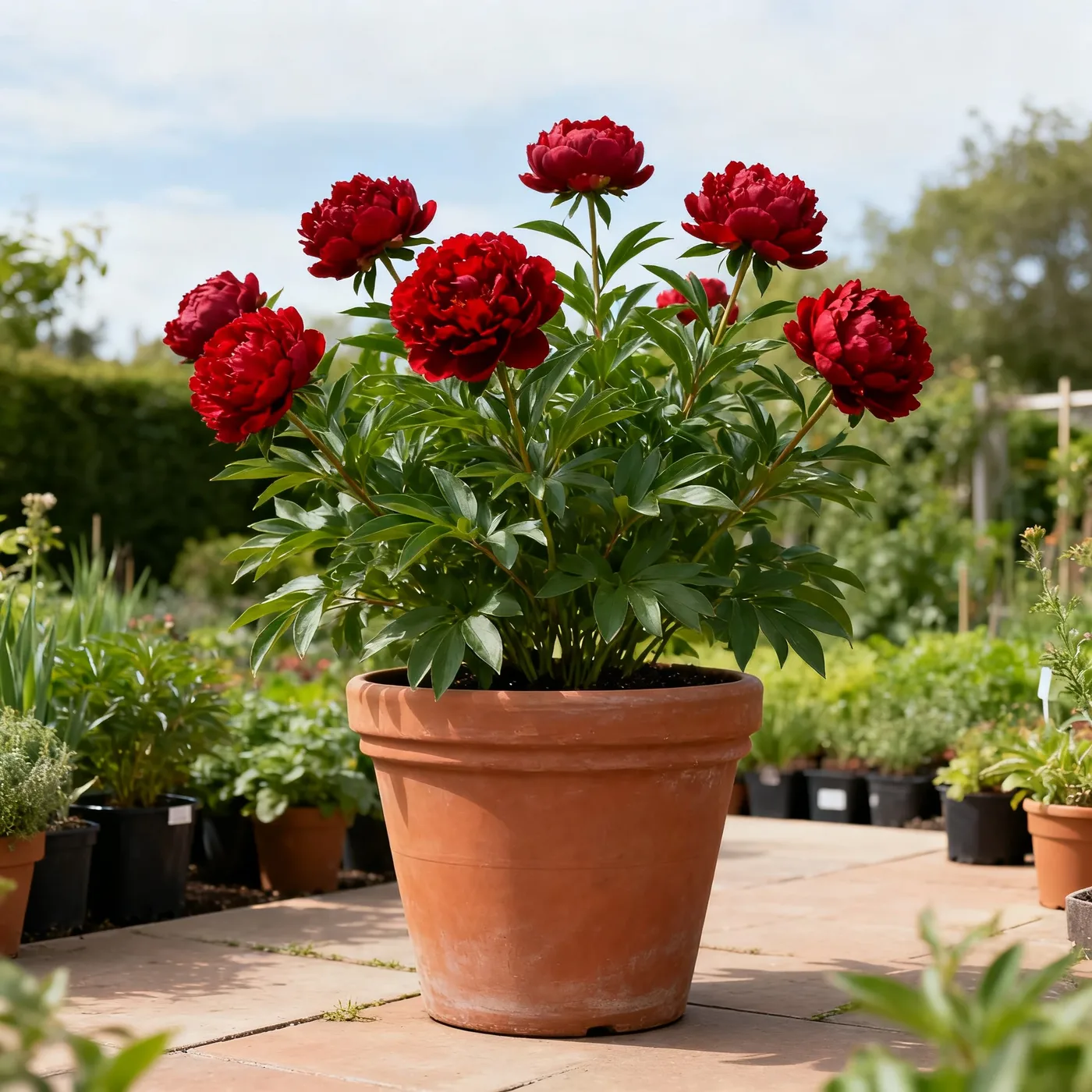
Plain "red" overstates it. The petals are dark pinkish-purple tinged with red, and the flowers are fragrant doubles about 6–8 inches across. Expect a deep, cool red-rose and not a fire-engine red. That matters when you plan a border, because a purer red will sit differently next to it.
Late spring to early summer is the bloom window for this plant. Each plant blooms for about two weeks, so cut flowers for a vase need planning around that short run.
Paeonia lactiflora Means Herbaceous, Not Woody
The botanical name has two working parts. Paeonia is the genus. lactiflora is the species epithet, from Latin for milky flower, a nod to the pale blooms of the wild plant. The species is native to eastern Asia, and most double, fragrant garden peonies descend from it. Herbaceous peonies sit in the family Paeoniaceae.
"Herbaceous" is the term that matters for you. It means the stems are soft, not woody, and they do not survive winter above ground. Herbaceous peonies die back completely during the winter, then rebuild from buds on the crown each spring.
What That Does to the Plant's Shape
The plant rebuilds from the crown every year, so its size is set by one season of growth. The NC State genus page gives 1–3 feet in height and width, and Colorado State describes herbaceous garden peonies at 3–4 feet. Garden peonies usually grow up to 3 feet high. For this cultivar, the maximum is 0.5–1 meter, which is about 20–39 inches. Plan on a mound near 3 feet and give it room.
Growth is slow. Expect a few seasons of building before the plant fills out, and do not judge it by its first spring.
What the Species Name Does Not Tell You
A species name covers a lot of plants. Paeonia lactiflora includes singles, semi-doubles and fully doubles in many colors. It tells you the structure and the care. It does not tell you flower color, fullness or fragrance, which come from the cultivar. That is why a label needs more than two Latin words.
Why Itoh and Tree Peonies Are Different Plants
The University of Wisconsin extension sorts peonies into three main categories: herbaceous, tree, and Itoh. The categories differ in what happens to the stems in winter, and that decides how you cut them.
| Type | Winter stems | Cutback |
|---|---|---|
| Herbaceous (Red Sarah Bernhardt) | Die to the ground | Cut all stems to soil level in fall |
| Tree | Woody stems stay | Never cut to the ground |
| Itoh (intersectional) | Die to the ground | Cut to the ground in fall |
Tree peonies keep their woody framework, and the stems are maintained year-round for next year's growth. Cutting one to the ground would remove next year's flowers. An Itoh is a hybrid of the herbaceous and tree types, and it behaves like a herbaceous plant at cutback time.
Tree Peonies Keep Their Branches
A tree peony is a shrub. It builds a permanent woody structure that gets taller and wider every year. Red Sarah Bernhardt does the opposite: it starts from the crown each spring and ends the season as a mound of soft stems. You can see the difference by touch in winter. A tree peony has hard branches with buds along them. Ours has bare ground.
The two also differ in how they are sold and labeled. Tree peonies are usually offered as shrubs with a visible trunk, and an Itoh tag names a hybrid parentage on its face. A herbaceous lactiflora arrives as a crown with eyes, or as a potted clump, with no woody stem at all.
The practical point is simple: do not take pruning advice written for a tree peony and apply it here. Your plant has no permanent stems to protect.
How Red Sarah Bernhardt Peony Relates to the Pink Original
Both plants are Paeonia lactiflora, both are herbaceous, and both are double. That shared classification is why the care is the same. Where they differ is color, and that is where tags go wrong.
One of the most common questions we get is whether the red one is just the pink one under a new label. We cannot say a tag proves that either way. Color is a visible trait, so compare the flowers once they open. The pink original is a rose-pink double, while the red form is darker and tinged with red.
Where the Two Get Confused
Mix-ups usually happen in three places:
- A listing says "Sarah Bernhardt" with a red photo, or "Red Sarah Bernhardt" with a pink one.
- A bare-root division ships without bloom, so nothing on arrival confirms the color.
- Another trade name gets attached to the same plant. We cover that in our guide on whether Red Sarah Bernhardt is also called Fiona.
If color matters to your border, buy from a source that grows the plant and can name the cultivar on the label. Then keep the tag. A peony can take a few years to bloom, and the tag is your only record in the meantime.
Reading Latin Names on a Red Sarah Bernhardt Peony Label
A correct label follows a set order: genus, species, then the cultivar in single quotes. Genus is capitalized and italic. Species is lowercase and italic. The cultivar name is capitalized, upright and in quotes. Trade names often come after, and that is where "Red" shows up.
| Label text | What it tells you |
|---|---|
| Paeonia | Genus, the peonies |
| lactiflora | Species, the herbaceous garden peony |
| 'Sarah Bernhardt' | Cultivar name of the pink original |
| Red Sarah Bernhardt | Trade name for the deeper-colored form |
| suffruticosa | A tree peony species, not this plant |
Check the species first. If a tag says Paeonia suffruticosa, you are holding a tree peony, and it will not die back. If it says Paeonia lactiflora, you have the herbaceous type this guide covers.
Search Terms and Tag Variants
People search for this plant as "paeonia red sarah bernhardt" and "paeonia lactiflora red sarah bernhardt." Both lead to the same plant. Expect tags that drop the species, tags that drop the quotes, and tags that add "Red" in front of the cultivar. None of those changes the classification.
Pet safety pages add one more wrinkle. The ASPCA lists peony as toxic to dogs, cats and horses under the name Paeonia officinalis. That is a different species label from ours, and we treat every peony in the yard the same way.
What Herbaceous Status Means for Winter Cutback
Because the stems die, cutback is a fixed task and not a judgment call. The buds for next year sit at or just below the soil surface, and the old stems carry nothing forward. Wisconsin extension says to cut down all old leaves to ground level in fall and destroy the debris instead of composting it. That step keeps disease from carrying over to spring.
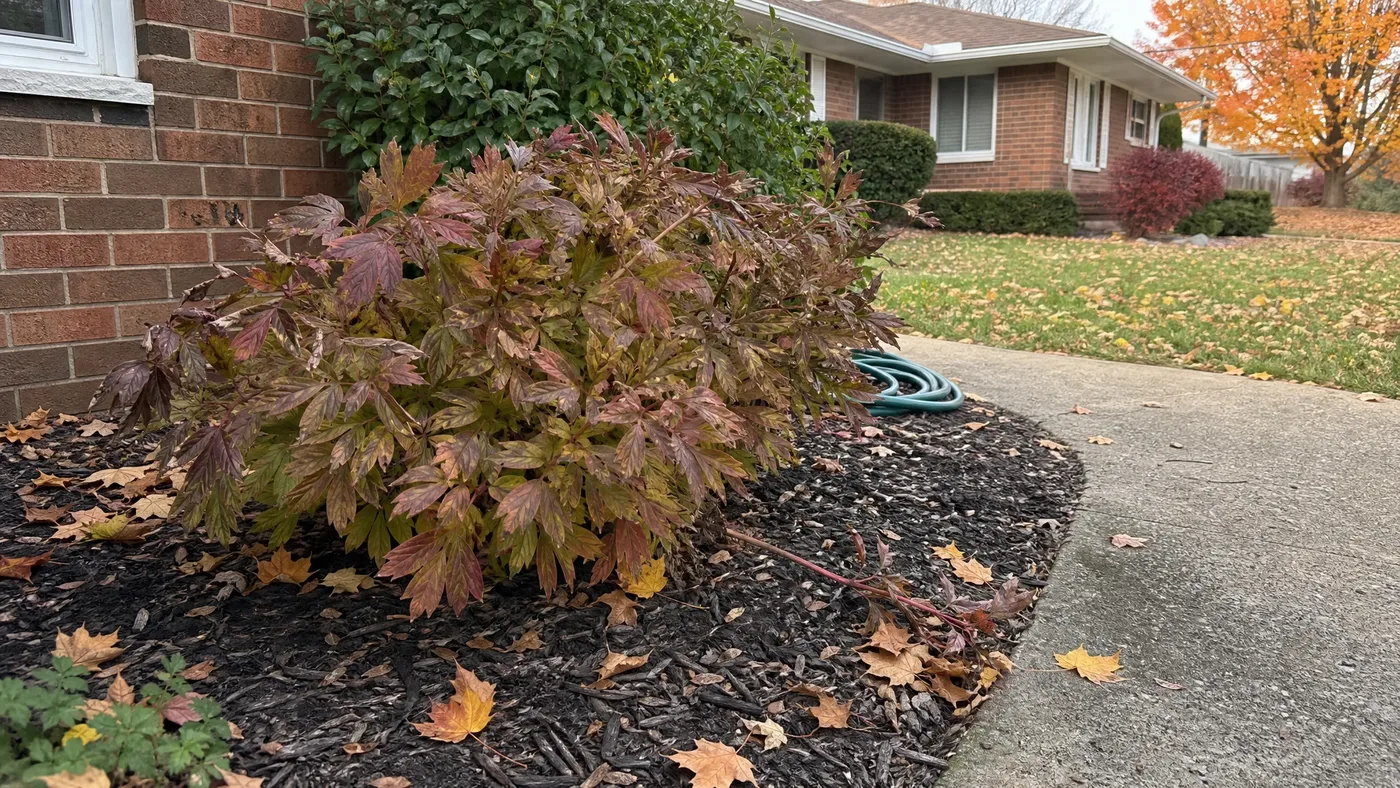
In autumn the foliage can turn yellow or reddish-maroon, and that is normal. Wait for the leaves to collapse or for a hard frost, then cut. Our guide to pruning and cutting back Red Sarah Bernhardt covers the details.
Steps for the Fall Cut
- Wait until the foliage has browned or frost has flattened it.
- Cut every stem to the ground with clean pruners.
- Bag and discard the stems and leaves. Do not compost them.
- Leave the crown alone, and mark the spot so nobody digs there.
Do not cut in summer right after bloom. The leaves keep feeding the roots through the season, and that stored energy builds next year's flowers.
The Yearly Cycle in Order
The plant follows the same sequence every year. Shoots push up in spring. Flowers open in late spring to early summer and last about two weeks. Foliage stays green and tidy through summer, then colors in fall and dies back. The crown sits dormant until the next spring. A bare patch in winter is not a dead plant, and customers often ask us whether they lost it. They did not.
Hardiness Numbers That Follow From the Classification
Herbaceous peonies survive cold because the buds are underground. Penn State Extension gives USDA Zones 3–8 with the right soil and sun, and NC State says they do best in zones 5–7. That is the range we plan around. Our page on hardiness zones for Red Sarah Bernhardt goes further.
Several extension services agree on 3–8, so the number is not in dispute. Treat 5–7 as the sweet spot and the edges as workable with attention to site and soil.
Why the Cold End Helps
Peonies need a cold winter to set flower buds. In the warm end of the range, blooms can thin out, so check with your local extension service on chill requirements for your area. We have no verified chill figure to give you.
Planting Depth
Depth is the number that causes the most failures. Wisconsin extension says to position the plant so the buds are 1–2 inches below the soil surface. Planted deeper, the plant grows leaves and few or no flowers. Our planting guide shows how to set the crown.
Site Figures to Match
Give the plant full sun, which means 6 or more hours of direct light a day, and well-drained, fertile soil. Spacing follows the mature spread, so leave room for a mound of about 3 feet. Shade and wet feet cost you blooms before they cost you the plant.
A Known Name for a Long-Lived Red Sarah Bernhardt Peony
The classification settles a lot. Your plant is Paeonia lactiflora, herbaceous, hardy in zones 3–8, cut to the ground each fall and planted with the buds 1–2 inches down. It does not settle color or breeding history. For those, you rely on the grower and on the flower itself. Expect a slow first few years, but a plant set well can stay for decades.
Check the tag for Paeonia lactiflora, and plant with the buds at the right depth. For the rest of the care, start with our complete care guide.
Red Sarah Bernhardt Peony
Nursery-grown Red Sarah Bernhardt Peony in sizes from #3, shipped to your door.
From $64.99
Shop Now →Red Sarah Bernhardt gets a full day of sun and fertile, freely draining soil in our beds, and that is where the plants you see in our shop come from. Every one we ship was raised in our own rows. Once you have the name and classification sorted and are ready to plant, stop in and look over what we have.