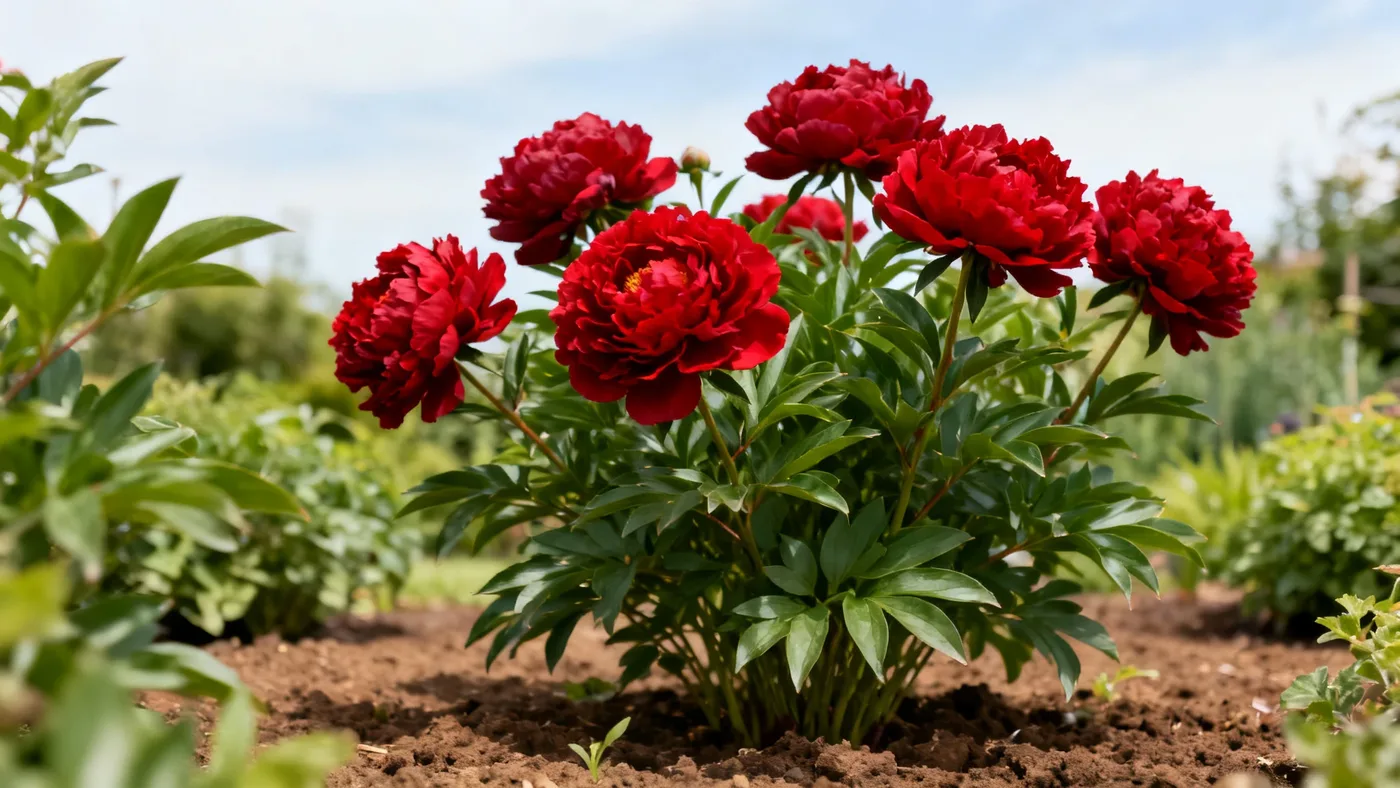
Why Is My Red Sarah Bernhardt Peony Not Blooming?
A Red Sarah Bernhardt Peony with plenty of dark green foliage but zero flowers is frustrating. The plant looks vigorous, so something else is holding back the blooms. In most cases, the problem comes down to one of five fixable issues: the crown sits too deep, sunlight is insufficient, soil lacks what the plant needs, water management is off, or the plant simply needs more time. This guide walks you through diagnosing which issue affects your peony and what to do about it.
Why Peonies Fail to Bloom: The Five Most Common Causes
Before you take action, identify which scenario matches your situation. Each has a different fix.
1. The Crown Was Planted Too Deep
This is the number-one reason a Red Sarah Bernhardt Peony produces leaves but no flowers. When the crown (the knobby area where the roots and shoots meet) sits buried too far below the soil surface, the plant diverts all energy into getting leaves above ground. Blooming never happens until the crown sits at the right depth.
The rule: the eyes (the small buds visible on the crown) should be no more than 1 to 2 inches below the soil surface. Any deeper, and flowering shuts down. This mistake typically happens when peonies are first planted or divided. Gardeners assume "deeper is better" for stability or root protection, but peonies have the opposite requirement.
2. Insufficient Sunlight
Red Sarah Bernhardt Peony blooms best in full sun, meaning 6 or more hours of direct sunlight daily. Light afternoon shade in hot climates is tolerated, but it trades bloom production for heat relief. In partial shade, you get leafy, healthy-looking plants that simply do not flower. This is especially common when peonies are planted under deciduous trees or on the north side of a building.
3. Poor Soil or Drainage Problems
Peonies demand fertile, well-drained loam rich in organic matter. Waterlogged or compacted soil exhausts the plant. If water pools around the base after rain or if the soil feels heavy and clay-like, roots suffocate and flowering stops before it starts. Soil pH should sit between 6.5 and 7.0, slightly acidic to neutral.
4. Watering Mistakes
Too much water is worse than too little for peonies. Mature plants are moderately drought tolerant, but inconsistent watering during establishment stresses them. Overhead watering that wets the foliage also invites fungal problems that weaken the plant. Conversely, soil that dries out completely between waterings can stall bloom development.
5. The Plant Is Too Young
Patience matters. A newly planted or divided Red Sarah Bernhardt Peony typically takes 2 to 3 years to reach significant bloom. The clump does not reach full mature size and flowering power until around 3 to 5 years. If your peony is younger than 3 years old and showing vigorous growth, it is probably on schedule.
Diagnosing Your Peony: Step-by-Step
Step 1: Check the Crown Depth
Gently scrape away mulch and soil from the base of the plant. Expose the crown and count the visible eyes. If the topmost eyes sit deeper than 1 to 2 inches below the soil surface, you have found the culprit. The fix requires lifting and replanting, which should happen in fall (September through October) when the plant is dormant.
If the eyes are already at the correct depth, move to Step 2.
Step 2: Assess Sunlight
Observe the plant's location at mid-morning, noon, and mid-afternoon on a clear day. Count the hours of direct sun it receives. Note whether shade comes from trees, buildings, or other obstructions. If the peony gets fewer than 6 hours of direct sun, light is the limiting factor.
If sunlight looks adequate, move to Step 3.
Step 3: Evaluate Soil and Drainage
After a heavy rain, check whether water stands in the planting area or drains away within a few hours. Dig a small hole near the peony (at least 12 inches away) and feel the soil texture. Crumbly, dark, organic-rich loam is ideal. Dense clay or waterlogged soil needs amendment.
If drainage seems normal, move to Step 4.
Step 4: Review Your Watering Practice
Think back over the past growing season. Did you water from above, wetting the leaves, or at soil level? Did the plant dry out completely between waterings, or stay consistently moist? Ideally, the soil should feel like a wrung-out sponge: moist but not soggy. While establishing (the first year or two), regular watering is essential. Once mature, the plant tolerates drier periods.
If you have made no watering errors and sunlight, soil, and crown depth all check out, move to Step 5.
Step 5: Confirm the Plant's Age
When was the peony planted or divided? If it has been in the ground fewer than 3 years and is growing steadily, blooming may simply not have started yet. This is normal. A healthy young peony is building root mass and clump size before investing in flowers.
Solutions for Each Problem
Fixing Deep Crown Planting
Wait until fall when the foliage dies back (typically after the first hard frost). Dig around the peony clump and carefully lift it out, disturbing the roots as little as possible. Shake off excess soil. Inspect the crown and eyes. Using a sharp, clean spade, divide the clump if it is mature (3+ years old and large enough to split into sections with 3 to 5 eyes each). Each division must have at least 3 eyes to flower.
Replant each clump so that the topmost eyes sit 1 to 2 inches below the final soil surface. Backfill with amended soil and water well. In spring, new shoots will emerge from the correctly positioned eyes. Blooming may begin the following year, though full flowering often takes one more season.
Increasing Sunlight
If the peony is in shade from deciduous trees, pruning higher branches may increase light penetration without removing the tree. If shade comes from a building or permanent structure, consider dividing the clump in fall and relocating it to a sunnier spot. Transplanting is stressful, so expect one off-year before blooming resumes. A peony in the wrong light can be moved, but it must recover before flowering.
Amending Soil
If drainage is poor, dig the area 12 to 18 inches deep and amend with compost or aged manure to lighten the texture. For acidic soil (below 6.5), add lime. For alkaline soil (above 7.0), add sulfur. Test kits from a local extension service give you exact amendments needed. Work amendments in thoroughly around the root zone.
Correcting Watering
From spring through early summer (the establishment and bloom period), water at soil level with 1 to 1.5 inches per week if rain does not provide it. Water early morning to allow foliage to dry quickly. In fall and after blooming, reduce frequency. Once the plant is 3+ years old and established, it needs regular water only during extended dry spells. Never use overhead sprinklers on mature peonies.
Adjusting Fertilizer
If you have been applying high-nitrogen fertilizer (the first number on a bag) to encourage green growth, stop. Heavy nitrogen favors foliage over blooms. In early spring as shoots emerge, apply a low-nitrogen, phosphorus-rich fertilizer such as bone meal or a balanced 5-10-10 formula. A light hand with feeding is always better for peonies than heavy applications.
Waiting for Maturity
If your peony is 1 to 2 years old and otherwise healthy, be patient. The plant is developing its root system and clump size. Small flower buds or even some blooms in year 2 are possible, but significant flowering comes in year 3 and beyond. Ensure the plant gets full sun, good drainage, and moderate water, then let time do its work.
Managing Late Frost Damage (Bud Blast)
In zones 3 to 8, late spring frosts sometimes kill emerging flower buds before they open. The buds blacken and drop, a condition called bud blast. This is not a long-term bloom problem, just bad timing for one season. Little can be done to prevent it once buds have formed, but it does not harm the plant. Blooming returns the following year.
For future springs, monitor the forecast in late April and early May. If a hard frost threatens when buds are visible, cover the plant overnight with a frost cloth or old bed sheet. Uncover it the next morning. This simple step can save a season of blooms in your zone.
Expected Results and Timeline
Once you identify and fix the underlying problem, the plant should respond within the next growing season. Corrections made in fall (replanting the crown, dividing, amending soil) show results the following spring and early summer. Adjustments to watering, sunlight, and fertilizer may spark blooming within weeks to months, depending on when in the growing season you make the change. Do not expect overnight results, but you should see improvement within 12 months.
Companion Actions
While troubleshooting bloom issues, refer to our complete care guide at the complete Red Sarah Bernhardt Peony care guide. For water-specific guidance, the article on how much to water Red Sarah Bernhardt Peony plants details seasonal schedules and soil-moisture targets.
Quick Reference: Bloom Problem Checklist
| Possible Problem | What to Look For | Solution | Expected Timeline |
|---|---|---|---|
| Crown too deep | Eyes buried more than 1-2 in below soil surface | Lift in fall, replant at correct depth | Blooming may resume next spring |
| Insufficient light | Fewer than 6 hours direct sun daily | Relocate or prune shade sources | Blooming within 12 months of move |
| Poor drainage | Water pools after rain; soil feels heavy and wet | Amend with compost; improve drainage | Within one growing season |
| Watering errors | Overhead watering or extreme drying between waters | Switch to soil-level watering; maintain consistent moisture | Within weeks to months |
| Young plant | Peony is younger than 3 years old | Maintain good care and wait | Significant blooming by year 3-5 |
| Bud blast | Buds blackened and dropped after late frost | Cover buds on frost nights; no treatment needed | Normal blooming returns next year |
| High nitrogen fertilizer | Applied heavy feeding or lawn fertilizer nearby | Switch to phosphorus-rich formula (5-10-10 or bone meal) | Within one to two growing seasons |