Is Red Sarah Bernhardt Peony Also Called Fiona?
You slit the box open, pull back the damp packing and find a bareroot division tagged Fiona. Your order form said Red Sarah Bernhardt. For a moment you wonder whether the wrong peony shipped, or whether you paid for one plant and received another that might bloom differently, grow differently or never match the picture you had in mind.
Take a breath. Fiona is a trade name some European bulb and root sellers use for this same cultivar, so the label in your hand is almost certainly a naming quirk and not a mix-up. Peonies are a long game, so it pays to settle this before you dig a hole.
We'll walk you through why Fiona is not a newer introduction, how relabeling works, and whether the name changes bloom timing or the roots in the box, then what to confirm before you pay.
Fiona Must Be a Newer Red Sarah Bernhardt Peony Cultivar
A fresh name feels like a fresh plant. You see Fiona beside a photo of a ruffled, fragrant double and assume a breeder has released an improved selection, maybe with deeper color or sturdier stems. That is a reasonable guess, and it is the one most buyers make first.
The guess does not hold up. Fiona is not a separate introduction. It is a documented alternate name used by growers and root sellers in Europe for the same red sport you know as Red Sarah Bernhardt, and the two names turn up side by side on supplier listings.
Run the Description Test
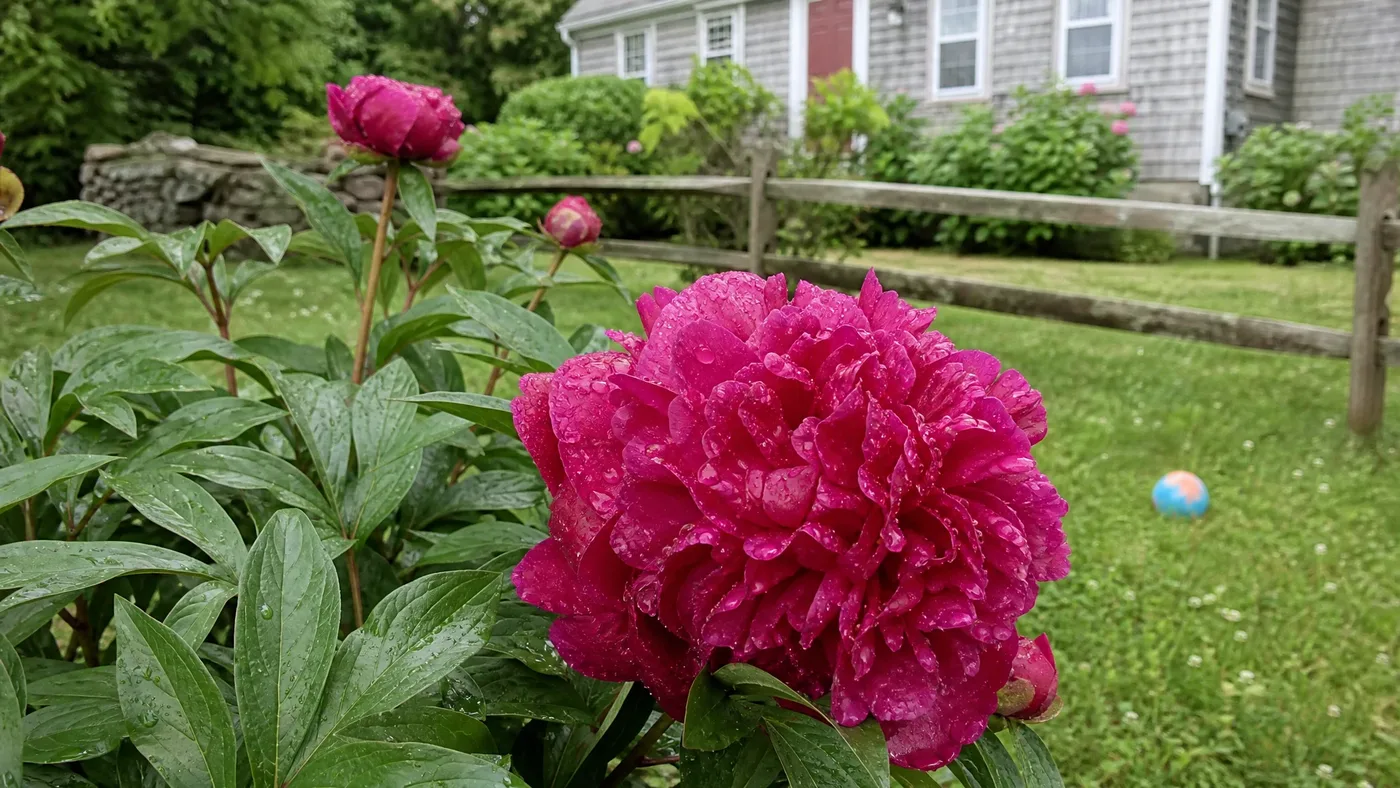
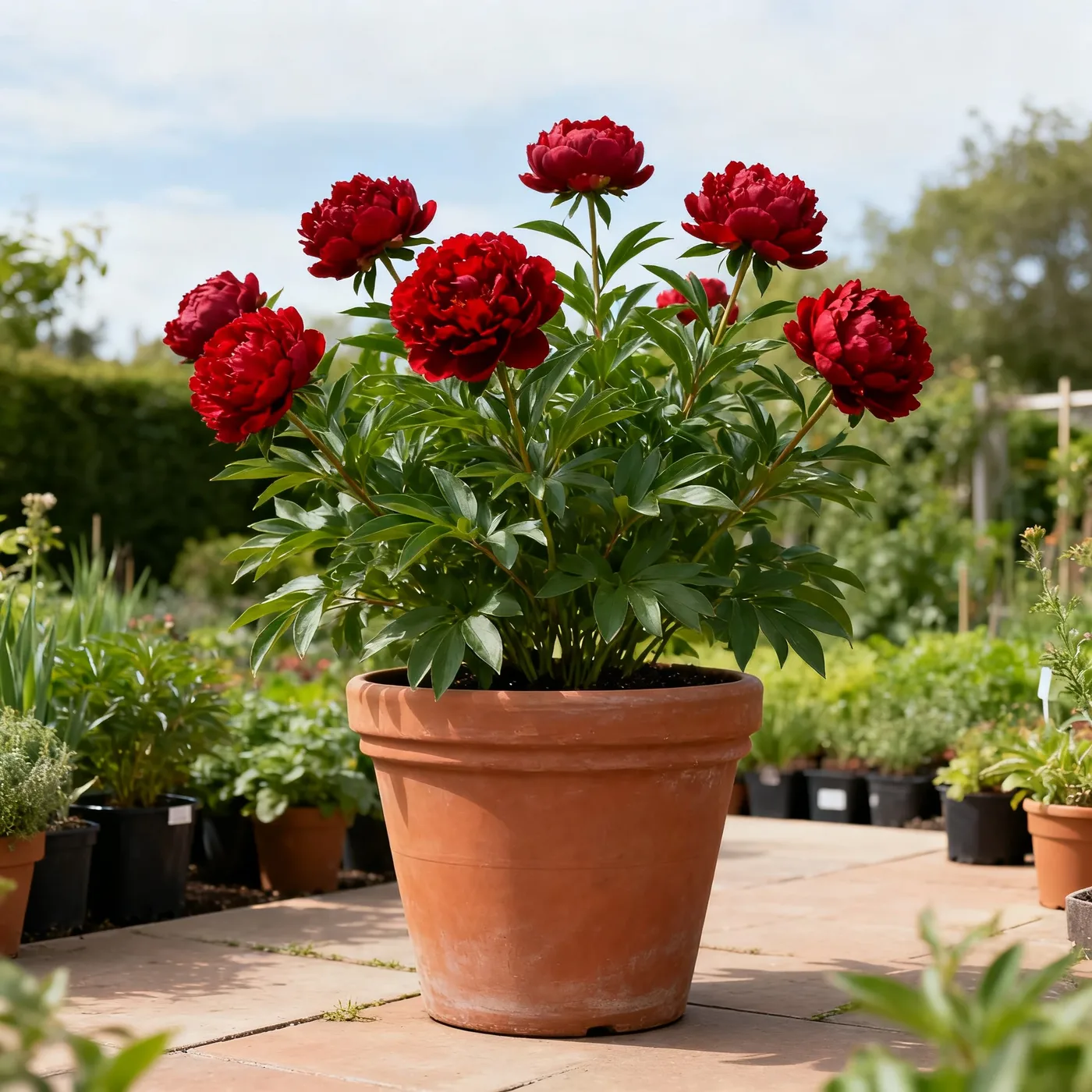
A genuinely different cultivar would differ somewhere you could measure. Compare the descriptions under each name and they line up. Both are double-flowered with fragrant blooms about 6–8 inches across, in dark pinkish-purple petals tinged with red. Both reach roughly 20–39 inches tall and about as wide. Both bloom in late spring into early summer.
That color note matters. This peony is not a plain, bright red, and the "red" in the name is generous. If a listing promises fire-engine scarlet under either label, trust the plant's real description over the marketing.
What "Newer" Would Actually Mean
A true new cultivar comes with a different parentage or a sport that someone selected and propagated, and it carries its own distinct name. Here there is a single established plant and two ways to write it on a tag. If you want to compare the plant with other reds, our guide to Red Sarah Bernhardt and other red peony varieties lays out the real differences.
Does a Different Label Mean a Different Plant?
Picture one clump of this peony in a field, divided into forty pieces. Twenty go to one catalog, twenty to another. Each catalog writes its own name on the bag. Every piece is the same plant, because peonies are increased by dividing the crown, not by seed, so each division is a cutting from the original clone.
Why Sellers Relabel
Sellers relabel for ordinary reasons. A name that sounds familiar in one market can sound clumsy in another, a short trade name fits a small catalog space, and a distributor may standardize names across hundreds of products. None of that touches the plant itself. The name is a handle on the product, not part of the genetics.
It is also why you should not hold a single catalog's spelling up as the truth. The same cultivar can appear with its full name in one place, a shortened version in another and a trade name in a third.
What a Label Cannot Change
A label cannot change how many hours of sun the plant needs, how deep it wants to be planted or how long it takes to settle in. Peonies grow slowly, and NC State rates herbaceous peonies as slow growers hardy in zones 3–8, best in zones 5–7. That holds whichever name is printed on the bag.
So when two listings disagree on the name but agree on the species, color, size and bloom season, treat them as one product. The disagreement is in the paperwork.
Red Sarah Bernhardt Peony Under a European Trade Name
Search for the pairing "red sarah bernhardt fiona" and you will see how it plays out. Several root suppliers list the two names together on one page, sometimes as the title and sometimes as a note under it. Buyers searching in other languages type both names too, which is how the confusion reaches North American gardeners who order from international catalogs.
The trade name belongs to the European bulb and root trade, where peonies are often sold as dormant roots in bulk packaging. The listing names are chosen for that market, and the cultivar name sits underneath. That is why you will see Fiona more on imported or cross-border listings than on domestic ones.
Reading Hardiness on European Listings
One more difference you will hit on those pages is the hardiness rating. European listings often give a code such as H6, which means hardy through roughly –4 to 5°F. That is not a USDA zone, and it does not map neatly onto one.
For a US garden, use zones. Peonies in general do well in USDA zones 3–8, and Penn State Extension confirms zones 3–8 with the right soil and sun. If you garden at the cold end, the plant's dormancy handles winter well. Warm-end gardens in zone 8 should read our guide to hardiness zones for Red Sarah Bernhardt.
Fiona Roots Supposedly Bloom Sooner
One of the most common questions we get is whether roots sold as Fiona establish faster or bloom a year earlier than the same plant sold under its full name. They do not. The name on the bag has no effect on how a root behaves once it is in your ground, so there is no head start to buy.
What Actually Drives First Bloom
Planting depth causes more empty springs than anything else. Colorado State says the eyes should sit no more than one inch below the soil surface, and Iowa State gives a range of 1 to 2 inches. Either way, too deep is the usual reason a healthy peony produces leaves and no flowers. Our guide to planting Red Sarah Bernhardt walks through the hole step by step.
Sun is next. Peonies flower best with at least six to eight hours of direct light, and shade cuts bloom. The size of the division matters too, because a piece with more eyes and a good root system has more to work with in its first year.
What Sets the Date Each Year
Bloom season belongs to the cultivar and the weather. The University of Illinois notes that depending on the species and cultivar, peonies bloom from late spring to early summer. A warm spring pulls the whole show forward and a cold one pushes it back, whatever label the plant came with.
Expect to wait. A newly planted division commonly needs a few seasons before it flowers well, and that wait is part of the bargain with a peony. If yours is still silent after that, work through why your Red Sarah Bernhardt is not blooming before you blame the name.
Red Sarah Bernhardt Peony Roots Match Fiona Roots
Lay the two bags side by side and you will see two different packing slips, maybe different bag colors and a different font. Open them and you will see the same thing: fleshy, brittle-looking roots with a cluster of buds on a short crown. What is in the box depends on the supplier's grading and storage, not on which name is printed on it.
This table sets out what you can and cannot learn from each label once the roots are in your hands.
| What you check | Does the label change it? | What to look at instead |
|---|---|---|
| Cultivar identity | No, both names point to one cultivar | The supplier's full listing and botanical name |
| Number of eyes | No, it varies by division | Count the buds, aiming for three to five |
| Root condition | No, it varies by storage | Firm roots, no mold, no soft rot |
| Flower color | No | Dark pinkish-purple tinged with red at first bloom |
What You Can and Cannot Tell by Looking
You cannot confirm a cultivar from a dormant root. Nobody can, not you and not us. Peony divisions of different cultivars look alike in the box, so what you rely on is the supplier's honesty and records. First bloom is the real test.
What you can judge is quality. Iowa State advises that each division have three to five buds (eyes) and a good root system. Check that, reject anything soft or moldy, and plant the rest. In our rows, the roots that struggle are rarely the ones with an odd label. They are the ones that sat in a warm hallway for a week.
Ordering Red Sarah Bernhardt Peony Under Either Name
The practical answer is that you can buy under either name and get the same plant, as long as the listing gives you enough to be sure. A bare "Fiona" with no cultivar name and no photo is a thinner promise than a listing that names both. Our plants go out labeled Red Sarah Bernhardt, so the tag matches your order.
Before You Pay
Run through this short list before you check out, whichever name is on the page:
- Look for Red Sarah Bernhardt spelled out somewhere on the listing, even if Fiona is the headline, ideally with the botanical name Paeonia lactiflora.
- Check that the photo shows a double bloom in dark pinkish-purple tinged with red, not a bright scarlet single.
- Ask how many eyes each division carries and how the roots are packed and shipped.
- Read the hardiness line in USDA zones, since a European code will not tell you if it suits your garden.
- Keep the listing page or confirmation email, so you have the supplier's exact wording later.
If the Label and the Listing Disagree
If the tag says Fiona and the listing says Red Sarah Bernhardt, that is the expected overlap and no reason to return anything. If the tag names a third cultivar entirely, contact the seller before you plant. Our buying guide for Red Sarah Bernhardt covers sizes and what to expect on arrival.
Red Sarah Bernhardt Peony Keeps One Name in Your Garden
Fiona and Red Sarah Bernhardt are one cultivar written two ways. The trade name comes from the European root trade, it does not mark a newer plant, and it does not speed up bloom or change what sits in the box. Plant at the right depth, give it sun and be patient.
One small habit settles the question for good: write the cultivar name from the supplier's listing on the plant tag, so the label question never comes up again.
Red Sarah Bernhardt Peony
Nursery-grown Red Sarah Bernhardt Peony in sizes from #3, shipped to your door.
From $64.99
Shop Now →Our Red Sarah Bernhardt peonies are raised in beds that get full sun and drain well, which is the setup we would pick for your garden too. Since we are a small business that grows its own stock, we know this plant under both of its names. Have a look at what is in stock now, and bring home the one you have been reading about.