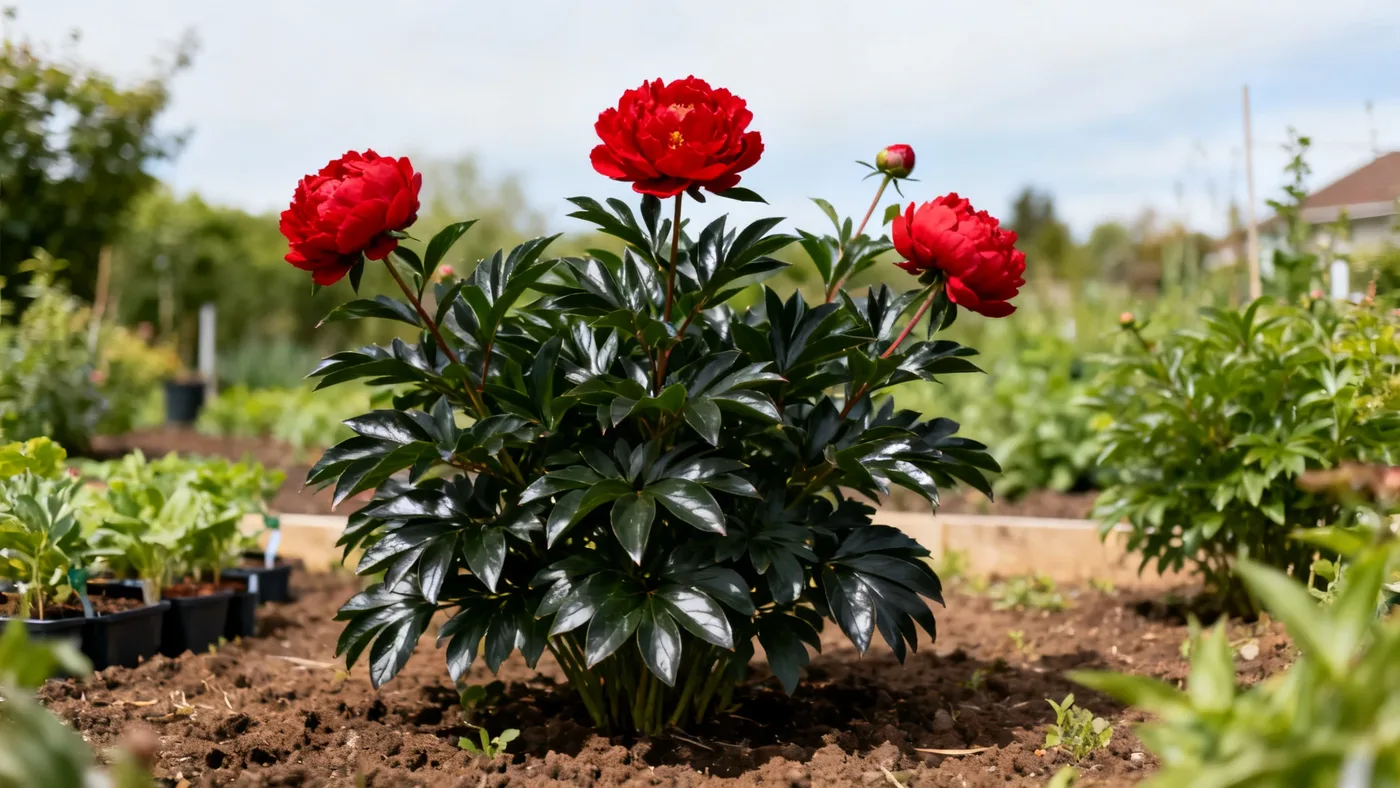
Red Sarah Bernhardt Peony and Other Red Peony Varieties
If you're shopping for a showstopping red peony, you'll quickly discover that the red peony market is more varied than many gardeners expect. While pink peonies dominate nursery shelves, red varieties offer a dramatic alternative for border plantings, cutting gardens, and foundation designs. The trick is knowing which cultivar fits your zone, your aesthetic, and your maintenance preferences.
Red Sarah Bernhardt Peony stands out as a bold red option in the lactiflora family, but it's far from the only choice. This guide compares the top red peony varieties so you can decide which one deserves space in your garden.
1. Red Sarah Bernhardt Peony
Red Sarah Bernhardt Peony produces deep red, fully double blooms that arrive in late spring to early summer, typically in May through June depending on your zone. The plant reaches 24 to 36 inches tall and wide at maturity, with glossy, deeply lobed dark green foliage that often turns bronze or burgundy before dying back in fall. It thrives in zones 3 through 8 and prefers full sun (6 or more hours daily), though it tolerates light afternoon shade in hotter climates.
Planted in fall or early spring while dormant, Red Sarah Bernhardt establishes best when the crown is set with eyes no more than 1 to 2 inches below the soil surface. Space plants 3 to 4 feet apart to allow air circulation and room for the clumps to thicken over several years. The plant reaches significant bloom by the second or third year after planting, with full mature size around year 3 to 5. Once established, it becomes moderately drought tolerant and requires minimal maintenance beyond deadheading spent blooms and cutting back foliage to 2 to 3 inches above ground in late fall after frost.
Practical takeaway: Choose Red Sarah Bernhardt if you want a deep red double peony for zones 3 to 8 that settles into a low-maintenance perennial border. The cultivar's mild to moderate fragrance adds another dimension to cut arrangements.
2. Karl Rosenfield
Karl Rosenfield is often considered the quintessential deep red peony cultivar. It produces crimson-red double blooms that are slightly more compact than some other reds, making it excellent for arrangements and smaller garden spaces. The plant grows 24 to 36 inches tall and wide, blooming in the same late-spring window as Red Sarah Bernhardt. It performs well in zones 3 through 8 and shares the same sun and spacing requirements: full sun and 3 to 4 feet between plants.
One key difference is that Karl Rosenfield tends to have sturdier stems than some double reds, meaning you may face less flopping under heavy blooms in wet weather, though staking is still recommended for high-impact display. The foliage is equally attractive, turning deep burgundy in fall. Because it's a well-established, widely documented cultivar, nurseries stock it consistently, and you'll find abundant growing information available. It divides readily in fall if you want to expand your planting or share plants with fellow gardeners.
Practical takeaway: Select Karl Rosenfield if you prioritize stem strength and widespread availability. It's the safest bet for a guaranteed deep red double peony that you can source from any major nursery.
3. Red Charm
Red Charm is a lesser-known but worthy red peony that produces rich burgundy-red double blooms with slightly ruffled petals. The plant reaches 24 to 36 inches tall and wide, fitting seamlessly into the same growing envelope as Red Sarah Bernhardt and Karl Rosenfield. It blooms in late spring to early summer and thrives in zones 3 through 8, with identical sun and spacing needs: full sun (6+ hours) and 3 to 4 feet between plants.
The main appeal of Red Charm is its subtle color depth. While Karl Rosenfield and Red Sarah Bernhardt are loud, unmistakable reds, Red Charm pulls back toward burgundy with more complexity. This makes it easier to pair with other perennials in mixed borders, particularly if you're planting alongside companion flowers like bearded iris, catmint, or alliums. Red Charm is slightly less common in commerce than Karl Rosenfield, so sourcing may require a specialty nursery order, but the wait is worth it if the softer tone matches your design vision.
Practical takeaway: Choose Red Charm for a burgundy-leaning red that feels more sophisticated in mixed plantings than a true scarlet. Expect a longer lead time to source it.
4. Kansas
Kansas is a single-to-semi-double red peony with a different aesthetic altogether. Unlike the heavily doubled varieties above, Kansas produces red blooms with fewer petals and a more open center, often showing prominent yellow stamens. The plant still reaches 24 to 36 inches tall and wide, blooming in the same May-June window in zones 3 through 8. Sun, spacing, and planting depth requirements are identical: full sun, 3 to 4 feet apart, eyes 1 to 2 inches below soil surface.
The single-to-semi-double form means less flopping under rain, lighter stems, and a more airy garden presence. Kansas is also commonly used in cutting gardens because the open face and stamens create dynamic arrangements. However, if you're drawn to peonies for their full, luxurious double blooms, Kansas won't deliver that signature look. It's best viewed as a complementary choice rather than a primary peony, useful for adding textural variety to a planting that already includes one or two full doubles.
Practical takeaway: Pick Kansas if you want a red peony with less formal structure and better rain tolerance. It suits cutting gardens and transitional borders where single blooms make sense.
5. Sarah Bernhardt (The Pink Original)
Here's where the confusion typically begins. Sarah Bernhardt is a classic pink double peony, not red. If you've accidentally ordered this cultivar thinking it was red, you're not alone. The similar name and widespread popularity of Sarah Bernhardt make it an easy mix-up at checkout. The original Sarah Bernhardt produces soft pink double blooms and reaches the same mature size (24 to 36 inches tall and wide) in zones 3 through 8 with identical growing requirements.
The key takeaway: if you're specifically hunting for red peonies, verify the cultivar name and ask your nursery for a photo before ordering. Sarah Bernhardt is pink. Red Sarah Bernhardt, Karl Rosenfield, Red Charm, and Kansas are the true reds. The pink original does make an excellent companion plant if you want to create a multi-colored peony display, but it should not be your default if red is your goal.
Practical takeaway: Double-check cultivar names before purchasing. Sarah Bernhardt is pink; don't confuse it with the red varieties above. Use it as a color contrast if you're planting multiple peonies.
6. How to Choose the Right Red Peony for Your Garden
All five peonies above thrive in zones 3 through 8, reach 24 to 36 inches tall, and need full sun and 3 to 4 feet of spacing. The differences lie in bloom form, color depth, stem strength, and availability. Start by deciding whether you want a full double bloom (Red Sarah Bernhardt, Karl Rosenfield, Red Charm) or a lighter, single form (Kansas). Next, assess your climate and soil: if you live in a high-rain region, stem strength matters, so lean toward Karl Rosenfield. If you're in a drier zone 3 climate, any of these cultivars will settle in and become quite drought tolerant once established.
Consider your landscape role. For cutting gardens and mixed borders where you'll see the flower up close, Red Charm's burgundy tone and Kansas's textural single form offer more refinement. For bold statement plantings and mass displays, Karl Rosenfield's deep crimson commands attention from across the yard. Red Sarah Bernhardt splits the difference: it's a true red with double form and good garden presence without being overwhelming. Finally, source your plants in fall if possible (though early spring also works), and commit to the 2 to 3 year establishment timeline before expecting peak bloom. Once your red peony matures, it will flower reliably for decades with minimal fuss.
For detailed care guidance specific to Red Sarah Bernhardt, read our complete care guide. And if you want to expand your planting later, our guide to dividing peonies walks you through the process step by step.
Practical takeaway: Match the cultivar to your zone, light, and design intent. All perform identically on the hardiness and spacing fronts, so choose by bloom form and color preference.
Quick Reference: Red Peony Varieties at a Glance
| Cultivar | Hardiness | Bloom Form | Bloom Time | Height × Width | Sun | Spacing | Best For |
|---|---|---|---|---|---|---|---|
| Red Sarah Bernhardt | Zones 3–8 | Full double | May–June | 24–36" × 24–36" | 6+ hours full sun | 3–4 ft apart | Bold borders, cutting gardens |
| Karl Rosenfield | Zones 3–8 | Full double | May–June | 24–36" × 24–36" | 6+ hours full sun | 3–4 ft apart | Stem strength, mass plantings |
| Red Charm | Zones 3–8 | Full double | May–June | 24–36" × 24–36" | 6+ hours full sun | 3–4 ft apart | Mixed borders, sophisticated tone |
| Kansas | Zones 3–8 | Single/semi-double | May–June | 24–36" × 24–36" | 6+ hours full sun | 3–4 ft apart | Cutting gardens, rain-prone areas |
| Sarah Bernhardt (pink) | Zones 3–8 | Full double | May–June | 24–36" × 24–36" | 6+ hours full sun | 3–4 ft apart | Color contrast, not a red option |