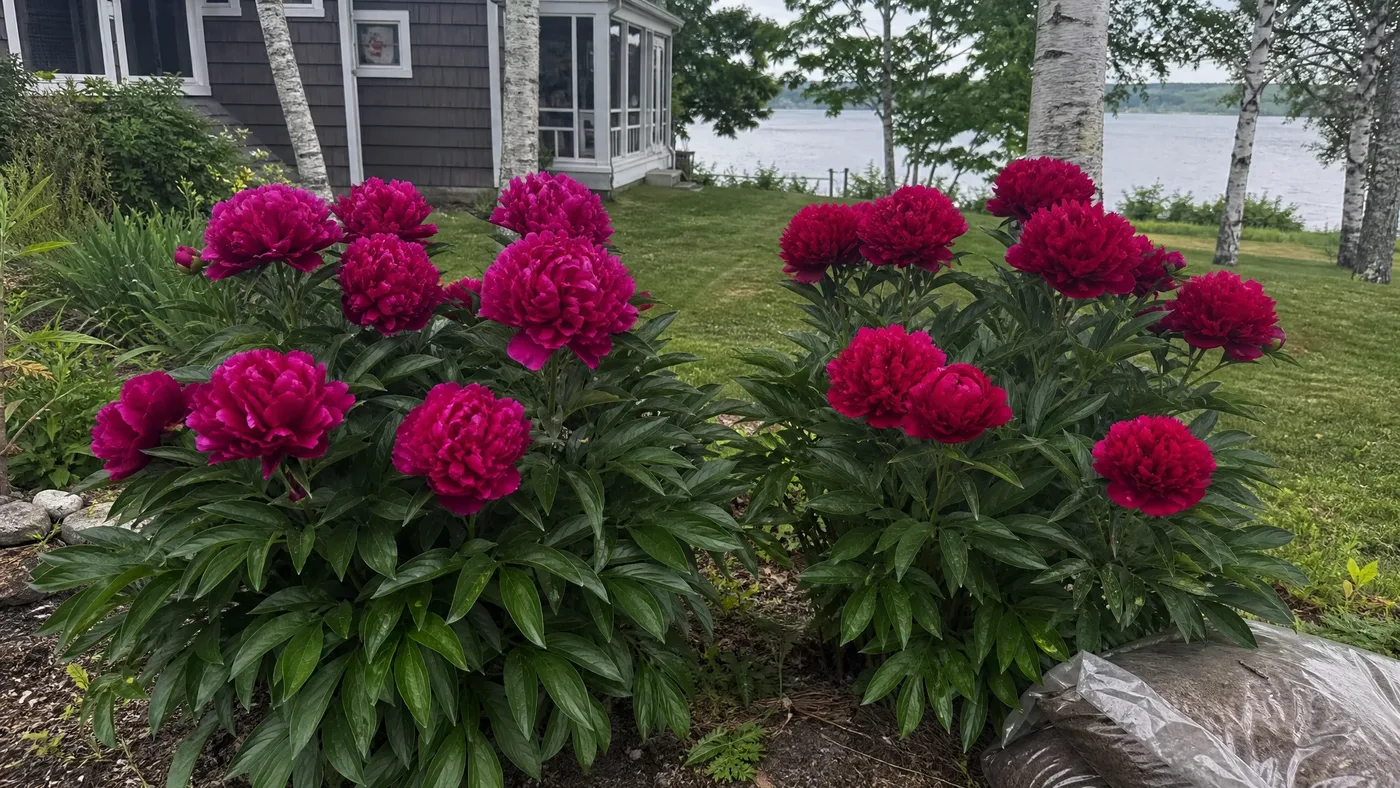
Red Sarah Bernhardt Peony vs Felix Crousse Peony: Color and Fragrance
Ten years is the number that frames this choice. A peony planted this fall may give you only a few blooms in its early seasons, then settle into decades of June flowers, so the plant you pick now is the one you will live with for a long time. If you have room and budget for exactly one fragrant red double, the shortlist usually comes down to Red Sarah Bernhardt and Felix Crousse.
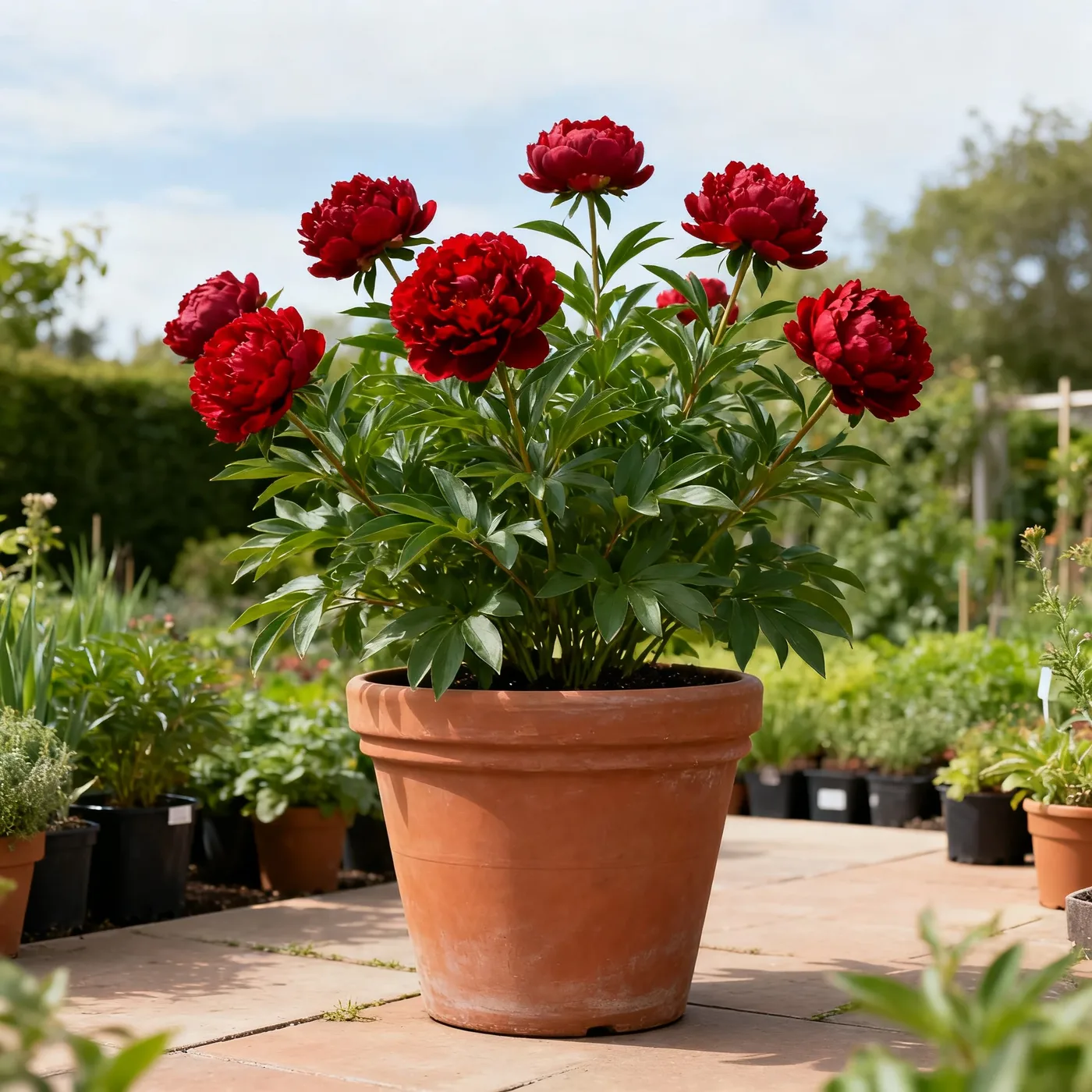
Both are fragrant doubles that stand roughly 3 feet tall, and both want full sun and good drainage. The differences look small on paper and large in the border: color depth, scent, timing, and how much staking you will do each spring. This article talks about those four criteria plus ten-year cost, and answers the questions customers ask us most. Read on to learn which one we would choose, and for whom.
Which Red Reads Richer in the Border
Start with the word "red," because it is the one that causes trouble. Red Sarah Bernhardt carries dark pinkish-purple petals tinged with red, which is not the same as plainly red, and the double blooms run about 6–8 inches across. Felix Crousse is the plainer rose-red of the pair, the one that reads as red from across the lawn. If your picture of the bed is a true red, that is a point for Felix Crousse. If your picture is depth, Red Sarah Bernhardt has more of it.
In Full Sun and in Shade
Peonies flower best with at least six to eight hours of sunlight per day, and we would plant either one there. Where a bed gets afternoon shade, the darker Red Sarah Bernhardt tends to look moodier and richer, while a brighter rose-red can glow more in the same light. Neither color is improved by deep shade, which cuts the number of flowers for both.
Think about what stands behind the plant, too. Dark petals disappear against a dark fence or a shaded hedge, and they sing against pale stone, silver foliage or a whitewashed wall. A brighter rose-red holds its own against almost any backdrop, which makes Felix Crousse the easier plant to place without planning.
In the Vase
Cut stems change the judgment, because a bloom in a vase is seen up close, against green foliage and a wall. A dark, heavy double holds a room in a way a lighter rose-red does not, and Red Sarah Bernhardt is the fuller, weightier flower of the two. Felix Crousse cuts well too, and its brighter tone carries across a table. Our advice is to decide which color you will walk past every day and plant that one.
Verdict: Red Sarah Bernhardt wins on depth and richness. Felix Crousse wins if you want the truest red. For the full color story, our bloom time and flower color guide goes further.
Red Sarah Bernhardt Peony Scent Against Felix Crousse
Scent is where the two part ways most clearly. Felix Crousse has the stronger, sweeter fragrance, and it is the reason many people shortlist it at all. Red Sarah Bernhardt is fragrant, but milder, and what we tell customers is to expect a soft sweetness you notice when you lean in or when a few stems sit in a room, not a perfume that fills the garden on its own. Part of this is the plant and part is the weather, since warm, still mornings carry scent further than cool, windy ones.
Placement matters more than people expect. A peony beside a path, a gate or a bench gets smelled. The same plant at the back of a wide border gets seen and rarely sniffed. If scent is your top criterion, put whichever you choose within arm's reach of where you walk, and cut stems for the house, where a mild fragrance becomes easy to enjoy.
We often see customers expect every red double to smell the same, and it does not work that way. Our fragrance guide for Red Sarah Bernhardt sets realistic expectations for the milder side of this pairing. If a strong scent decides the matter for you, do not argue yourself out of Felix Crousse.
Verdict: Felix Crousse, clearly. Red Sarah Bernhardt is pleasant and never pushy.
Red Sarah Bernhardt Peony Bloom Timing and Show Length
Felix Crousse opens slightly earlier in midseason, and Red Sarah Bernhardt follows later. The gap is a matter of days, not weeks, and it shifts with spring weather and your zone. Extension sources agree that peonies bloom from late spring to early summer depending on the cultivar, so the order holds even if the dates move. Check your local extension service for the typical peak in your area.
Each plant blooms for about two weeks, which is the real limit on any single peony. That is why one plant never gives a long season, however good it is. The timing difference also means the two overlap only partly. Felix Crousse starts the show and Red Sarah Bernhardt carries it on, so a bed with both stretches the red season noticeably past what either gives alone.
If You Can Only Plant One
One plant is a two-week event, and the question is which two weeks you want. Earlier suits gardeners who want color before the heat of early summer arrives. Later suits those who would rather the peonies follow the first flush of other bloomers. A hot, stormy spell hurts a late bloom's heavy flowers more, so keep that in mind in a windy site.
After the flowers fade, both plants give you the same thing: a mound of dark green foliage that can turn yellow or reddish-maroon in autumn. That means the bed keeps earning its space long after June, whichever name you choose.
Verdict: Neither wins outright. Felix Crousse is first, and Red Sarah Bernhardt is the better choice to follow it. Together they lengthen the show.
What Red Sarah Bernhardt Peony Stems Cost in Staking
Staking is a recurring cost, paid in minutes each spring and in a few supplies, and it is the criterion buyers forget. Both plants reach a similar height. Felix Crousse stands 34–36 inches, and Red Sarah Bernhardt tops out between about 20 and 39 inches depending on conditions. The difference is not height but head weight.
Red Sarah Bernhardt carries the heavier bloom, and after a rain those big rose-form flowers drag stems down. Tall herbaceous peonies with large, full flowers require staking to remain upright, and Red Sarah Bernhardt fits that description more than Felix Crousse does.
Felix Crousse needs less support, which is a real saving over a decade. The work in either case is small if you do it at the right time, which is early, when shoots are a foot or so tall. Staking after the buds are heavy is harder and often leaves bent stems.
Here is what we recommend for the heavier bloomer:
- Set a grow-through hoop or ring over the crown in early spring, before the stems are tall enough to be damaged.
- Let the foliage grow up through the support, so the hoop disappears by bud time.
- Check the ties after a hard rain, since wet blooms are the heaviest they ever get.
- Cut a few stems before storms are forecast, which also gives you the vase flowers.
Reusing the same hoops each year makes the real cost close to zero after the first season, so this is a smaller criterion than it first appears. Where it does matter is a windy or exposed bed, or a gardener who travels in May and cannot catch the shoots in time.
Verdict: Felix Crousse, for lower upkeep. Red Sarah Bernhardt asks for a hoop and gives a heavier bloom in return.
Red Sarah Bernhardt Peony Cost Over Ten Years
We do not quote prices here, because they change with plant size and season, so use this section as a framework and compare current numbers when you shop. Our buying guide explains how plant size affects what you pay and how soon you see flowers. Felix Crousse, introduced in 1881, is an old cultivar, and availability can vary from year to year, so confirm it is in stock before you plan a bed around it.
What the Wait Buys
Growth is slow, and that shapes the payoff. In the first seasons you are paying for a clump that is still building, with few flowers and maybe none. The return comes later, and it comes every year without replanting.
Hardiness runs across zones 3 to 8 for the Sarah Bernhardt peony, so most US gardens qualify. We would ask your local extension service to confirm hardiness for Felix Crousse in your area.
The Ten-Year Ledger
The ledger is simple. The purchase price is paid once. Upkeep is the staking above, plus the usual fall cut-back, and neither plant needs more than that. Our care guide covers the routine.
Planting depth matters more than any other cost. Penn State Extension warns that if planted too deeply, flowers will not emerge in the spring, and years of waiting go to waste. Keep the eyes covered by only 1–2 inches of soil, whichever name you plant.
Verdict: Roughly a tie on payoff. Felix Crousse costs slightly less in upkeep, and Red Sarah Bernhardt gives the heavier bloom for each year of waiting.
Which One Earns Your Bed Space
Turning the verdicts into a decision means weighing what you will miss. The table below pairs common situations with what we would plant.
| Your situation | Our pick |
|---|---|
| One plant, scent matters most | Felix Crousse |
| One plant, you want the deepest color and a heavy vase flower | Red Sarah Bernhardt |
| Tight budget for upkeep time, no appetite for staking | Felix Crousse |
| Room for two, and you want the longest red season | Both, Felix Crousse first |
A small bed is a different problem from a large one. Where you have room for one plant, choose by the table. Where you have room for several, plant both and let the overlap work for you. Our roundup of other red peonies is useful if neither fits.
Budget works the same way. If you can buy only one plant this year, buy the one whose strength you would miss most, and treat the second as a later purchase once the first has settled in. Peonies resent being moved, so leave each a full 3 feet or so of room to grow, and plan the pair before you dig rather than after.
Choosing Between Red Sarah Bernhardt Peony and Felix Crousse
Felix Crousse wins on scent, earlier bloom and lighter staking, and it is the plainer red. Red Sarah Bernhardt wins on color depth and bloom weight, and it follows later. Both are slow, long-lived plants that repay patience, so neither is a wrong choice, only a different one.
The simple rule is this: if only one fits the bed, pick by the criterion you would miss most in June, and plant the other later if space opens up.
Red Sarah Bernhardt Peony
Nursery-grown Red Sarah Bernhardt Peony in sizes from #3, shipped to your door.
From $64.99
Shop Now →Red Sarah Bernhardt does best in our beds with a full day of sun and soil that is fertile and drains freely. Every plant we sell, this peony included, is grown on our own farms and is a top-quality plant. If the deep color has you leaning its way, see what is in stock right now in our shop.