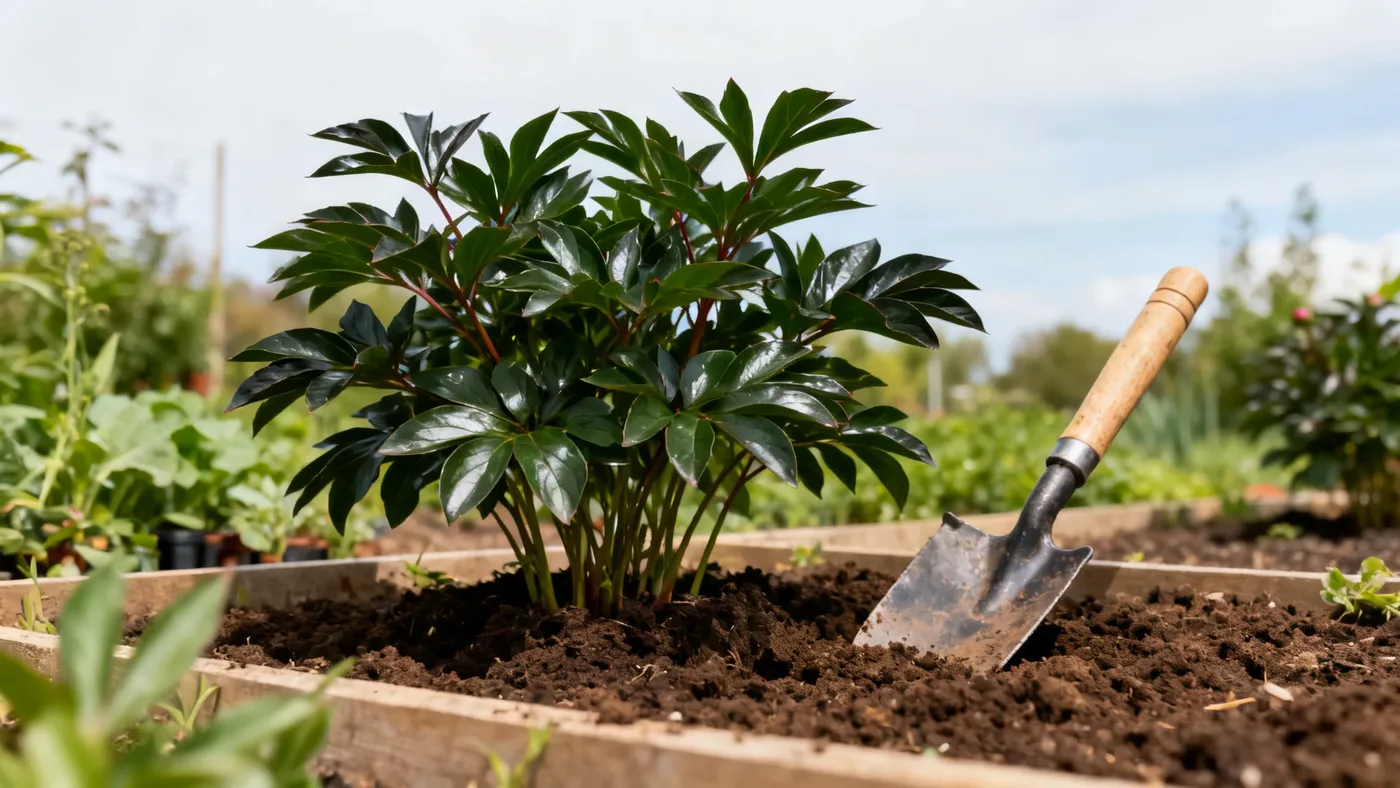
How to Divide Red Sarah Bernhardt Peony Plants
Dividing Red Sarah Bernhardt Peony plants is one of the most reliable ways to propagate this long-lived perennial. Unlike seed propagation, which does not produce plants identical to the parent, division ensures you get the same deep red double blooms year after year. A mature clump can produce multiple new plants, each capable of flowering for decades in your garden.
Why Divide Your Red Sarah Bernhardt Peony
Dividing serves two main purposes. First, it allows you to propagate the plant without relying on seed. Second, it refreshes an aging clump by removing dead or diseased sections of the root system. After 5 to 8 years, a peony clump may benefit from division, though peonies can thrive for 20 to 50 or more years without intervention.
Each division you create becomes an independent plant capable of reaching 24 to 36 inches tall and wide at maturity. Proper spacing of 3 to 4 feet apart allows mature clumps to develop without crowding, and each new plant will reach significant bloom size within 2 to 3 years after division.
When to Divide Red Sarah Bernhardt Peony
Timing is critical for division success. Fall is the preferred season for dividing peonies because it allows newly planted divisions time to establish roots before winter dormancy and the spring growing season. In colder climates within USDA zones 3 to 5, divide in late August through September so divisions have 4 to 6 weeks to settle before hard frost. In zones 6 to 8, late September through October works well.
You can also divide in early spring while the plant is still dormant, before shoots emerge from the soil. This works best in warmer zones where soil thaws early. However, spring division gives roots less time to establish before the heat of summer, so fall is generally more reliable.
Do not divide during the growing season or after the plant has begun flowering. Digging during active growth stresses the plant and reduces its ability to recover.
What You Will Need
- A sharp garden spade or digging fork
- Pruning shears or a handsaw
- A clean knife (a serrated utility knife works well for cutting the roots)
- Buckets of water
- Well-draining garden soil rich in organic matter, pH 6.5 to 7.0
- Bone meal or a balanced 5-10-10 fertilizer (optional but recommended)
- Work gloves and eye protection
- A tarp or sheet to work on (keeps roots moist and organized)
Step-by-Step Instructions for Dividing Peonies
Step 1: Cut Back the Foliage
In late fall after frost has killed the top growth, or in early fall when dividing an older clump, cut the foliage back to 2 to 3 inches above the soil surface. Use clean pruning shears and dispose of the foliage in your compost or yard waste. This gives you a clear view of the crown and makes digging easier.
Step 2: Dig Out the Entire Clump
Using a sharp garden spade, begin digging around the perimeter of the clump about 12 inches out from the visible stems. Work slowly and carefully, as peony roots run deep and sideways. Loosen the soil on all sides before attempting to lift the clump. Once the soil is sufficiently loosened, use the spade as a lever or switch to a digging fork to carefully lift the entire root mass from the ground. This clump may weigh 15 to 30 pounds, so take time and avoid breaking roots.
Step 3: Rinse the Roots
Gently rinse the root clump with water from a hose to remove soil. Use low pressure so you do not damage the fine roots or the eyes (growth points) at the crown. Once most of the soil is gone, you will see the structure clearly. The crown is the dense, knobby upper section where multiple stems emerged. Below it extend the thick storage roots.
Step 4: Identify the Eyes and Plan Your Cuts
Eyes are small reddish or pinkish buds on the crown. Each new division must contain at least 3 to 5 eyes to flower reliably. Study the crown and mentally map where you will make cuts to divide it into sections, ensuring each has the required number of eyes. If you are uncertain whether a section has enough eyes, leave it with 4 or 5 to be safe.
Step 5: Divide the Clump
Using a clean, sharp knife or serrated saw, cut the crown into pieces. Each division should have 3 to 5 eyes and a good section of thick root attached (ideally 4 to 6 inches of root per division). Make cuts decisively to minimize damage. If a piece has rotted areas, cut those away cleanly. Remove any mushy or blackened root tissue, as this indicates disease.
A large, healthy clump might yield 3 to 5 divisions; some larger plants can produce more. A small clump may divide into just 2 or 3 pieces. It is better to divide conservatively and keep larger pieces than to create weak divisions with too few eyes.
Step 6: Prepare the Planting Sites
Choose a location with full sun (6 or more hours daily) and well-draining soil. Peonies do not tolerate waterlogged soil. Amend the planting hole with compost or well-rotted organic matter to improve drainage and fertility. The soil should be slightly acidic to neutral, pH 6.5 to 7.0.
If your soil is heavy clay, work in extra organic matter or consider creating a raised planting area. Space each new division 3 to 4 feet from neighboring plants to allow for mature spread.
Step 7: Plant Each Division
Dig a hole deep and wide enough to accommodate the roots without crowding. The critical step here is depth: the eyes of the newly planted division should be no more than 1 to 2 inches below the soil surface. Planting too deeply is the most common reason peonies fail to bloom. Planting too shallowly exposes the eyes to freezing and drying.
Set the division in the hole with roots spread naturally. Backfill with amended soil, firm gently, and water thoroughly to eliminate air pockets. Apply a light mulch (1 inch of shredded bark or compost) around the base, staying back a few inches from the stems.
Step 8: Water and Monitor
Water each new division regularly during fall so roots can establish before winter. If you divide in spring, water consistently through the first growing season, especially during dry spells. Once established, mature peonies are moderately drought tolerant, but new divisions benefit from regular moisture for the first year.
Common Mistakes to Avoid
- Planting too deep: Eyes buried more than 2 inches deep often fail to sprout or flower. This is the most frequent reason for disappointment with newly planted divisions.
- Dividing into pieces too small: Divisions with fewer than 3 eyes may survive but will take longer to flower, or may not flower at all the first years. Aim for 4 to 5 eyes per piece.
- Poor drainage: Waterlogged soil causes root rot. Amend heavy clay soil generously with compost before planting.
- Dividing at the wrong time: Spring or summer division stresses the plant. Fall division gives the best chance of success, especially in cooler zones.
- Rough handling of roots: Torn or crushed roots are entry points for disease. Work gently and keep roots moist until planting.
- Planting too close to other plants: Crowded peonies develop poor air circulation, leading to fungal issues. Space divisions 3 to 4 feet apart.
What to Expect After Division
Newly divided peonies may produce weak growth or no blooms during their first year or two. This is normal and does not indicate failure. The plant is investing energy in root establishment. By year 2 or 3, you should see significant flowering. By year 3 to 5, the clump will reach mature size (24 to 36 inches tall and wide) and produce abundant blooms.
Apply a balanced 5-10-10 fertilizer or bone meal in early spring as shoots emerge each year. Avoid high-nitrogen fertilizers, which promote foliage at the expense of blooms. Once established, peonies need minimal feeding.
Your divided Red Sarah Bernhardt Peony plants will reward patience with decades of deep red, sweetly fragrant double blooms. Read our complete Red Sarah Bernhardt Peony care guide for detailed year-round maintenance. If you're troubleshooting blooming issues, our guide on why your Red Sarah Bernhardt Peony is not blooming covers the most common causes and fixes.
Quick Reference: Red Sarah Bernhardt Peony Division Checklist
| Task | Timing | Key Detail |
|---|---|---|
| Cut back foliage | Late fall after frost, or early fall | Leave 2 to 3 inches of stem above soil |
| Dig and extract clump | Fall (preferred) or early spring | Work carefully to avoid root damage |
| Rinse roots | Immediately after digging | Use gentle water pressure |
| Identify eyes on crown | After cleaning | Count carefully; each division needs 3 to 5 eyes |
| Divide the clump | After identifying eyes | Use a clean knife; include 4 to 6 inches of root per division |
| Prepare planting holes | Before planting divisions | Ensure well-draining soil, pH 6.5 to 7.0 |
| Plant divisions | Fall or early spring | Eyes 1 to 2 inches below soil surface; space 3 to 4 feet apart |
| Water thoroughly | After planting and through first fall/year | Keep soil consistently moist until established |
| Expect significant bloom | Year 2 to 3 after division | Full mature clump by year 3 to 5 |
| Apply spring fertilizer | Each spring as shoots emerge | Use balanced 5-10-10 or bone meal |