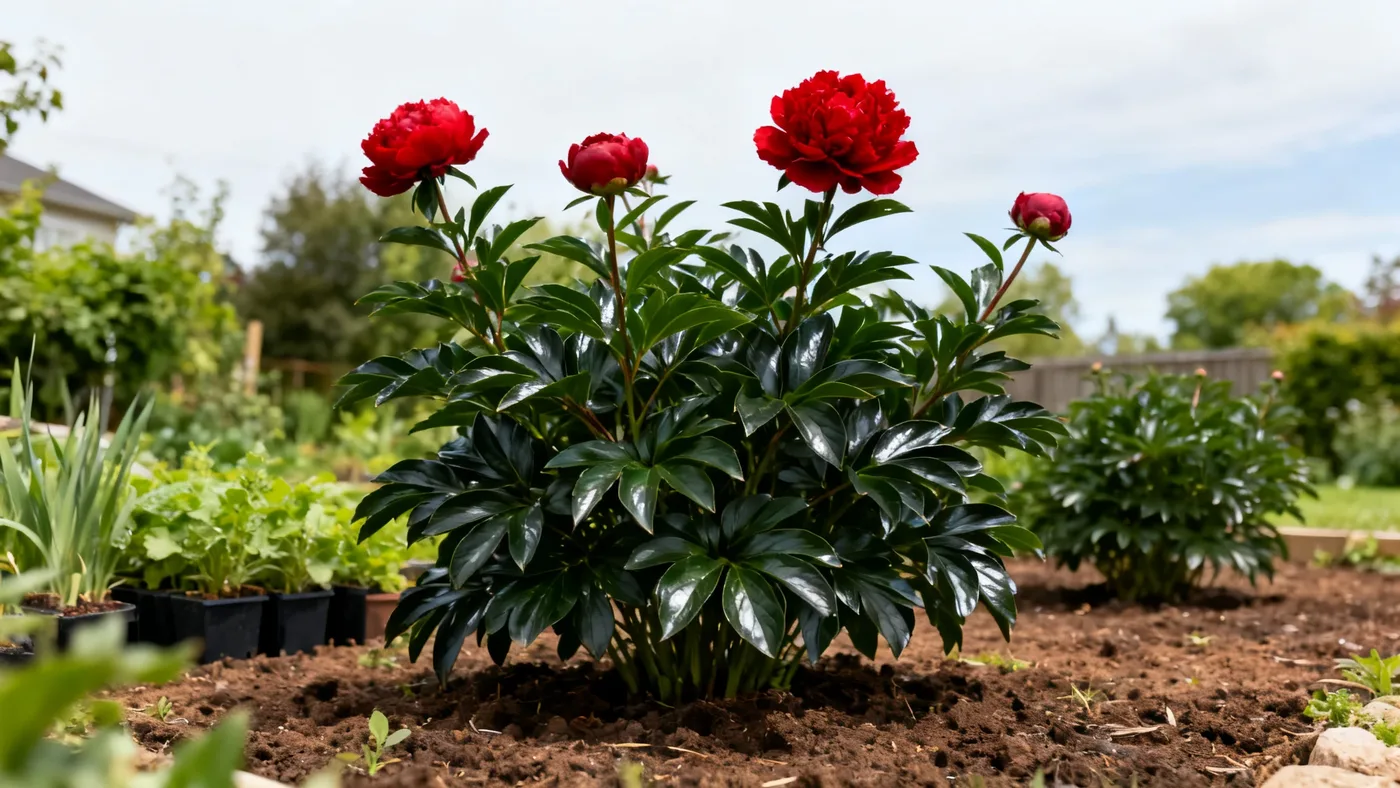
Best Soil and Drainage for Red Sarah Bernhardt Peony
Red Sarah Bernhardt Peony is remarkably forgiving once it settles in, but it has one non-negotiable requirement: well-drained soil. Plant it in waterlogged conditions, and you'll see yellowing foliage, stunted growth, and root rot within the first season. Get the drainage right, and your peony will reward you with deep red double blooms year after year. This guide walks you through building the ideal soil foundation from the ground up.
Understanding Your Peony's Soil Needs
Red Sarah Bernhardt Peony thrives in fertile, well-drained loam rich in organic matter. The soil pH should sit between 6.5 and 7.0 (slightly acidic to neutral). These aren't suggestions. Peonies planted in compacted clay, pure sand, or consistently moist soil simply won't perform, no matter how much sun they receive.
Well-draining soil doesn't mean dry soil. It means water moves through the profile, delivering nutrients to roots but never pooling around them. If water sits after rain, your drainage isn't adequate.
Materials You'll Need
- Soil pH test kit (or local extension office soil test)
- Organic compost or aged manure
- Perlite or coarse sand (for drainage amendment)
- Bone meal or balanced 5-10-10 fertilizer
- Shovel
- Garden fork or tiller (for large beds)
- Landscape fabric (optional, for raised beds)
- Mulch (wood chips or shredded bark)
Step-by-Step Soil Preparation
Step 1: Test Your Soil pH
Before amending anything, know your starting point. Grab a soil test kit from any garden center, or contact your local extension service for a comprehensive analysis. Peonies need a pH between 6.5 and 7.0. If your soil reads 7.5 or higher (alkaline), you'll need to lower it with sulfur. If it's 6.0 or lower (acidic), add lime. Wait 2 to 4 weeks after amending pH before planting so the soil can stabilize.
Step 2: Assess Drainage
Dig a hole 12 inches deep and fill it with water. If water drains within 2 hours, you have acceptable drainage. If water is still present after 4 hours, your soil retains too much moisture. Heavy clay soils almost always fall into this category. You have two options: amend the existing bed heavily, or build a raised bed.
Step 3: Break Up Compacted Soil
Use a garden fork to loosen the planting area to a depth of 12 to 15 inches. If your soil is hard-packed clay, you may need a tiller. Loosen a circle at least 3 feet across; peonies need room for roots to expand. Don't rush this step. Compacted soil will sabotage everything else you do.
Step 4: Amend with Organic Matter
Mix 3 to 4 inches of compost or aged manure into the loosened soil. This improves both drainage in clay soils and water-holding capacity in sandy soils. Organic matter is the single best amendment for peonies across nearly all soil types. Work it in thoroughly, turning the soil multiple times to blend it evenly.
Step 5: Add Drainage Material If Needed
If your soil is heavy clay, mix in 1 to 2 inches of perlite or coarse sand. Sand alone isn't ideal (it can compact and seal in moisture), but perlite stays loose and won't compact. Blend this in as you finish amending. Skip this step if you have naturally sandy or loamy soil.
Step 6: Verify Texture with the Squeeze Test
Grab a handful of your amended soil and squeeze it. If it falls apart easily, your drainage is good. If it holds a tight ball, it still needs more amendment or you should consider a raised bed. A good peony soil should feel crumbly and open, not dense or sticky.
Step 7: Apply Initial Fertilizer
Sprinkle bone meal or a balanced 5-10-10 fertilizer across the top of your prepared bed at the rate recommended on the package. Work it in lightly with a fork. This gives newly planted peonies a phosphorus boost for root development. Avoid heavy nitrogen; it promotes leafy growth over blooms.
Step 8: Mulch the Surface
Spread 2 inches of wood chips or shredded bark over the prepared bed. Mulch moderates soil temperature, suppresses weeds, and helps retain consistent moisture (without waterlogging). Keep mulch 3 inches away from the eventual crown of the peony to prevent rot.
Special Situation: Raised Beds
If your native soil is pure clay or drainage is seriously poor, build a raised bed 12 to 18 inches high. Fill it with a blend of 50% compost, 30% topsoil, and 20% perlite or coarse sand. This gives you complete control over the growing environment. Peonies in raised beds thrive, though they may require slightly more frequent watering during dry spells since the bed drains faster than in-ground soil.
Tips for Long-Term Soil Health
After your Red Sarah Bernhardt Peony is planted, annual maintenance is minimal. Each fall, top-dress with 1 inch of compost or aged manure around the base (keeping it 3 inches away from the crown). Over time, this organic layer breaks down and enriches the soil further. In early spring as shoots emerge, apply a light application of low-nitrogen, phosphorus-rich fertilizer, then resume annual top-dressing. Peonies are long-lived, often thriving 20 to 50 years or more in the same spot with this simple routine.
Avoid overhead watering on the foliage, especially on humid evenings. Water at the base of the plant and allow the soil surface to dry slightly between waterings once the plant is established. Overhead spray creates conditions for fungal diseases and wastes water.
Common Soil Mistakes to Avoid
Planting too deep: The eyes (growth buds) on your peony root should be no more than 1 to 2 inches below the soil surface. Deeper planting is one of the top reasons peonies fail to bloom. Measure carefully when you plant.
Adding peat moss as the main amendment: While peat retains moisture, it becomes hydrophobic (water-resistant) when dry. Use compost or aged manure instead.
Overcrowding: Space peonies 3 to 4 feet apart. Air circulation prevents disease, and each plant has room to develop its full 24 to 36 inches of spread without competing for nutrients.
Skipping the pH test: A soil test takes 15 minutes and prevents years of problems. Peonies struggling in the wrong pH can fail slowly and confusingly. Know your number before you plant.
Assuming "well-draining" means dry: Well-draining soil is moist and fertile, not bone-dry. It simply doesn't stay waterlogged. Water moderately during establishment; mature plants are moderately drought tolerant but prefer consistent moisture during the growing season.
Expected Results
With proper soil preparation, Red Sarah Bernhardt Peony should produce healthy foliage within the first season and may flower lightly in year 2. Full-sized, abundant blooms typically arrive by year 3. The plant reaches its mature spread of 24 to 36 inches in width around years 3 to 5. You should notice deep green, glossy, deeply lobed leaves with no yellowing or spots, and in late spring to early summer, rich red double blooms with mild to moderate sweet fragrance.
If your peony isn't thriving after a full growing season, revisit your drainage and pH first. These two factors solve most peony problems. For more guidance on ongoing care, see the complete Red Sarah Bernhardt Peony care guide.
Quick Reference: Soil Prep Checklist
| Task | Target / Specification | Timing |
|---|---|---|
| Test soil pH | 6.5 to 7.0 (slightly acidic to neutral) | Before planting |
| Check drainage (water retention test) | Water drains within 2 to 4 hours | Before planting |
| Loosen soil depth | 12 to 15 inches | Before amending |
| Add compost or aged manure | 3 to 4 inches worked in | Before planting |
| Add perlite or coarse sand (clay soils) | 1 to 2 inches if needed | Before planting |
| Apply bone meal or 5-10-10 fertilizer | Per package rate | At planting time |
| Mulch surface layer | 2 inches, 3 inches from crown | After planting |
| Spacing between plants | 3 to 4 feet apart | At planting time |
| Annual top-dress (compost) | 1 inch per year in fall | Every fall |
| Spring fertilizer application | Light, low-nitrogen, phosphorus-rich | Early spring as shoots emerge |