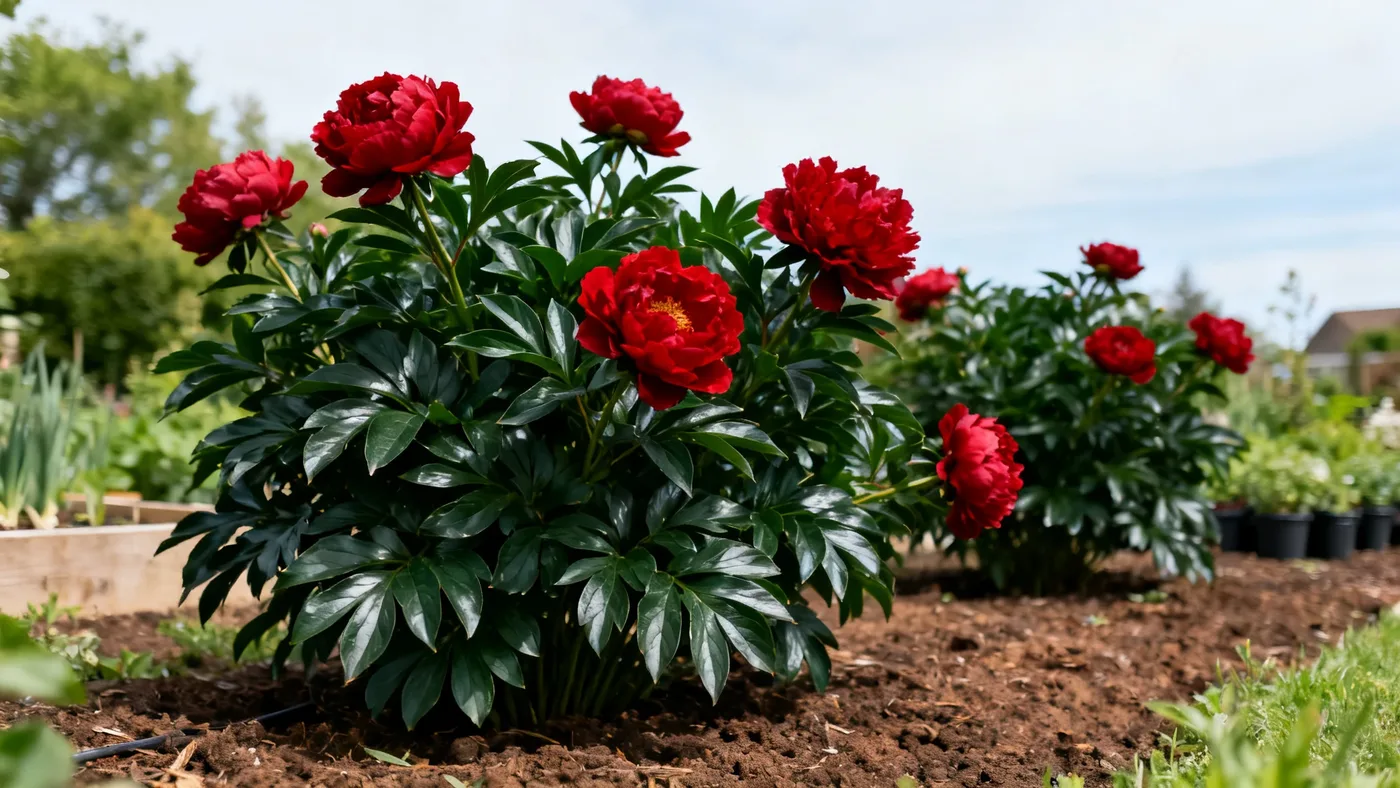
When and How to Fertilize Red Sarah Bernhardt Peony
Fertilizing Red Sarah Bernhardt Peony is straightforward once you know the timing and the numbers. Unlike many perennials that benefit from heavy feeding, peonies thrive on restraint. A light hand with the right formula at the right moment will give you years of reliable blooms without the foliage-heavy growth that steals energy from flowers.
This guide covers exactly when to apply fertilizer, which products work best, and the simple steps to get it right.
Why Peonies Need Fertilizer
Red Sarah Bernhardt Peonies are long-lived, often performing 20 to 50 years or more in the same spot with minimal maintenance once established. Early on, however, they benefit from targeted nutrition. The plant grows slowly over its first 3 to 5 years, thickening its clump a few inches per year. A light application of the right fertilizer in early spring supports this establishment phase and encourages flower production.
Mature, well-established plants (3+ years in the ground) often need no fertilizer if they sit in fertile, well-drained loam. However, a modest spring dose can sustain blooming year after year, especially in leaner soils.
Understanding Peony Fertilizer Needs
The key to fertilizing Red Sarah Bernhardt Peony is understanding nitrogen's role. Too much nitrogen favors leafy growth over flowers, and heavy nitrogen can reduce bloom quality. Instead, use a low-nitrogen, phosphorus-rich formula.
Bone meal is an excellent traditional choice. It is high in phosphorus (which supports root and flower development) and low in nitrogen, making it ideal for peonies. A balanced 5-10-10 fertilizer (or similar) also works well, providing moderate nutrients with phosphorus as the star.
Avoid standard all-purpose fertilizers like 10-10-10 or high-nitrogen blends marketed for general garden use. These often push leaf growth at the expense of blooms.
Timing: The Early Spring Window
Apply fertilizer in early spring as shoots emerge from the ground. This timing aligns with the plant's natural growth cycle. For Red Sarah Bernhardt Peony in USDA zones 3 to 8, this typically means late March through April, depending on your location. In zone 3, shoots appear later; in zone 8, they emerge earlier.
Watch for the first red or purple shoots breaking through the soil. That is your signal to fertilize. Do not wait until leaves have fully unfurled.
Do not fertilize in summer or fall. Late-season feeding can stimulate tender new growth that frost damages, weakening the plant heading into winter. A single spring application is all an established peony needs.
Materials You Will Need
- Bone meal or balanced 5-10-10 fertilizer
- A measuring cup or kitchen scale
- A hand cultivator or small spade (optional, for light soil disturbance)
- Water source (hose or watering can)
- Work gloves (recommended when handling dry fertilizer)
Step-by-Step Application
Step 1: Identify the Base of the Plant
Locate where the shoots emerge from the soil. This is the crown of the plant. You will apply fertilizer in a circle around this area, roughly at the drip line of the clump (where the foliage will eventually reach as it grows). For a mature Red Sarah Bernhardt Peony, this spread is typically 24 to 36 inches.
Step 2: Measure the Fertilizer
Use a light hand. For an established plant (3+ years), apply 2 to 3 tablespoons of bone meal or a similar amount of balanced 5-10-10 fertilizer. For a younger plant still building its clump, use 1 to 2 tablespoons.
Overfeeding is a common mistake. More fertilizer does not mean more blooms; it means more leaves and potential burn.
Step 3: Distribute Fertilizer Around the Base
Scatter the measured fertilizer in a circle around the base of the plant, roughly 6 to 12 inches away from the shoots. Avoid dumping it directly on emerging growth. If you prefer, use a hand cultivator to lightly work the fertilizer into the top inch of soil, though this is optional.
Step 4: Water Thoroughly
After applying fertilizer, water the soil deeply. This activates the nutrients and carries them into the root zone. Apply water gradually so it soaks in rather than running off. Aim for moisture to reach at least 6 to 8 inches deep.
If you applied bone meal, watering is especially important, as bone meal breaks down slowly in moist soil.
Step 5: Maintain Regular Moisture Through Spring
Red Sarah Bernhardt Peony prefers moderate watering while establishing. Keep the soil consistently moist (not waterlogged) through the growing season. This helps the plant make full use of the nutrients you applied and supports flower development as buds form.
Tips and Common Mistakes
Avoid high nitrogen. Products labeled for lawns or with high first numbers (like 20-5-5) are wrong for peonies. They produce vigorous foliage but weak, sparse flowers.
Do not fertilize newly planted peonies heavily. A new peony needs 2 to 3 years to reach significant bloom. A light spring application supports this phase, but overfeeding stresses young plants. Let them establish slowly.
Do not fertilize in late summer or fall. This timing encourages tender growth that frost will kill, weakening the plant.
Skip fertilizer if your soil is already rich. If you amended your planting hole generously with compost or aged manure, your soil may have sufficient nutrients for years. Mature plants in fertile, well-drained loam often need no fertilizer at all.
Do not pile fertilizer at the crown. A common error is dumping all the fertilizer directly on top of the shoots or against the crown. This can burn emerging growth. Spread it in a circle away from the shoots.
Choose bone meal for simplicity. Bone meal is forgiving, slow-release, and nearly impossible to overdo. If you prefer, use it every spring; you will not harm the plant.
Expected Results
A single spring application of low-nitrogen, phosphorus-rich fertilizer may support stronger stem growth and more abundant blooms in the weeks ahead. Results are most noticeable in the first few years of establishment and in soils that lack organic matter.
Established plants may show subtler improvements: slightly fuller flowers, more consistent year-to-year bloom, or better recovery after division. Because peonies are so long-lived and adaptable, the benefit of one spring feeding can be difficult to isolate from other factors like sunlight, soil quality, and plant age.
Fertilizing Schedule at a Glance
| Time of Year | Plant Age | Action | Product | Amount |
|---|---|---|---|---|
| Early spring (as shoots emerge) | 1-2 years old | Apply fertilizer | Bone meal or 5-10-10 | 1-2 tablespoons |
| Early spring (as shoots emerge) | 3+ years old | Apply fertilizer | Bone meal or 5-10-10 | 2-3 tablespoons |
| Late spring through summer | All ages | No fertilizer | n/a | n/a |
| Fall and winter | All ages | No fertilizer | n/a | n/a |
Pairing Fertilizer With Other Care
Fertilizer works best as part of a complete care routine. A Red Sarah Bernhardt Peony thrives in full sun (6 or more hours daily), well-drained soil, and moderate watering. Soil pH should sit in the slightly acidic to neutral range, ideally 6.5 to 7.0.
If your plant struggles with blooming despite proper fertilizing, check sunlight first. Insufficient light is the most common cause of poor flowering in peonies, not nutrient deficiency. Similarly, waterlogged soil can rot roots; peonies are intolerant of soggy conditions.
For more detailed guidance on all aspects of Red Sarah Bernhardt Peony care, including planting depth, spacing, and year-round maintenance, see the complete Red Sarah Bernhardt Peony care guide.
Quick Reference Checklist
- Wait until early spring when shoots first emerge.
- Choose bone meal or a balanced 5-10-10 fertilizer.
- Measure carefully: 1 to 2 tablespoons for young plants, 2 to 3 for established ones.
- Scatter fertilizer in a circle around the base, 6 to 12 inches from shoots.
- Water deeply after applying.
- Never fertilize in summer or fall.
- Avoid high-nitrogen products.
- In rich soil, fertilizer is optional for mature plants.
- Reapply each spring if desired, or skip if the plant is thriving.