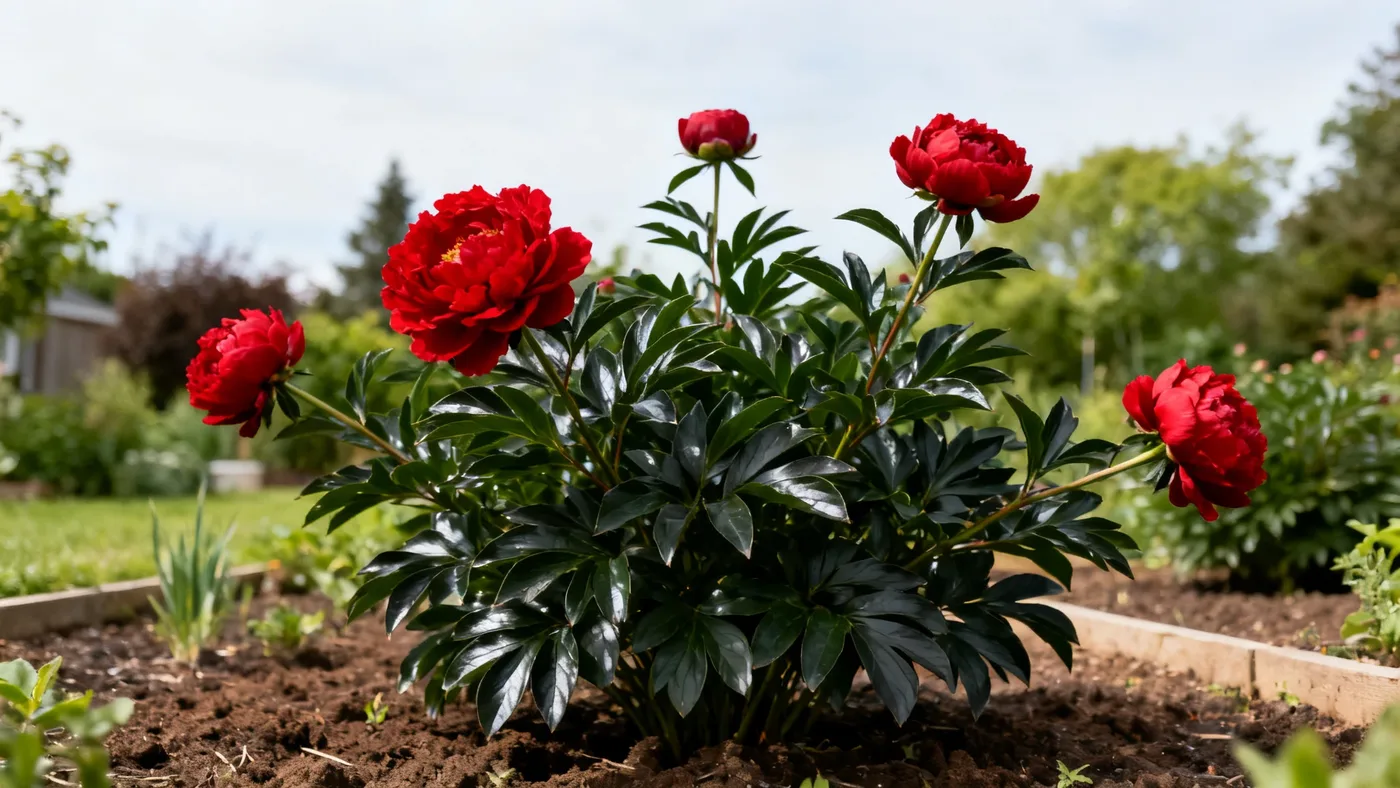
Pruning and Cutting Back Red Sarah Bernhardt Peony
Red Sarah Bernhardt Peony is remarkably low-maintenance, but understanding when and how to prune will keep your plants healthy, encourage better blooms, and maintain that tidy garden appearance year-round. Unlike shrubs that need shaping, your peony requires just two simple pruning tasks: deadheading spent flowers during the growing season and a single hard cutback in late fall.
This guide walks you through both, with step-by-step instructions, materials, and the timing that works best for zones 3 through 8.
Understanding Your Peony's Pruning Needs
Red Sarah Bernhardt is an herbaceous perennial, meaning it dies back completely to the ground each fall. It doesn't have woody stems to manage or constant shaping to do. The plant grows 24 to 36 inches tall and wide, reaching mature size around year 3 to 5. During the growing season, deadheading redirects the plant's energy away from seed production and toward root and foliage health. In late fall, after hard frost kills the top growth, you'll cut the entire plant down to 2 to 3 inches above the soil surface.
Materials You'll Need
Keep these supplies on hand for both deadheading and fall cutback work:
- Sharp pruning shears or secateurs: A clean, sharp cut heals faster than a ragged one. Bypass pruners (those with a single sharp blade) are better than anvil-type for peony work.
- Loppers: For thicker stems at the base during fall cleanup, particularly useful on mature plants at full size.
- Garden gloves: Peony foliage and stems have no thorns, but gloves protect your hands during repetitive cutting.
- Disinfectant: Rubbing alcohol or a 10% bleach solution (one part bleach to nine parts water) to wipe blades between cuts. This prevents spreading disease between plants.
- A lightweight rake or small hand rake: Useful for clearing debris after fall cutback.
Deadheading Spent Blooms During the Season
Deadheading is the removal of faded flowers before they set seed. For Red Sarah Bernhardt, this happens in late spring and early summer, typically May through June depending on your zone. The plant puts considerable energy into seed production, so removing spent blooms redirects that energy toward next year's flower buds.
Ants are commonly seen on peony buds feeding on nectar, but these are harmless and do not damage the plant. You may also see them on developing seedpods; this is normal peony behavior.
Step-by-Step Deadheading
- Identify spent flowers. Red Sarah Bernhardt blooms are deep red double flowers. Once the petals begin to drop or fade, or when the bloom starts to thin and look shabby, it's time to deadhead. You don't have to rush; wait until the flower is clearly past its prime.
- Locate the first healthy leaf set below the spent bloom. Trace down the stem from the flower head to where leaves are still dark green and robust. This is usually 6 to 12 inches below the bloom.
- Make a clean cut. Use your sharp pruning shears to cut just above that first healthy leaf set, at a slight angle. A 45-degree angle sheds water and heals cleanly. Remove the entire flower stem and any seed pods that may have started forming.
- Disinfect your shears. Wipe the blades with your disinfectant solution if moving between plants or if you've made more than a few cuts. This step takes 10 seconds and prevents disease spread.
- Repeat as new flowers fade. Red Sarah Bernhardt is a full, double-flowered cultivar, so blooms may open in succession or in small clusters over 2 to 4 weeks. Deadhead each one as it fades.
Deadheading is optional for a home garden (the plant won't suffer if you skip it), but it does redirect resources and keeps your peony looking tidy. Some gardeners prefer to leave a few spent blooms on strong outer stems for visual interest, which is fine; just deadhead the majority of the plant.
The Main Event: Fall Cutback
This is the most important pruning task, and the one that makes the biggest visual difference. In late fall, after the first hard frost has killed the foliage, you'll cut the entire plant down to 2 to 3 inches above the ground. This removes diseased or pest-infested leaves, tidies the garden, and reduces the risk of disease overwintering in the debris.
Timing matters. Wait until after frost has completely killed the top growth. In zones 3 to 8, this typically happens in November, though it may be late October in zone 8 or December in zone 3. The foliage will turn bronze, burgundy, or reddish before dying back, signaling that dormancy is setting in. Once you see this color change and the leaves are crispy or mushy, you're ready to cut.
Step-by-Step Fall Cutback Guide
- Wait for hard frost and foliage death. After your first killing frost, wait a few days to a week for the foliage to fully die back and turn color. Cutting live green tissue too early interrupts the plant's nutrient reabsorption into the roots.
- Gather your tools. Have your pruning shears and loppers ready, along with your gloves and disinfectant. Cleaning shears is less critical in fall (you're not moving between plants for disease prevention), but it's still good practice.
- Locate the crown. The crown is where the stems meet the soil, usually an inch or two below the surface. It's typically slightly darker or firmer than surrounding soil. You don't need to dig it up, but knowing its location helps you cut at the right height.
- Cut all stems to 2 to 3 inches above ground. Starting at one side of the plant, cut each stem at a consistent height. Use loppers on thicker, woody-feeling stems at the base. Your goal is to remove all visible top growth, leaving just small stubs. The 2-to-3-inch height is important: it's tall enough to locate the plant next spring, but low enough to avoid leaving disease-prone stubble.
- Remove all cut debris. Use your rake to gather all the fallen stems, leaves, and plant material. Do not compost diseased or pest-infested foliage; either dispose of it in yard waste or in a hot compost pile that reaches 140 degrees Fahrenheit or higher. Peony foliage can harbor disease spores through winter.
- Step back and inspect. Once you've cleared all the debris and dead stems, your peony planting bed should look clean and bare, with just the low stubs poking through. This is normal and healthy.
Tips for Success
- Don't fertilize after cutback. The plant is dormant and won't use the nutrients. Wait until early spring, when new shoots emerge, to apply a light dose of low-nitrogen, phosphorus-rich fertilizer such as bone meal or a balanced 5-10-10 formulation.
- Mark your planting site if it disappears under mulch or snow. Peonies stay in the ground all winter and sprout from the crown, so once the stems are cut and buried, it's easy to forget where the plant is. A small stake or garden marker prevents accidental digging or planting over the spot.
- Prune in dry conditions if possible. A dry day makes cuts cleaner and reduces the chance of disease entering through cut surfaces. If your area is rainy or wet, proceed anyway; the benefits of cutback outweigh the minor disease risk.
- Sharp tools make a difference. Dull shears crush rather than cut, leaving ragged wounds that invite disease. If your shears don't cut cleanly through a thin peony stem, sharpen them before the job.
- Don't prune during the growing season. Between spring emergence and fall frost, leave your peony alone except for deadheading. Cutting stems in summer removes foliage the plant needs for photosynthesis and next year's flower buds.
Common Mistakes to Avoid
- Cutting back too early. Cutting while the foliage is still green interrupts the plant's nutrient reabsorption. You'll weaken the plant and risk reduced blooming next year. Wait for frost and foliage death.
- Leaving stubs too tall. If you leave 6 inches or more of dead stem, disease can overwinter in that material, and the plant looks untidy. The 2-to-3-inch guideline is a practical balance.
- Keeping diseased foliage in the garden. If your peony had powdery mildew, leaf spots, or botrytis during the season, removing all top growth and disposing of it properly breaks the disease cycle. Don't leave anything behind.
- Cutting buried crowns. Peonies dislike being planted too deep; the crown should be 1 to 2 inches below the soil surface. If yours is buried deeper, carefully expose it after a few years and adjust. Cutting into a deep crown during fall pruning can damage it.
- Deadheading so late that frost arrives. If you're still deadheading in October and frost is coming, stop and let the plant be. The few remaining spent blooms won't hurt, and you avoid wounding the plant right before dormancy.
What to Expect After Pruning
After fall cutback, your peony will spend the winter completely underground, dormant in the soil. The roots and crown rest and build reserves for spring growth. By late March or early April (depending on your zone), new shoots will emerge from those stubs and from below-ground buds. You may not see growth for several weeks after soil warming, which is normal.
A plant that was deadheaded regularly during the growing season and properly cut back in fall typically produces more robust foliage and fuller bloom clusters in the following spring. Plants that skip fall cutback often carry disease into the next season and may bloom less prolifically.
Quick Reference: Pruning Calendar and Checklist
| Task | When | What to Do | Expected Outcome |
|---|---|---|---|
| Deadheading | Late spring to early summer (May to June, zone-dependent) | Remove spent blooms at first healthy leaf set | Tidier appearance, redirected energy to roots and foliage |
| Growing season monitoring | June through October | No pruning; observe for pests or disease | Healthy foliage, disease-free plant |
| Fall cutback | Late fall, after hard frost and foliage death (November in most zones) | Cut all stems to 2 to 3 inches above ground; remove all debris | Clean garden bed, reduced disease risk, vigorous spring growth |
For more complete care guidance, see The Complete Red Sarah Bernhardt Peony Care Guide.