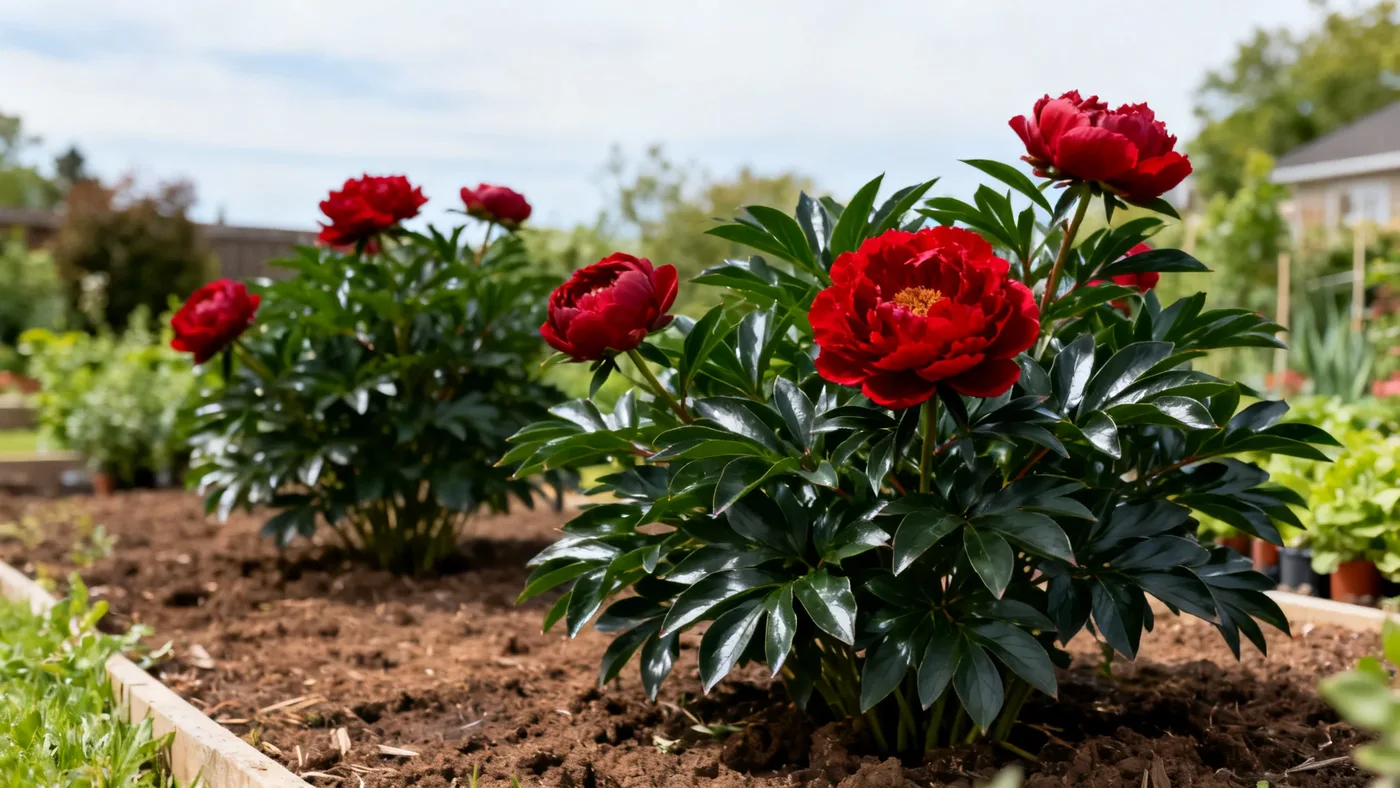
Red Sarah Bernhardt Peony vs Karl Rosenfield Peony
If you're shopping for a deep red, double-flowered peony, you've likely encountered both 'Red Sarah Bernhardt' and 'Karl Rosenfield' in nursery catalogs. These two cultivars are frequently confused in the trade, sometimes even mislabeled, and choosing between them requires understanding what sets them apart (if anything) and whether either matches your garden conditions.
The Market Confusion: What You Should Know
'Red Sarah Bernhardt' is a nursery trade name that does not appear to be a widely registered, distinct cultivar. Some suppliers may use this name interchangeably with other red double peonies, or it may be a rebranded version of an existing cultivar like 'Karl Rosenfield' itself. This matters because it affects availability, reliability, and what you can expect when your plant arrives.
'Karl Rosenfield', by contrast, is a genuinely established red double peony known for its deep red blooms and vigorous growth. It was developed decades ago and is widely available from reputable nurseries.
Before purchasing either variety, confirm the exact botanical name and cultivar information with your nursery. If you're buying something labeled 'Red Sarah Bernhardt', ask whether it's the same genetics as another cultivar or if it's a distinct selection.
Side-by-Side Comparison Table
| Attribute | Red Sarah Bernhardt | Karl Rosenfield |
|---|---|---|
| USDA Hardiness | Zones 3 to 8 | Zones 3 to 8 |
| Mature Height | 24 to 36 inches | 24 to 36 inches (typically 30 in) |
| Mature Width | 24 to 36 inches | 24 to 36 inches (typically 30 in) |
| Spacing | 3 to 4 feet apart | 3 to 4 feet apart |
| Bloom Time | Late spring to early summer (May to June) | Late spring to early summer (May to June) |
| Bloom Color | Deep red/crimson | Deep red/crimson |
| Fragrance | Mild to moderate | Mild to moderate |
| Years to Significant Bloom | 2 to 3 years | 2 to 3 years |
| Soil Requirements | Fertile, well-drained loam (pH 6.5 to 7.0) | Fertile, well-drained loam (pH 6.5 to 7.0) |
| Sun Requirement | Full sun (6+ hours) | Full sun (6+ hours) |
| Cultivar Status | Likely a trade name; genetic distinction unclear | Established, registered cultivar |
Red Sarah Bernhardt Peony: Profile and Expectations
'Red Sarah Bernhardt' is marketed as a red counterpart to the classic pink 'Sarah Bernhardt' peony. It produces deep red, double blooms in late spring and early summer, typically May to June depending on your zone. The plant reaches 24 to 36 inches tall and wide, clumping outward slowly over 3 to 4 years until it fills its mature space.
This cultivar thrives in full sun for at least 6 hours daily and tolerates light afternoon shade in hot climates, though it blooms best in full sun. Plant 3 to 4 feet from neighbors to allow air circulation and prevent disease.
The main challenge with 'Red Sarah Bernhardt' is confirming you're buying the actual plant you want. Because the cultivar name is not widely documented in horticultural records, you may receive a different red double peony. When ordering, request specific information about the breeder, introduction date, or parentage. If the nursery cannot provide these details, consider buying 'Karl Rosenfield' instead, which has a clear identity.
Soil must be fertile, well-drained loam rich in organic matter, with a pH between 6.5 and 7.0. Avoid waterlogged or soggy soil, which invites root rot. Water regularly while the plant establishes during its first two growing seasons, then water moderately during dry spells.
Karl Rosenfield Peony: Profile and Expectations
'Karl Rosenfield' is one of the most widely recognized red double peony varieties in North America. It produces the same vibrant deep red, full double blooms as 'Red Sarah Bernhardt' and blooms at the same time in late spring to early summer. Height and width are comparable: 24 to 36 inches, maturing in 3 to 4 years.
Karl Rosenfield is hardy in USDA zones 3 to 8, making it reliable from cold northern climates to warmer southern gardens. It prefers full sun, needs fertile, well-drained loam with a soil pH of 6.5 to 7.0, and tolerates moderate drought once established. Space plants 3 to 4 feet apart to maintain air flow.
The advantage of choosing 'Karl Rosenfield' is certainty. Every nursery knows this cultivar by name, your plant will match descriptions you read, and it has decades of proven performance in home gardens. If you are unsure whether 'Red Sarah Bernhardt' is a real distinct cultivar or a rebranded stock, 'Karl Rosenfield' eliminates that ambiguity.
Fragrance is mild to moderate and sweet. Foliage is dark green, glossy, and deeply lobed, turning bronze, burgundy, or reddish in fall before dying back after frost. The plant is generally deer and rabbit resistant, making it a good choice for wildlife-pressured gardens.
Pros and Cons: Which Red Double Peony Wins?
Red Sarah Bernhardt Peony
Pros:
- Named as an intentional red counterpart to the classic pink 'Sarah Bernhardt', which appeals to gardeners familiar with the original.
- If it is a distinct cultivar, it represents a unique selection worth owning.
- May be priced slightly lower at some nurseries due to its less-established reputation.
Cons:
- Cultivar status is unclear, and you may receive mislabeled stock or a substitute without knowing.
- Harder to find consistent information across sources.
- Difficult to verify authenticity before purchasing; growers cannot always explain the plant's origin.
- If you need to reference care guides or forums later, fewer resources will match the exact name.
Karl Rosenfield Peony
Pros:
- Established, registered cultivar with a clear identity and consistent supply across the industry.
- Abundant care guides, reviews, and community discussion online and in books.
- Every nursery stocks it or can obtain it easily, making it widely available.
- Known performance history spanning decades; no surprises at maturity.
- If you need to divide or propagate later, you can confidently source new stock by name.
Cons:
- Extremely common, so if you want a rare or unique cultivar, this is not it.
- May be priced slightly higher due to established demand.
When to Choose Each Variety
Choose Red Sarah Bernhardt If:
- You specifically want a red peony to mirror a pink 'Sarah Bernhardt' in another part of your garden.
- Your nursery has verified it as a distinct cultivar and can provide breeder or introduction information.
- You are comfortable with some uncertainty and willing to contact the grower directly for details.
- You prefer a potential novelty or rare variety, understanding the trade-off in research and reliability.
Choose Karl Rosenfield If:
- You want a red double peony with zero ambiguity about what you are getting.
- You prefer to research care, troubleshooting, and companion planting using established resources.
- You value proven performance history and wide availability for future reference or division.
- You are planting in a formal garden, border, or landscape where consistency matters.
- You are unsure about the status of 'Red Sarah Bernhardt' and want the safest choice.
Planting and Care for Either Variety
Both red double peonies follow the same cultural requirements. Plant in fall (preferred) or early spring while dormant, spacing 3 to 4 feet apart. Position the crown (where roots meet shoots) 1 to 2 inches below the soil surface. Plant deeper and you risk failure to bloom.
Locate plants in full sun, at least 6 hours daily, in fertile, well-drained loam. Soil pH should be slightly acidic to neutral, between 6.5 and 7.0. Amend planting holes with compost or aged manure to enrich the soil.
Water regularly during the first two growing seasons while the plant establishes its root system. Once mature, water moderately during dry spells. Avoid overhead watering on foliage; water at the base to reduce disease pressure.
In early spring as shoots emerge, apply a light dose of low-nitrogen, phosphorus-rich fertilizer, such as bone meal or a 5-10-10 formulation. Avoid heavy nitrogen, which favors foliage over blooms.
Deadhead spent flowers during the blooming season to redirect energy toward next year. In late fall after frost kills the top growth, cut foliage back to 2 to 3 inches above ground.
Both varieties reach significant bloom by year 2 to 3 after planting and mature to full clump size around year 3 to 5. They live for 20 to 50 or more years with minimal maintenance once established, making them a long-term garden investment.
Companion Plants and Landscape Uses
Red Sarah Bernhardt and Karl Rosenfield work beautifully in mixed perennial borders, cutting gardens, foundation plantings, and cottage gardens. Pair either with bearded iris (which bloom earlier and provide vertical contrast), roses (which bloom around the same time), catmint (airy purple flowers provide textural relief), baptisia (deep purple spikes), alliums (spherical flowers), or salvia (columnar forms).
Both peonies are deer and rabbit resistant, making them reliable in wildlife-pressured areas. Plant in groups of 3 or more for mass color in spring, or scatter single plants throughout a border for focal depth.
A Note on Availability and Certainty
For the most reliable growing experience, choose a red peony with clear cultivar documentation. 'Karl Rosenfield' is the safest choice if 'Red Sarah Bernhardt' remains unverified or if your nursery cannot confirm its origins. Both plants will perform equally well in your garden if you meet their cultural needs. The key difference is clarity and peace of mind about what you are planting.
Quick Reference Checklist
| Task | Red Sarah Bernhardt | Karl Rosenfield |
|---|---|---|
| Verify cultivar information before buying | Yes, critical | No, standard |
| Plant in fall or spring dormant | Fall preferred | Fall preferred |
| Planting depth (crown below soil) | 1 to 2 inches | 1 to 2 inches |
| Spacing between plants | 3 to 4 feet | 3 to 4 feet |
| Sun requirement | 6+ hours daily | 6+ hours daily |
| Soil pH target | 6.5 to 7.0 | 6.5 to 7.0 |
| Years to significant bloom | 2 to 3 years | 2 to 3 years |
| Deadhead spent flowers | Yes, season | Yes, season |
| Fall cleanup (cut foliage) | 2 to 3 inches | 2 to 3 inches |
| Fertilize early spring | Low-N, high-P | Low-N, high-P |