Does Soil pH Change Red Sarah Bernhardt Peony's Color?
A customer called us one May, a little out of breath, standing beside her bed with a bag of garden lime in her hand. The hydrangeas next door had turned a hard blue, she had heard soil could do that, and she wanted to know whether the lime would change her Red Sarah Bernhardt into something else. We get some version of that call every spring, and our answer is calm and plain: no.
Hydrangeas have taught everyone that dirt can repaint a flower, so the worry is fair for a peony whose deep red stands out among all those pastel pinks. You are planting for decades, and you should not spend those years fussing over a color the soil never controlled. Read on for how the plant is built, why its red is locked in, what pH really changes, how to test your bed, and what actually makes a bloom look paler.
What Roots and Buds Actually Do
Start below ground, because that is where the whole plant is organized. Red Sarah Bernhardt is an herbaceous peony, so every stem and leaf dies back to the soil line each winter and the plant survives as a crown of thick, fleshy roots. The buds, called eyes, sit on that crown, and each one holds next year's stem, leaves and flower bud. Nothing above ground carries over, which is part of why peonies are hardy in zones 3 to 8.
In spring the eyes break and the shoots rise. Our guide to Red Sarah Bernhardt's spring shoots covers what you will see as they emerge. The plant grows slowly, reaching about 2.5 to 3 feet tall and wide, and it blooms for roughly two weeks in late spring to early summer. After that it spends the season feeding its roots, and in autumn the foliage can turn yellow or reddish-maroon before you cut it back.
The roots take in water and minerals and store energy, and that is their whole job. They do not carry color instructions up into the flowers. Those instructions live inside the plant itself, which is the next part of the story.
Why Red Sarah Bernhardt Peony Color Is Genetic
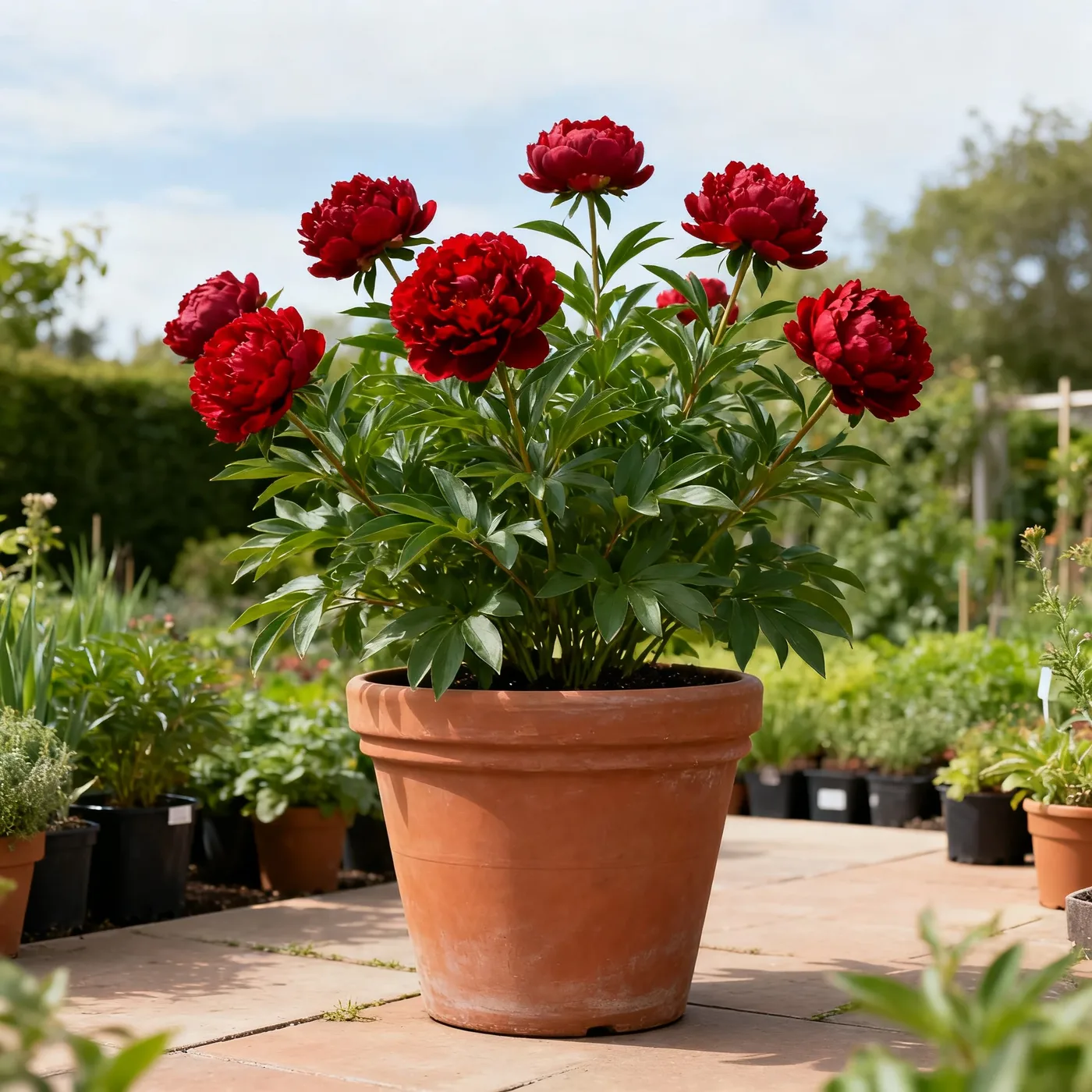
Petal color is made by the petal cells themselves, following instructions written in the plant's genes. Soil supplies water and minerals as raw materials, but the genes decide which pigment gets built and how much. Red Sarah Bernhardt is not a plain fire-engine red. Its double, fragrant blooms open a dark red with pinkish-purple tones, and that mix is what the cultivar makes wherever it grows.
There is a second reason the soil has no say. A named peony is not grown from seed. Each plant is a division, a piece of root with eyes cut from a parent, so every Red Sarah Bernhardt you meet is a copy of the same original. Clay in one yard and loam in another give you the same color, because the same instructions are being followed.
What soil and weather can change is how that color looks on a given morning, and we get to that below.
Hydrangeas Shift, so Why Not Peonies?
The hydrangea next door really does change color with soil, and seeing why shows what is different. Clemson's extension team explains that bigleaf hydrangea flower color is determined indirectly by soil pH, because pH controls how much aluminum is available to the roots. In acidic soil (pH 5.0 to 5.5) the flowers are blue, and in alkaline soil (pH 6.0 and up) they are pink.
So a hydrangea's color is a chemical reaction between its pigment and a metal it takes up from the ground. The soil is a dial, and the plant is built to be turned by it. A peony has no such dial. The extension guidance we rely on for peonies talks about pH only in terms of plant health, never flower hue, so test strips and amendments have nothing to push on.
You will see advice online to dig in aluminum sulfate, coffee grounds or lime to deepen a peony's color. We would skip all of it. At best it does nothing, and at worst it pushes the pH far enough from comfortable that the plant sulks, which costs you flowers rather than changing their hue.
How a Color Sport Locks in the Red
A sport is a single bud that changes on its own, so the shoot it grows carries a different flower color from the rest of the plant. Red Sarah Bernhardt began that way, as a darker sport of the pink original, and the red shoot was kept and propagated. Because the change sits in the cells of that bud, everything grown from it inherits the red.
Peonies are multiplied by dividing the crown, and every division carries the same eyes, with the same changed cells, as the plant it came from. That is why the red does not drift back to pink as the plant ages or moves to a new bed. The root system is not forgetting an old color, because it never held one.
If you ever see a stem that looks truly different from the rest, that is a plant question and not a soil one, and we would like to hear about it.
What Soil pH Does Change in Red Sarah Bernhardt Peony
Soil pH matters to this plant, just not for color. What pH controls is which nutrients the roots can pull in. When the soil strays far from comfortable, some nutrients become hard to reach, growth stalls, and a slow grower like this one falls even further behind.
Nutrient Uptake and Steady Growth
A peony in soil that suits it builds a bigger crown every year, and a bigger crown means more eyes and more flowers. In soil that is too far off, you do not see a different petal color. You see thin stems, small leaves and a crown that never seems to gain ground. Weak, off-color foliage is a far likelier sign of a pH problem than anything about the blooms.
Fertilizer and Flower Count
Feeding changes how many blooms you get, not what color they are. Plants that receive excess nitrogen put on foliage instead of flowers, so a rich lawn-style feed applied in hope of a deeper red tends to give you a bigger green plant with fewer buds. Our guide on when and how to fertilize covers what to give, and the one on a peony that is not blooming walks through the other usual suspects.
Testing Your Bed for Red Sarah Bernhardt Peony
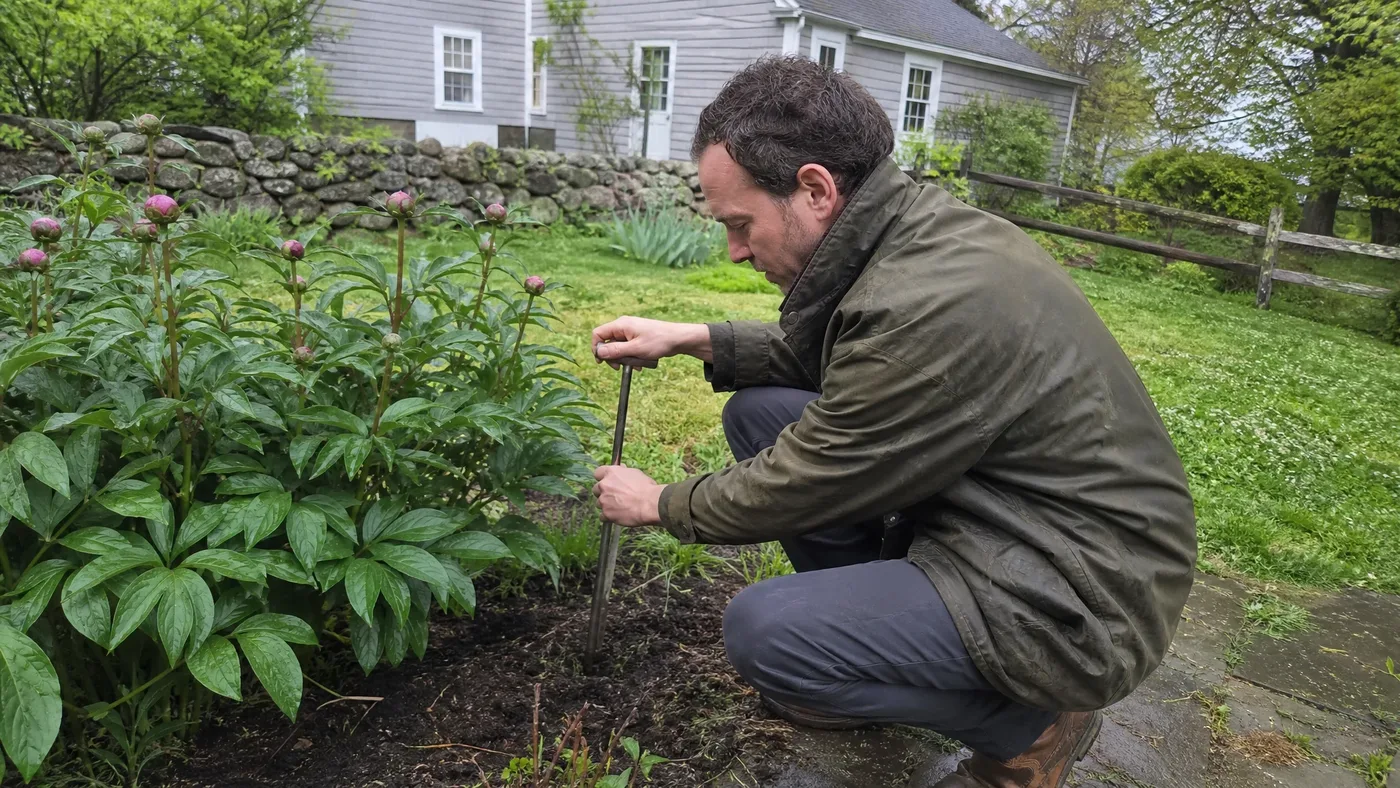
If you are curious about your soil, a pH check is cheap and quick, and it is worth doing once before planting or when a plant seems to be struggling. It will tell you nothing about color, but it will tell you whether the plant has comfortable footing. A home kit is enough for a first look, and your local extension service can run a lab test if you want exact numbers.
A Simple pH Check
This is the routine we suggest, and it takes about a quarter of an hour plus drying time:
- Dig small samples from several spots around the planting area, staying well clear of any existing crown.
- Mix them together in a clean bucket and let the soil dry, removing stones and roots.
- Test the mixture with a home kit or send it to your extension service, following their instructions for how much to include.
- Compare the result with the range below, and leave the bed alone if it falls inside.
The Comfortable Range
Extension sources do not agree on a single sweet spot, which tells you the plant is forgiving. Purdue says peonies thrive in slightly acidic soil (pH 6.0-7.0), Penn State says they prefer a neutral to slightly alkaline pH, and NC State lists herbaceous peonies as acid (below 6.0). Aim for roughly 6.0 to 7.0 and do not chase decimals.
Only act if your result is far outside that. Then ask your local extension service which product to use and how much, because it depends on your soil type, and work any change in gradually and away from the crown. Our soil and drainage guide explains why drainage usually matters more than pH ever does.
When Red Sarah Bernhardt Peony Looks Paler Than Expected
Customers usually ask us this after the first good bloom, and the cause is almost never in the ground. The cultivar's color is a dark red with pinkish-purple tones, so it reads differently in morning light than at noon, and it softens as each flower ages. The table lists the real causes and what helps with each.
| Cause | What you see | What helps |
|---|---|---|
| Hot, bright afternoons | Petals fade and soften faster in strong heat | Cut stems for the vase in the cool morning while buds are still soft |
| Flower age | Blooms lighten over their final days | Enjoy them early and snip spent flowers |
| Too much shade | Fewer, smaller flowers and a duller show | Give the plant at least six hours of direct sun |
| Light when you look | A purple cast in cool light, redder in warm light | Judge the color at the same time of day, in the open |
Shade deserves a word of its own, since it is the one cause you can fix over time. NC State recommends six or more hours of direct sun, and a plant short on light blooms poorly well before it fades. Our guide to sun requirements for blooms goes through how to read your site.
In every case the red is still there. The plant has not changed, only the conditions around the bloom.
Leave the Soil Kit in the Drawer
Your Red Sarah Bernhardt's color was settled long before it reached your yard. It is a stable sport carried in the eyes of every division, and no lime, sulfur, aluminum or fertilizer will deepen it, shift it or protect it. Keep the soil comfortable, give it sun and patience, and enjoy that first bloom after the long wait.
If a bloom ever looks truly off to you, write to us with a photo and a description, and we will help you work out why.
Red Sarah Bernhardt Peony
Nursery-grown Red Sarah Bernhardt Peony in sizes from #3, shipped to your door.
From $64.99
Shop Now →Here in our beds, Red Sarah Bernhardt spends its days in full sun, rooted in fertile soil that sheds water quickly, and that is how it earns the color you were asking about. We only ship plants we would plant ourselves, top-quality ones raised in our own fields. If this guide has settled your pH worries, the plants we have ready are waiting whenever you are.