What Color Are Red Sarah Bernhardt Peony's Spring Shoots?
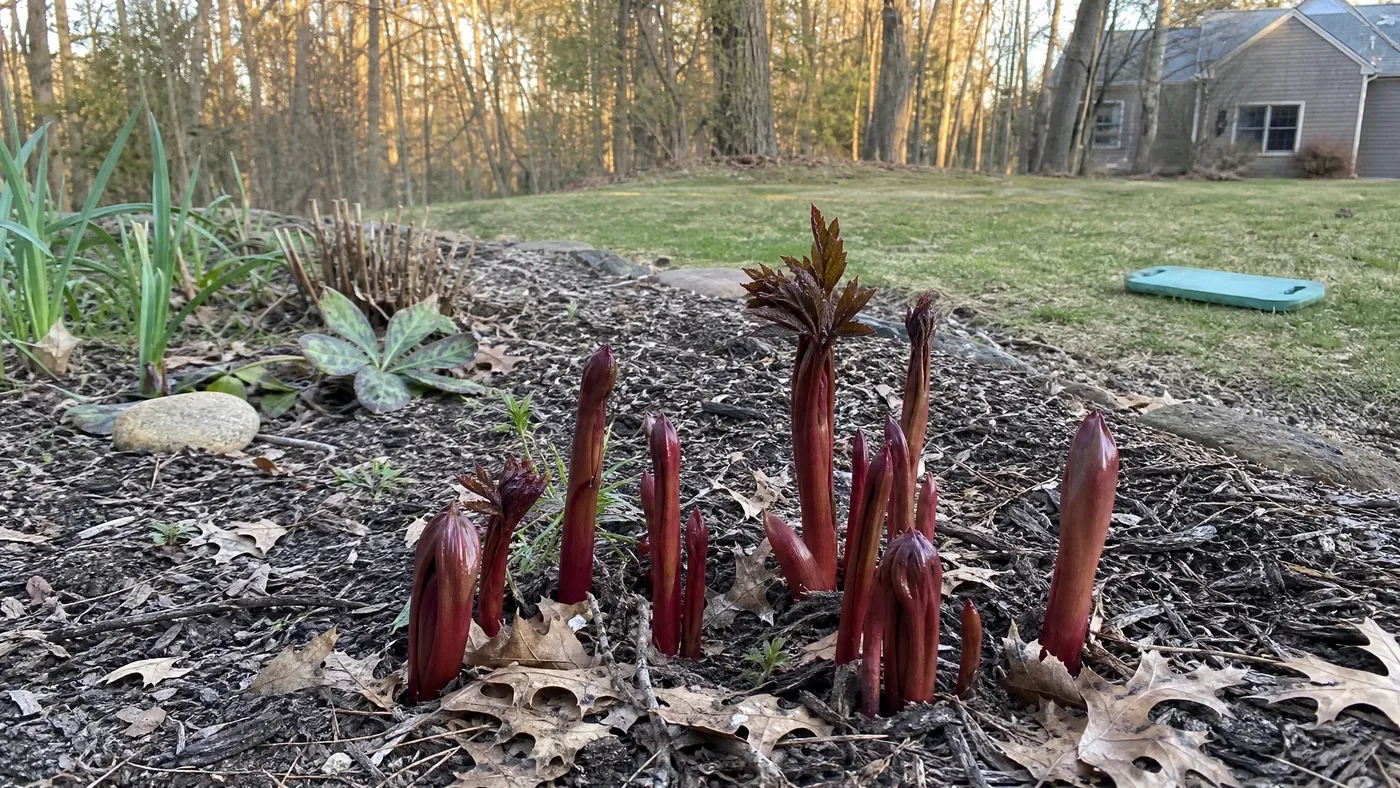
The ground has just let go of winter. The air still bites, the mulch lies flat and brown, and most of the bed looks asleep, but in one corner something red is already pushing up through the soil. That is Red Sarah Bernhardt, and its first weeks are easy to miss.
This guide covers everything you need to know about the color of those first shoots, from the early-spring view of the whole bed to the burgundy flush on a single unfurling leaf. You will learn how to find your plant before it has a leaf to show, what each stage looks like, and what the color tells you about the June blooms to come.
Skip this window and you miss weeks of the plant's best-kept color. You also risk raking or stepping on the very shoots you came to admire.
A Garden Waking Up in Early Spring
Stand at the edge of the bed on the first thawed morning and take in the whole scene before you look for any single plant. The mulch is flat and brown. Shrub buds are swollen but shut. A few early bulbs may show green tips, and most perennials are still bare ground, because herbaceous peonies die back to the soil every winter and start over each spring.
Peonies are early risers. Penn State Extension notes that peonies emerge early in the spring, often while the weather is still quite cold, so your red shoots may stand beside bare soil for weeks before the neighbors catch up. That head start makes this the best window to meet the plant.
Take Stock of the Neighbors
Walk the bed slowly and write down what is up and what is not. Note the bulbs, the early groundcovers, and the patches of bare soil where a perennial is still asleep. Each bare patch is a clue, since peony shoots return in the same place every year.
Take one wide photo of the whole bed from a spot you can reuse all season. Three weeks later it will look like a different garden. If you are planning companions, our landscape ideas for Red Sarah Bernhardt gardens cover which plants sit well beside red shoots.
Mark the Clump Before the Shoots Rise
Push a plant label into the soil beside the spot where last year's stems stood, and keep it well clear of the crown. The growing points of a peony, called eyes, sit shallow. Planting advice is to cover the eyes with only one to two inches of soil, so a careless stake can easily spear one. Keep spring mulch thin over the crown for the same reason.
If you are still choosing where a new plant will go, we grow Red Sarah Bernhardt for beds like this, and our guide to planting it the right way walks through the autumn planting window.
Spotting Red Sarah Bernhardt Peony Among the Emerging Clumps
Most peonies in a mixed bed come up red, so red alone will not name a plant. Clemson's extension factsheet says emerging peony shoots will usually be dark red. What sets this one apart is depth.
Red Sarah Bernhardt is a red-flowered sport of pink Sarah Bernhardt, and its shoots typically carry a deeper red-burgundy flush than the paler pink-green shoots of the original. Use these steps on a mild morning to pick it out.
- Go to the spot where your label or planting map says the clump lives, and crouch so your eyes are level with the soil.
- Look at the shoot tips against the mulch in soft or overcast light, which shows the burgundy truest and keeps bright sun from washing it out.
- Brush loose mulch back with your fingers. Never rake near the crown, because young shoots snap easily.
- Compare the shoots within the clump. A healthy plant shows the same dark tone across every spike.
- Write the date and the number of shoots in your garden notes so you can compare next spring.
Telling It Apart From Other Red Peonies
Be honest with yourself here: shoots alone cannot separate two red-flowered peonies. If Karl Rosenfield or another red sits in the same border, rely on your labels, and read our comparison of Red Sarah Bernhardt and Karl Rosenfield for the differences that show in bloom.
One of the most common questions we get each spring is whether dark red shoots mean the wrong plant arrived. They do not. Dark red is the normal start for a peony. A clump that stays pale pink-green well into the warming weeks is the one worth a second look at its label.
Judge Young Plants by Tone
A first- or second-year plant sends up only a few shoots, so a thin showing says nothing about color. Judge the tone of the shoots you have, not the count.
The Clump as a Ring of Red Spikes
Step back a few feet and the shoots stop being individual stalks. They read as one ring of upright red spikes packed around the crown, each one pointed and straight. A young plant shows a handful. A clump that has sat in place for years shows a crowd, and the ring widens only slowly, because NC State Extension lists the growth rate of herbaceous peonies as slow.
That slow pace is why this window deserves your attention. The plant that rises from this ring becomes a rounded mound roughly 2 to 3 feet tall and wide, but it takes its time getting there, and these red spikes are the only show the plant offers in early spring.
Count and Compare the Spikes
Once a week, count the spikes and compare the tallest with the shortest. An even ring, with every shoot at a similar height, points to a healthy crown. A lopsided ring can simply mean one side of the crown is younger and slower to wake, so count again the following week before you worry.
Feed as the Spikes Appear
Early spring is also feeding time. Iowa State Extension advises you to fertilize plants in early spring as the new shoots begin to emerge from the ground. Scatter the product on the soil around the ring, keep it off the red tips, and water it in. Our guide to when and how to fertilize Red Sarah Bernhardt covers timing and method in more detail.
Let the Ring Read Your Site
Notice how much light the ring gets by midmorning. This plant wants full sun, meaning six or more hours a day, and a ring that sits in shade is telling you the bloom will suffer. Do not move it now. Autumn is the best time to plant or relocate a peony, so make a note and wait for fall.
Red Sarah Bernhardt Peony Stems Up Close
Now lean in on a single stem. Young peony stems are thick for their height, smooth and fleshy, and the red runs through them like the color of rhubarb. New shoots look quite red, almost like rhubarb, and special proteins, referred to as antifreeze proteins, are credited for the color.
That explains why a plant that comes up in cold weather wears its red so boldly. As a red sport, this cultivar also carries red color into its blooms, which is why the shoots typically run deeper than the original pink Sarah Bernhardt. In our rows, the stems look closer to burgundy than to brick.
Read the Stage by the Color
A stem changes quickly in the weeks after it breaks the soil. This table shows what you will see and what to do at each stage.
| Stage | What you see | What to do |
|---|---|---|
| Tip just breaking the soil | Dark red, pointed, tightly folded | Mark the spot and keep mulch thin |
| Stem lengthening | Deep red-burgundy stem, leaves still folded against it | Feed and take your weekly count |
| Leaves starting to unfurl | Burgundy flush across the young leaves | Photograph from the same spot |
| Leaves open | Green taking over the leaves | Watch the stem tips for round buds |
Handle Young Stems Gently
Photograph rather than touch. Stems at this stage are brittle, and a snapped one can mean one fewer flower stalk this year. If a stem does break, cut it cleanly and leave the rest of the clump alone.
Burgundy on a Red Sarah Bernhardt Peony Bud Tip
Now go to the very top of the stem. At the tip, the leaves are still folded in on themselves, and this is where the burgundy shows strongest, a wine-dark flush over the young foliage. Over the following days the leaves open and flatten, and the burgundy fades toward green. If you only look once, look here.
Watch the Leaves Unfurl
The unfurling happens fast, often within days, so a weekly look can feel like you missed a step. Go out every few days once the stems have lengthened. Notice how the flush lingers longest on the leaves still held close to the stem, while the first leaves to open turn green sooner.
Keep a Weekly Photo Record
A phone is all you need to capture the change, and these habits make the photos comparable:
- Shoot at the same time of day, preferably in soft light, so the tone is not skewed by harsh sun.
- Stand in the same spot and frame the same shoot, so each week's photo shows how far the color has moved.
- Include something plain and neutral, like a white label, in the frame, so you can judge the burgundy against it.
- Date each photo and compare it with last year's, which tells you whether the plant is gaining strength.
After a few springs, that record becomes a small family album for the plant, and the best proof that a peony planted once keeps paying you back.
From Burgundy Shoots to June Blooms
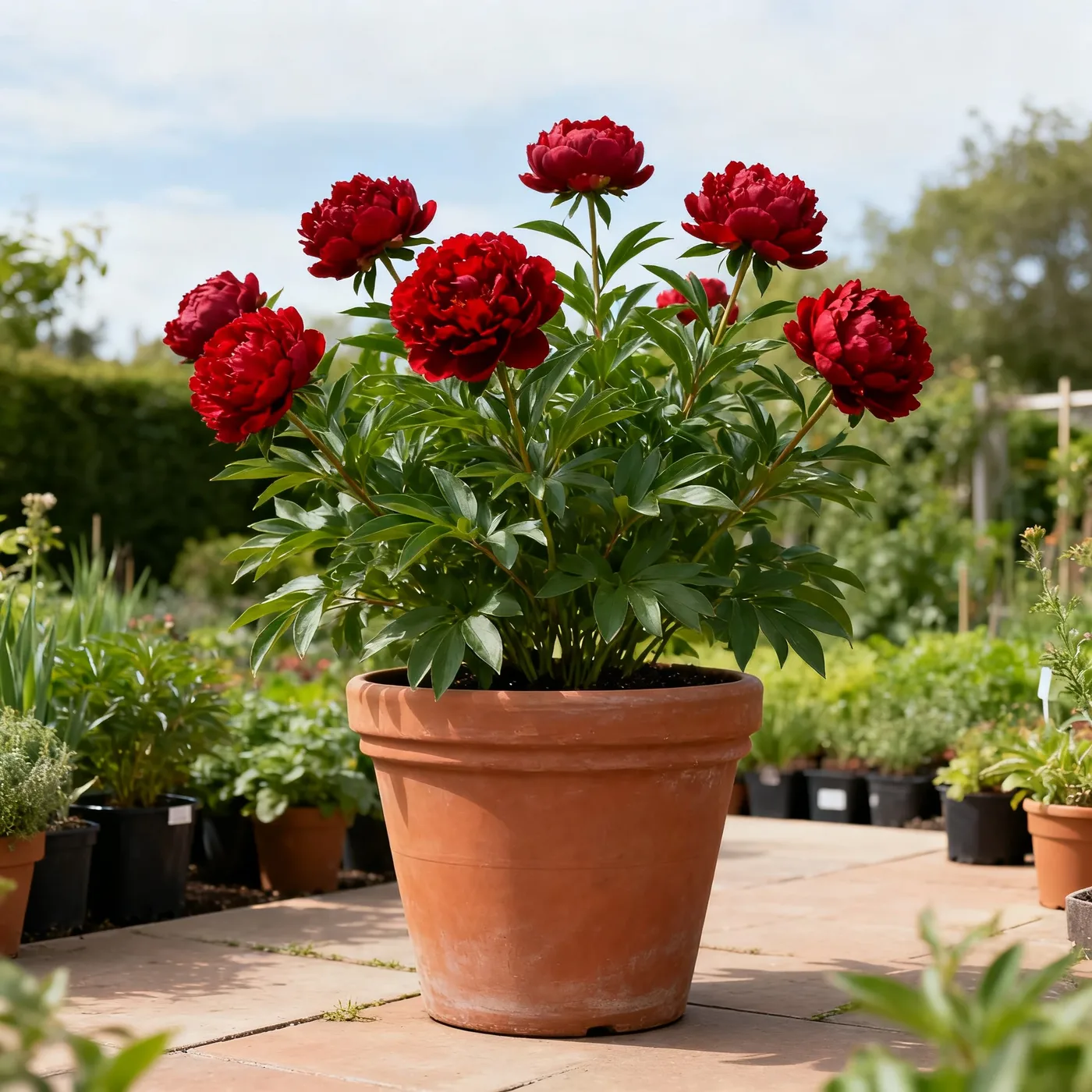
The color at the soil line is the first chapter of a story that ends months later. The burgundy shoots grow into lustrous green foliage, then into fragrant double blooms in dark, red-tinged petals about 6 to 8 inches across. NC State Extension says each plant blooms for about two weeks in late spring to early summer, so the early shoots are the long, quiet part of the show. Our bloom time and flower color guide covers what to expect when the buds open.
So walk out to the bed once a week in early spring and watch the color change, from dark red spikes to burgundy leaf tips to green. The red returns in autumn, when Colorado State's PlantTalk notes peony foliage can turn yellow or reddish-maroon.
Red Sarah Bernhardt Peony
Nursery-grown Red Sarah Bernhardt Peony in sizes from #3, shipped to your door.
From $64.99
Shop Now →Red Sarah Bernhardt grows best in our beds when it gets a full day of sun and fertile soil that drains well, so the color you watch emerge each spring is the one we see in our own rows. We grow and sell top-quality plants as a small business with our own farms. If those dark red spikes have won you over, we would love for you to take a look at our shop when you are ready to plant.