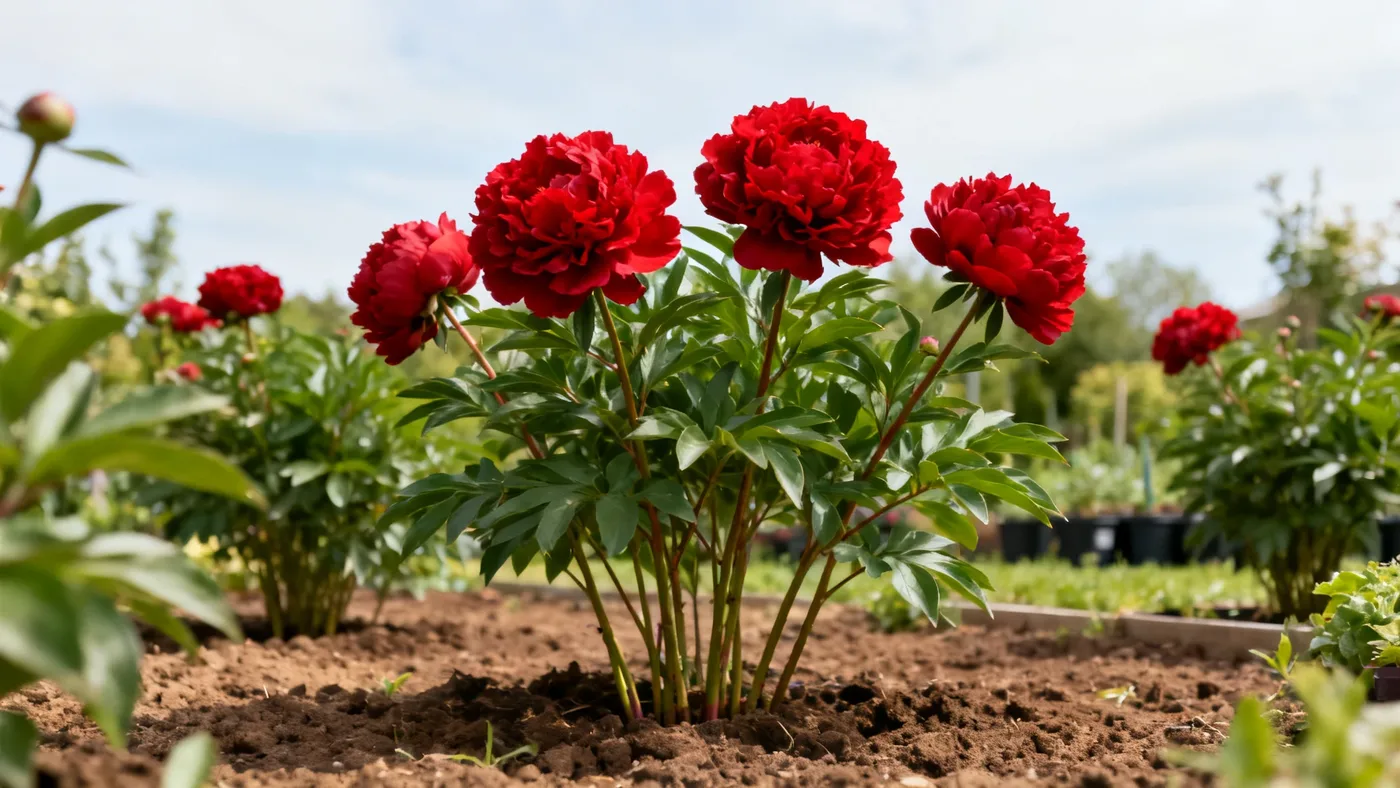
Sun Requirements for Red Sarah Bernhardt Peony Blooms
Red Sarah Bernhardt Peony produces deep red, double blooms in late spring to early summer, but only when planted in the right light conditions. Unlike many perennials that tolerate partial shade, this peony variety is particular about sunlight. Getting the sun exposure right is one of the most direct ways to ensure reliable, abundant flowering year after year.
How Much Sun Do Peonies Need?
Red Sarah Bernhardt Peony requires full sun to perform at its best. Full sun means 6 or more hours of direct sunlight each day. This is not a guideline or preference; it is a genuine requirement for reliable blooming on this cultivar. Plants that receive less than 6 hours of sun will survive, but they will produce fewer flowers and blooms may open incompletely.
The plant will tolerate light afternoon shade in hot climates where temperatures regularly exceed 85 degrees Fahrenheit. In these regions, 2 to 3 hours of afternoon shade can prevent petal scorch and wilting. However, even in hot climates, morning sun is non-negotiable. Aim for direct sun before noon, then filtered or dappled afternoon light.
Do not assume that "some shade" is acceptable. Poor flowering in too much shade is one of the most common problems reported by gardeners. If your garden cannot provide 6+ hours of sun, Red Sarah Bernhardt Peony is not the right plant for that location.
Why Sun Matters for Your Blooms
Sunlight drives the energy the plant needs to build flower buds and open them into the deep red, double blooms this cultivar is known for. Peonies in shade allocate their energy to foliage instead, resulting in leafy plants with few or no flowers. Additionally, shaded peonies are more prone to diseases like powdery mildew and botrytis blight, since air circulation is usually poor in shaded spots.
The timing of sunlight also matters. Morning sun is more valuable than afternoon sun in most regions because it dries dew and early-morning moisture from the foliage, reducing fungal disease pressure.
Materials and Site Assessment
Before planting, gather these simple tools to evaluate your site:
- A watch or phone with a timer
- A notebook or phone to track sun patterns
- A compass (optional, helpful for determining sun direction)
- A clear view of your planting area from early morning through late afternoon
You will also need to assess your soil, since sun and soil together determine peony success. Red Sarah Bernhardt Peony grows in fertile, well-drained loam rich in organic matter, with a soil pH between 6.5 and 7.0 (slightly acidic to neutral). Poor soil cannot be fully offset by perfect sun.
Step-by-Step Guide to Finding and Preparing a Sun-Rich Planting Site
Step 1: Map sunlight across your garden for one full week.
Choose a typical day and observe your proposed planting location every hour from sunrise to sunset. Note exactly when the sun reaches the spot and when shade falls. Do this on two different days if possible, including one overcast day, to account for patterns. Record the total hours of direct sun. If the spot receives fewer than 6 hours, consider a different location before proceeding.
Step 2: Account for future shade from trees and structures.
Trees grow. Fences cast expanding shadows as sun angles change with the seasons. If your planting site is near a tree or structure, check the site again in the season when shade will be deepest (usually winter for deciduous trees, but year-round for evergreens and buildings). A location that receives 7 hours of sun now may receive only 5 hours in three years if a nearby tree's canopy is filling in.
Step 3: Test your soil and amend if needed.
Use a simple soil test kit (available at garden centers and extension services) to check pH and nutrient content. Red Sarah Bernhardt Peony will not thrive in waterlogged or heavily compacted soil. If your soil drains poorly, work in 2 to 3 inches of aged compost or peat moss to improve structure. If the soil is too acidic (below 6.5 pH), add horticultural lime. If it is too alkaline (above 7.0 pH), add elemental sulfur according to the soil test results.
Step 4: Choose a site with good air circulation.
Air circulation and sunlight work together. A site that receives full sun but is surrounded by walls or dense plantings will be humid and prone to fungal disease. Space Red Sarah Bernhardt Peony at least 3 to 4 feet away from other shrubs and trees, and avoid planting in corners where air movement is restricted.
Step 5: Plant during the optimal season.
Fall (September through November, depending on your zone) is the preferred planting season. This allows the root system to establish during cool months before winter cold prepares the plant for spring growth. Early spring planting while the plant is still dormant is also acceptable. Do not plant Red Sarah Bernhardt Peony in summer, when heat stress combined with transplant shock can kill the plant.
Step 6: Position the crown correctly.
When planting, the crown (the point where shoots emerge from the roots) should sit no more than 1 to 2 inches below the soil surface. Planting too deep is a leading cause of failure to bloom, even in full sun. Measure carefully and backfill soil to the correct depth before watering in.
Tips for Maximizing Blooms
Reflective surfaces can boost effective sunlight. A white fence, light-colored wall, or even white mulch behind your peony will reflect additional warmth and light. This is especially useful in regions with shorter growing seasons (USDA zones 3 and 4).
In hot climates (zones 8), afternoon shade from a tall tree or structure can prevent petal browning without reducing overall bloom production. The key is to avoid dense, all-day shade.
Avoid fertilizing with high-nitrogen products, which push leafy growth at the expense of flowers. Instead, apply bone meal or a balanced 5-10-10 fertilizer in early spring as shoots emerge. Excess nitrogen will reduce flowering even in full sun.
Staking or cage support may be needed. The double blooms are heavy and can flop in high wind or afternoon sun if stems are not supported. Install stakes or a grow-through cage in early spring before stems reach full height.
Common Mistakes to Avoid
Planting in partial shade and expecting full blooming. This is the most common error. A site that receives 4 or 5 hours of sun is not "close enough." The plant will grow, but flowering will be disappointing. If your garden is mostly shaded, choose a different peony or plant entirely.
Planting too deep. Even one extra inch of soil over the crown can prevent blooming for years. Measure twice before backfilling.
Underestimating future shade. Do not rely on the sun exposure you see today if nearby trees are young or growing. Plan for the mature tree canopy.
Ignoring soil drainage. Full sun alone cannot overcome soggy soil. Red Sarah Bernhardt Peony will rot in waterlogged conditions even in bright light.
Overwatering. While the plant needs regular water while establishing, it is only moderately drought tolerant once mature. Avoid overhead watering on foliage, which promotes fungal diseases and reduces the benefit of the sun you worked hard to provide.
Expected Results
Once established in full sun with correct soil, Red Sarah Bernhardt Peony typically blooms reliably by the second or third growing season after planting. The plant reaches mature width of 24 to 36 inches and height of 24 to 36 inches over approximately 3 to 5 years. Blooms appear in late spring to early summer (typically May to June, though timing varies by USDA zone). The deep red, double flowers may have a mild to moderate sweet fragrance, depending on growing conditions and cultivar variation.
If your peony fails to bloom in a sunny location, verify that the crown is not planted too deep and that the soil is not soggy. Both conditions can block flowering even in full sun. A plant in genuine full sun and proper soil will bloom within a few years; if it does not, the site itself may not be as sunny as it appears, or an underground issue like poor drainage requires attention.
For more guidance on caring for your Red Sarah Bernhardt Peony after planting, see the complete Red Sarah Bernhardt Peony care guide.
Quick Reference: Sun and Site Checklist
| Requirement | Target | Notes |
|---|---|---|
| Daily sunlight | 6+ hours direct sun | Less than 6 hours reduces flowering significantly |
| Afternoon shade in hot climates | Light afternoon shade only (zones 8) | Morning sun is essential; afternoon shade acceptable in extreme heat |
| Soil drainage | Well-drained loam | Waterlogged soil causes root rot even in full sun |
| Soil pH | 6.5 to 7.0 | Test and amend before planting |
| Spacing from other plants | 3 to 4 feet | Ensures air circulation and reduces disease |
| Crown depth | 1 to 2 inches below soil surface | Planting too deep is a leading cause of failure to bloom |
| Planting season | Fall or early spring | Fall preferred; avoid planting in summer |
| Expected first blooms | Year 2 to 3 after planting | Depends on planting season and site conditions |