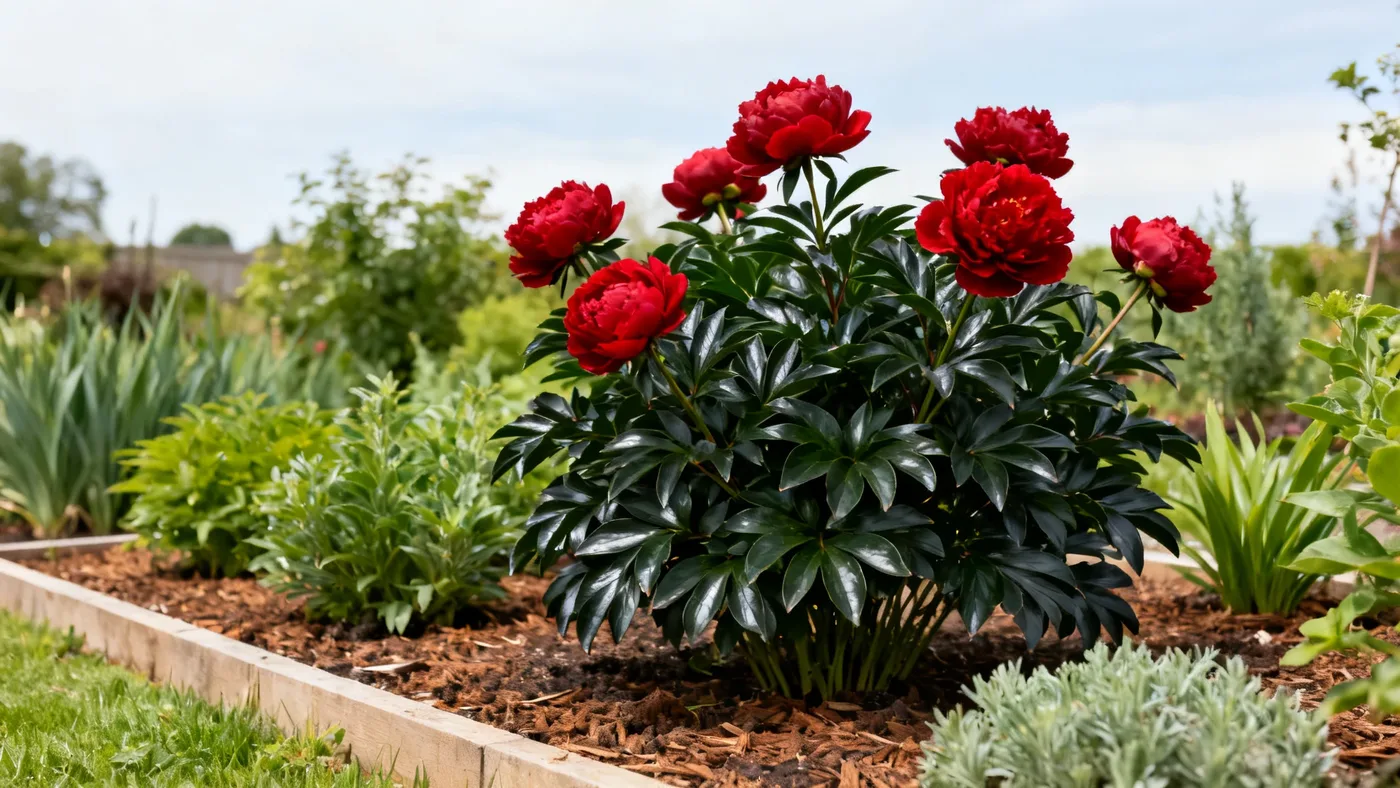
Landscape Ideas for Red Sarah Bernhardt Peony Gardens
Red Sarah Bernhardt Peonies bring bold, unmistakable color to spring and early summer gardens. These herbaceous perennials reach 24 to 36 inches tall and equally wide, making them substantial focal points in any landscape. The deep red double blooms appear in late May through June (timing varies by zone), and the dark green, glossy foliage adds presence even after the flowers fade. Designing a garden around this peony variety means choosing companion plants that amplify its impact, planning for structural support, and ensuring the entire composition looks intentional from spring emergence through fall dormancy.
Successful red peony landscaping combines practical horticultural knowledge with aesthetic vision. This guide covers 10 design strategies that work across USDA zones 3 through 8, all grounded in how Red Sarah Bernhardt Peonies actually grow and perform.
1. Border Red Peonies with Classic Roses for Layered Blooms
Roses and Red Sarah Bernhardt Peonies are natural partners in the mixed perennial border. Plant roses either in front of or alongside your peonies, depending on their mature height. Shrub roses at 4 to 6 feet tall create a backdrop, while shorter patio roses (2 to 3 feet) work as complementary neighbors. The key is timing: peonies bloom in late May and June, so choose rose varieties that peak during the same window or bridge into summer. David Austin roses and heirloom varieties often hit this window reliably.
The visual pairing works because rose foliage and peony foliage complement each other. Peony leaves are deeply lobed and glossy, while rose foliage tends toward finer texture. This contrast draws the eye through the border. When both are in bloom, the layered reds and crimsons create depth. After the peony blooms fade (deadhead them to redirect energy), the roses continue the show, maintaining color continuity through mid to late summer.
Practical takeaway: Space roses at least 3 feet from the peony's center to avoid root competition. Both want well-drained soil rich in organic matter, so amend your bed uniformly. Water roses at the base, not overhead, to protect both plants from fungal issues like powdery mildew.
2. Pair with Bearded Iris for Extended Spring Color
Bearded iris varieties bloom just before peonies in many zones, typically in mid to late May. Shorter bearded iris cultivars (18 to 24 inches) nestle in front of your peony clumps without shading them. Taller varieties (30 to 36 inches) can stand alongside without competing for visual prominence. The iris blooms provide a warm-up act; as they fade, the peonies take center stage.
Iris and peony root systems are different enough to coexist peacefully. Iris rhizomes grow close to the soil surface and prefer slightly drier conditions, while peonies have deeper tubers and appreciate moderate moisture once established. This means you can position them in the same bed without special accommodation. Choose bearded iris in complementary hues: deep purples, crimsons, or even butter yellows that echo warm undertones in the red peony blooms.
Practical takeaway: Plant iris rhizomes so the top third sits above soil, peony crowns no deeper than 1 to 2 inches below soil surface. Both need full sun (6 or more hours daily), so site them together without shading. Divide iris every 3 to 4 years if crowding occurs; peonies prefer not to be divided unless necessary.
3. Use Catmint as a Soft Textural Companion
Catmint (Nepeta) is one of the most underused companion plants for peonies, yet it deserves a spot in every peony garden design. This herbaceous perennial reaches 2 to 3 feet tall with wispy, aromatic foliage and tiny lavender-blue flowers. Plant catmint in clusters around or in front of your Red Sarah Bernhardt Peonies. The ethereal quality of catmint's blooms softens the architectural boldness of the peony's full double flowers.
Catmint blooms from late spring through summer, so it extends interest beyond the peony's May-June window. The soft texture of its foliage (finely divided leaves) contrasts beautifully with the peony's glossy, deeply lobed leaflets. In many gardens, catmint persists through fall and into early winter as dried stems and foliage, adding architectural interest when the peony top has died back to 2 to 3 inches.
Practical takeaway: Catmint is drought tolerant once established, so it's a lighter drinker than peonies. Space catmint 2 to 3 feet from the peony center to avoid crowding. Deadhead spent catmint flowers to encourage more blooms. Both plants need full sun and well-drained soil; catmint is even more insistent about drainage than peonies.
4. Create Height Contrast with Baptisia Shrubs
Baptisia (false indigo or wild indigo) is a native shrubby perennial that reaches 3 to 4 feet tall and equally wide. Plant baptisia behind your Red Sarah Bernhardt Peonies to create layered depth in the border. Baptisia blooms in late spring (May into early June in most zones), overlapping with peony bloom time. The flower color is typically deep indigo or purple-blue, creating striking contrast with the deep red peony blooms.
Baptisia is long-lived and slow to establish, much like peonies. Both plants settle into their mature size over 3 to 5 years. Once established, baptisia is tough and low-maintenance, requiring no staking even at 4 feet tall (its wood is naturally sturdy). After bloom, baptisia develops attractive black seedpods that persist through fall and into early winter, adding visual interest after the peony foliage has died back.
Practical takeaway: Baptisia is deep-rooted and drought tolerant; it won't compete aggressively with peony roots. Space baptisia at least 4 feet from the peony center. Both need full sun and well-drained soil. Avoid moving baptisia once planted, as it has a taproot and doesn't like disturbance. Never deadhead baptisia's spent flowers if you want the decorative fall seedpods.
5. Add Movement with Allium Ornamentals
Alliums (ornamental onions) inject a sense of movement and whimsy into peony gardens. Choose mid-height varieties like Allium 'Purple Sensation' (24 to 30 inches) or 'Gladiator' (30 to 36 inches) that won't tower over your 24 to 36-inch Red Sarah Bernhardt Peonies. Alliums bloom in late May through June, coinciding with peony peak bloom. The spherical flower heads (called umbels) create geometric contrast to the soft, ruffled texture of peony double blooms.
Alliums work well scattered throughout the peony bed rather than in strict rows. Their thin, upright stems don't crowd the peony foliage, and they emerge from the peony clump without shading it. Purple and deep burgundy allium varieties echo the red tones in the peony blooms, while white or pale yellow alliums provide lightness. After bloom, allium seedheads dry beautifully and last through early fall, adding airy texture as the peony foliage begins to turn bronze and burgundy.
Practical takeaway: Plant allium bulbs 3 to 4 inches deep, spacing them 6 to 8 inches apart within the peony bed. Alliums prefer well-drained soil and tolerate drought once established. They're deer resistant and generally pest-free. Leave seedheads in place for late-season interest, then deadhead in late fall before the peony foliage dies back.
6. Incorporate Salvia for Continuous Summer Interest
Salvias (sages) are herbaceous perennials and subshrubs that extend color continuity from late spring into fall. Meadow sage (Salvia pratensis) and hybrid salvias like 'Blue Hill' reach 18 to 24 inches with purple, blue, or rose-colored flower spikes. Plant salvias in front of or alongside your Red Sarah Bernhardt Peonies. They bloom starting in June and often rebloom if deadheaded regularly, covering the gap when the peony flowers have faded.
Salvias' upright flower spikes provide form contrast to the peony's full, rounded double blooms. The foliage is typically aromatic and fine-textured, offering another layer of textural interest. Many salvias are semi-evergreen, holding dried foliage through winter in zones 3 to 8, which means they add structure to the garden long after the peony tops have been cut back to 2 to 3 inches.
Practical takeaway: Plant salvias at least 2 feet from the peony center. Most salvias are drought tolerant and prefer full sun with well-drained soil. Deadhead spent flower spikes to encourage repeat blooming. In late fall after hard frost, cut salvias back to 4 to 6 inches to tidy the bed and prepare for spring growth.
7. Plan for Staking to Support Heavy Blooms
Red Sarah Bernhardt Peonies produce full, heavy double blooms that often require support. A mature peony clump at 24 to 36 inches wide with flopping stems under double-bloom weight is one of the common problems listed by experienced growers. Install peony rings or single stakes early in the growing season, before the stems reach their full height. A 30 to 36-inch peony ring (the circular frame type) is ideal for containing the sprawling stems as they grow.
Position the stakes or rings in early spring as shoots emerge, not after they've grown tall and flopped. This approach is far easier than trying to stake a plant after bloom has begun. Bamboo stakes (48 to 60 inches tall) driven 8 to 12 inches into the ground work for individual stem support, while the ring system supports an entire mature clump. After bloom fades and you deadhead spent flowers, leave the support in place through the growing season; the stems still need help managing the foliage weight.
Practical takeaway: Install stakes in late March or early April, before the peony reaches full height. Remove them in late fall after cutting the foliage back to 2 to 3 inches. This prevents flopping, improves air circulation (reducing fungal issues), and keeps the bloom pristine throughout the flowering window.
8. Design for Fall Interest with Foliage Color
After the Red Sarah Bernhardt Peony's blooms fade, the foliage becomes the focal point. This plant's dark green, deeply lobed compound leaves often turn bronze, burgundy, or deep reddish colors in fall before dying back to the ground after frost. Plan your peony garden to showcase this transition. Plant peonies in clusters of 3 to 5 plants spaced 3 to 4 feet apart to create dramatic masses of changing color.
Combine peonies with perennials that hold burgundy or bronze tones in fall, like certain salvias, ornamental grasses, and sedum varieties. These companions echo the peony's fall color, creating a harmonious transition from summer to winter. Once frost kills the peony's top growth, cut it back to 2 to 3 inches above ground. At that point, neighboring plants like ornamental grasses and dried sedum take center stage, maintaining structure and visual interest through winter.
Practical takeaway: Leave peony foliage standing until hard frost (typically late October to early November, depending on zone) so you can enjoy the color change. Don't cut it back early; the plant is redirecting energy to the roots during this phase. Plan neighboring plants with late-season color in mind rather than focusing only on spring bloom.
9. Space Appropriately for Air Circulation and Mature Size
Red Sarah Bernhardt Peonies reach their full mature width (24 to 36 inches) over 3 to 5 years. Undersizing the space allocated to each plant is one of the most common landscaping mistakes. Space peony clumps 3 to 4 feet apart, not 2 feet. Yes, this means your peony garden will look sparse the first year or two, but it's the only way to ensure each plant has adequate air circulation and room to reach its full, glorious size.
Poor spacing leads to crowding, weak stems, and increased fungal pressure (botrytis blight, powdery mildew, and leaf spot all benefit from dense plantings). Good air circulation is especially critical since Red Sarah Bernhardt Peonies produce heavy, moisture-holding double blooms that are susceptible to fungal issues. Resist the urge to cram in companion plants or add extra peonies in tight quarters. The payoff for restraint is healthier, more vigorous plants and fewer disease problems.
Practical takeaway: Use temporary fillers (annuals, smaller perennials) in the gaps between young peonies during the establishment years. Remove them once the peonies begin to thicken (around year 3). Check spacing before planting to confirm you're allowing room for mature width.
10. Choose Sunny Locations for Best Blooming
Red Sarah Bernhardt Peonies require full sun (6 or more hours daily) to produce the best bloom and strongest stems. While the plant tolerates light afternoon shade in hot climates, this is a compromise, not a preference. A peony sited in partial shade will produce fewer flowers, weaker stems more prone to flopping, and denser foliage that restricts air circulation. This is one of the most common reasons why peonies fail to bloom in gardens: they're planted in locations that receive less than 6 hours of direct sun.
Survey your garden carefully before placing peonies. Check light patterns across the growing season, not just on a single sunny day. Consider shade from trees, structures, and neighboring plants as they grow. If your ideal site receives only 4 to 5 hours of afternoon sun, a nearby location with 6 to 8 hours of morning and midday sun will perform far better. Morning sun is especially valuable because it dries dew from the foliage, reducing fungal disease pressure.
Practical takeaway: Plant Red Sarah Bernhardt Peonies in the sunniest, most open part of your landscape. Avoid planting under high-canopy trees or on the north side of structures. If you have two potential sites, choose the one with the most unobstructed sun exposure. This single decision has more impact on bloom abundance than almost any other factor.
Quick Reference: Peony Garden Design Checklist
| Design Element | Recommendation | Why It Matters |
|---|---|---|
| Companion plants | Roses, iris, catmint, baptisia, alliums, salvia | Extend bloom season and provide textural contrast |
| Spacing | 3-4 feet apart | Allows mature size (24-36 in wide) and air circulation |
| Sun exposure | Full sun, 6+ hours daily | Necessary for abundant blooming and strong stems |
| Staking | Peony ring or stakes installed early spring | Prevents flopping under heavy double-bloom weight |
| Soil | Fertile, well-drained loam with organic matter | Peonies fail in soggy or waterlogged soil |
| Bloom window | Late May to June (zone 3-8) | Plan companions to extend color before and after |
| Fall prep | Cut foliage back to 2-3 in after hard frost | Removes disease refuge and directs energy to roots |
| Fragrance | Mild to moderate sweet peony scent | Best appreciated when sited near seating or pathways |
For more detailed information on planting depth, seasonal care, and troubleshooting common problems, refer to the complete Red Sarah Bernhardt Peony care guide. That resource covers establishment through maturity, disease prevention, and pest management across all zones 3 through 8.