Does Red Sarah Bernhardt Peony Hold Its Color When Dried?
Brown, papery petals in a jar are how most dried peony projects end. Peonies of the Paeonia lactiflora type are hardy in zones 3–8, and when pink flowers fade in the drying room, the pale ones go tan within days. Red Sarah Bernhardt Peony comes from the same species, but its petals are a dark pinkish-purple tinged with red, and that heavier pigment changes the outcome.
Below, you'll find out all about drying and pressing Red Sarah Bernhardt, including when to cut, how to split whole heads from loose petals, how to dry each one, how to store them, and what color you will really end up with. We trace where the red goes wrong at each stage, then walk through the job in order. This guide covers dried and pressed blooms only, not vase life.
Cutting Red Sarah Bernhardt Peony at the Marshmallow-Soft Stage
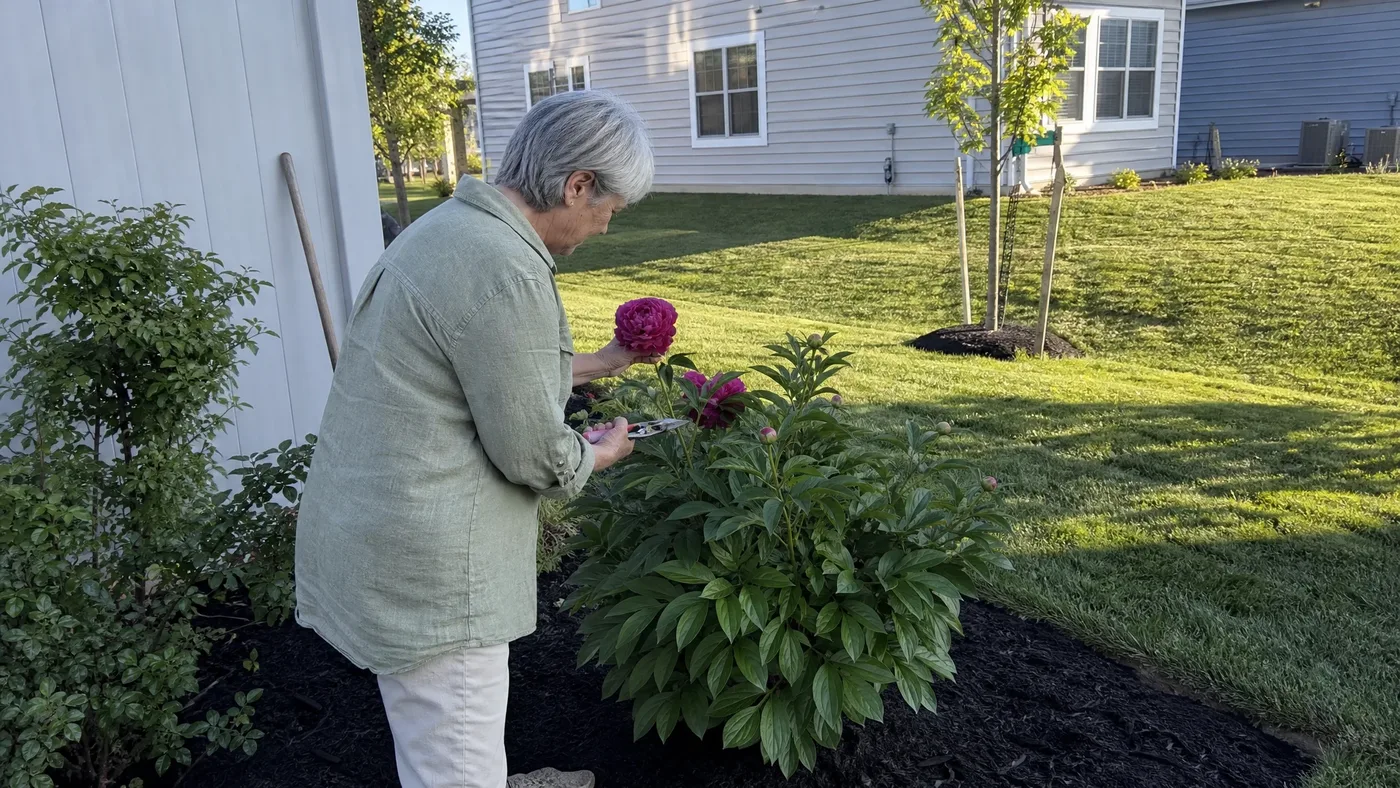
Cut the bud when it shows color and gives slightly under a gentle squeeze, like a marshmallow. Iowa State's extension describes the best harvest stage as buds showing color and soft in the center. Squeeze at the top of the bud, not the sides, so you do not bruise petals you plan to dry.
Plan around a short window, because each plant blooms for about two weeks in late spring to early summer. Check your plants every morning once the first buds start to color. In warm weather, a bud that is firm on Monday can be loose by Thursday.
Cut after the dew has dried, with clean shears. Wet petals are the first step toward mold later, so if a bloom is damp from rain, lay it on a towel until it is dry before you go further. Cut just above a leaf and leave the rest of the stem standing. Our guide to pruning and cutting back covers what to do with the stems in fall.
One of the most common questions we get is how many blooms a young plant can spare, and what we tell customers is very few. This is a slow-growing plant, and it earns your patience.
If the Bloom Is Too Open
If the outer petals have started to spread and the center is showing, the head will not hold together once it dries. Do not hang it. Strip the petals instead and use them for pressing or confetti. If the petals have brown edges or rain spots, trim those away before you press.
If the Bud Is Too Tight
If the bud feels hard with no give, leave it on the plant and check again tomorrow. A hard bud cut early tends to dry as a small, tight knot with dull color. If a storm is coming and you must cut ahead, Iowa State says moist refrigeration keeps buds fresh for several weeks, so you can bring them out in batches at the right stage.
Sorting Red Sarah Bernhardt Peony Heads From Loose Petals
Decide at the cutting table what each bloom is for, because heads and petals need different flowers. Red Sarah Bernhardt carries double blooms about 6 to 8 inches across. That gives you plenty of petals per flower, but also a dense center that is slow to dry. A bloom you want whole has to be in better shape than one headed for the confetti bowl.
Use these tests to sort the harvest:
- Keep as a whole head if the outer guard petals are intact, the center still feels soft, and no petal has a brown bruise or a rain spot.
- Strip for petals if the bloom has opened fully, the outer petals are ragged, or the head droops when you hold it by the stem.
- Press the largest, cleanest petals flat and keep the small, torn or sun-marked ones for confetti, since confetti gets crumbled anyway.
- Throw out anything with gray fuzz, slime or dark soft patches. Mold spreads to the rest of the batch.
Plan for Shrinkage
Clemson's extension notes that roses and peonies shrink somewhat when air-dried. A head cut at full size will finish noticeably smaller, so for a wreath cut more heads than the finished look seems to need.
Sun-struck outer petals often lighten at the tips before you ever cut them, and that pale edge will read as tan after drying. Put those petals in the confetti pile, where a few light flecks do no harm. Keep each day's harvest on its own tray so you can tell later which batch turned out best.
Drying Red Sarah Bernhardt Peony Heads Upside Down
Hang whole heads upside down in a dark, dry room with moving air. Hanging keeps the weight of the bloom from crushing the petals, and a dark room protects the color. Clemson's extension says the darkness helps preserve the flower color. Speed matters too, because the faster flowers dry, the better they retain color.
- Strip the leaves from the stem and leave 3 to 4 inches or so of stem as a handle.
- Tie a loop of string or wire around the stem. Hang one head per loop so the blooms do not touch.
- Choose a closet, attic or spare room with no direct sun and a little air movement. A small fan on low in the next room helps.
- Check daily. The head is done when the outer petals feel papery and the center no longer gives when pressed.
Fixes for Slow or Moldy Drying
If the outer petals are crisp but the center is still soft, the dense middle is holding moisture. Move the head to a warmer, drier spot with more air, but keep it out of sun. Do not heat it hard, because heat browns the petals.
If you see gray fuzz or smell mustiness, discard the head. Next time, hang fewer heads at once, cut a drier bloom, or spread them farther apart. If the petals are drying with brown patches instead, the room is too humid or too bright, so move the heads to a darker, drier place.
If a head drops petals as it dries, it was cut too open. Let it finish, then use the fallen petals for confetti.
Pressing Petals Flat for Confetti and Crafts
Pressing suits the petals you pulled from open blooms. Peony petals are broad and fleshy, so they hold more water than most flowers people press, and that is where pressing goes wrong. Thick, wet petals dry slowly, and slow drying is when red turns brown.
Lay the petals in a single layer between sheets of absorbent paper, with no overlap. Put the stack under a heavy book or a flat board with weight on top. Keep it somewhere dry and dark, and treat the first day as the one that counts.
- If the paper feels damp after a day, swap in fresh sheets. Wet paper beside a petal is the usual cause of brown patches.
- If petals are very thick, trim away the tough base of each one before pressing, and press the thin upper part of the petal.
- If the edges curl up, add weight and press again with fresh paper.
- If a petal sticks, it went in too wet. Use parchment next time, and let the petals sit out for a short while before they go in.
- If drying drags on, move the stack to a warmer, drier spot. The same rule applies as with whole heads: the faster they dry, the more color they keep.
Turning Pressed Petals Into Confetti
Once the petals are crisp and rustle when you lift them, they are ready. For confetti, crumble them gently by hand into coarse flakes and keep them in a shallow dish. For cards and frames, leave them whole and handle them with tweezers. We often see people press petals the minute they are cut and then wonder about the brown spots, but a short rest before pressing helps a lot.
Storing Red Sarah Bernhardt Peony Away From Light
Drying is only half the job. Light keeps working on the color after the petals are dry, so a wreath on a bright wall will lose its red faster than a head in a closed box. Store everything in the dark until you need it, and keep it dry.
Use this table to read what your stored batch is telling you:
| Symptom | Likely Cause | Fix |
|---|---|---|
| Edges turning tan or pale | Light, often from a window or bright room | Move to a closed box in a dark closet and display only briefly |
| Musty smell or soft, limp petals | Moisture got in or the batch was not fully dry | Re-dry in a warm, dry spot with moving air, and discard any with fuzz |
| Petals crumbling into dust | Brittle from handling or stacking too tightly | Layer between tissue paper and keep boxes shallow |
| Dull gray look | Dust settling on the surface | Keep in a lidded box and brush off gently with a soft brush |
Displaying Without Losing Color
If you hang a wreath, choose a wall that never gets direct sun, and take it down during bright seasons. For pressed petals in a frame, keep the frame away from windows. When the color starts to go, it does not come back, so display in rotation and store the rest.
What Red Sarah Bernhardt Peony Petals Become
Expect a deeper, dustier red. The bright, saturated bloom darkens as it loses water, and the dark pinkish-purple tinge settles toward a rich red with a plum or burgundy cast. Missouri's extension warns that extremely dark flowers in the red, purple and blue ranges may appear almost black after drying. A very dark batch of Red Sarah Bernhardt can do the same, especially in the center of a head.
That is a very different ending from the pink peonies that turn tan. Our guide to bloom time and flower color explains the pigment you start with, and if you want to compare it against others, see the other red peonies we grow.
What to Expect in Use
Whole heads finish smaller than they began and look like aged velvet, with outer petals a little lighter than the center. Pressed petals on white paper read as maroon rather than bright red. Confetti looks like dark red flecks, so use it on pale tables or white paper where the color shows.
If you grow the plant yourself, the care guide covers how to keep it blooming year after year. A plant that blooms well gives you more to dry.
A Deeper, Dustier Red Worth Keeping
Cut at the marshmallow-soft stage, sort heads from petals, dry fast in the dark and store away from light, and Red Sarah Bernhardt ends up as a deep, dusty red rather than the tan of a faded pink. The pigment does the work, but your drying room decides how much of it survives.
One check tells you whether a batch is worth using: lay a dried petal on white paper in daylight. If it reads as deep red, plum or near black, use it. If it reads as tan or brown, set the batch aside.
Red Sarah Bernhardt Peony
Nursery-grown Red Sarah Bernhardt Peony in sizes from #3, shipped to your door.
From $64.99
Shop Now →We grow Red Sarah Bernhardt on our own farms in full sun and well-drained, fertile soil, which gives the strong color that dries so well. Before a plant leaves us, our growers check it over, then raise and pack it with care. Come pick out a plant for your own garden in our shop.